


Unlocking the True Potential of Your Large Scale Solar System
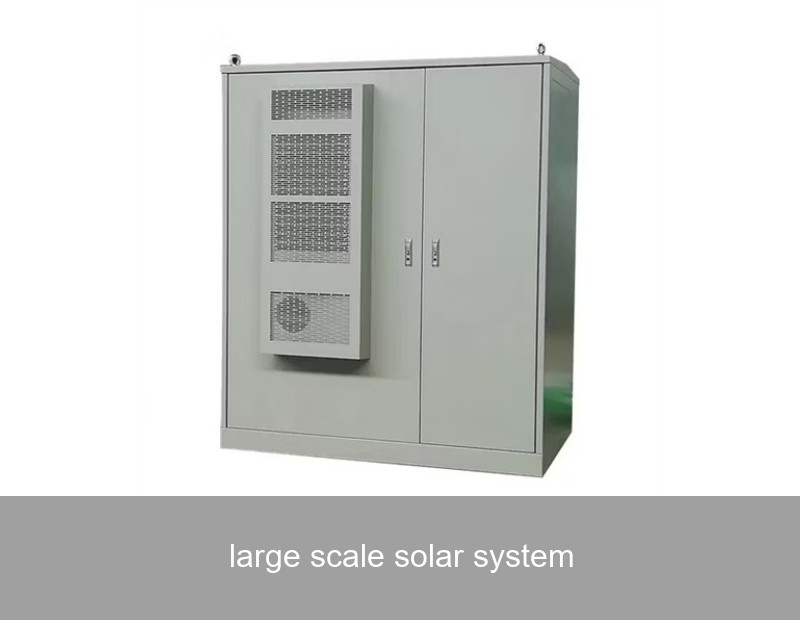
So, you've made the smart investment in a large scale solar system. Rows of gleaming panels capture the sun's bounty, a testament to a commitment to clean energy and cost savings. But if you're like many facility managers or energy directors, you might be facing a familiar, frustrating phenomenon: watching a significant portion of that valuable, self-generated power slip away, unused, back to the grid during peak production, only to buy it back at a premium later. This isn't just an operational hiccup; it's a fundamental challenge that limits the return on investment for solar projects of all sizes. The key to transforming this challenge into opportunity lies not just in generation, but in intelligent storage. This is where advanced energy storage systems, like those pioneered by Highjoule, become the critical component for a truly resilient and profitable energy asset.
Table of Contents
- The Curtailment Puzzle: When Solar Abundance Becomes a Problem
- The Data Tells the Story: Quantifying the Solar Duck Curve
- Case Study: Transforming a German Logistics Hub
- More Than a Battery: The "Brain" Behind a Smarter Solar System
- The Highjoule Solution: Engineered for Large-Scale Performance
- The Future is Resilient and Decentralized
The Curtailment Puzzle: When Solar Abundance Becomes a Problem
Imagine a bright, sunny afternoon at your industrial plant or commercial campus. Your large scale solar system is operating at maximum output. However, the facility's operational load—the machinery, lighting, and HVAC running at that moment—is only using 70% of the power being produced. Traditionally, this surplus 30% is exported to the utility grid. While net metering or feed-in tariffs offer some compensation, this rate is often far lower than the retail price you pay for electricity. More critically, in many regions, grid operators are increasingly mandating curtailment, forcing large renewable generators to reduce output to maintain grid stability. You are literally being told to throw away your own produced energy. This mismatch between solar production peaks and consumption patterns is the central hurdle to maximizing solar's value.

Image Source: Unsplash - A typical large scale solar system, whose full potential is often unlocked only when paired with storage.
The Data Tells the Story: Quantifying the Solar Duck Curve
The phenomenon described above is vividly captured in what grid operators call the "Duck Curve." This graph, first noted in California, shows the deepening dip in net grid demand during midday (when solar floods the system) and the steep, rapid ramp-up in demand as the sun sets. The "belly" of the duck represents wasted solar potential, while the "neck" is a period of grid stress and high-cost fossil fuel generation. For a business, this translates to:
- Reduced Energy ROI: Lower revenue from exported power and missed savings on peak-time consumption.
- Exposure to Price Volatility: Remaining dependent on the grid during high-price evening hours.
- Grid Dependency: Lack of backup power during outages, halting operations even when the sun has been shining all day.
| Time of Day | Solar Generation | Facility Load | Surplus/(Deficit) | Grid Interaction |
|---|---|---|---|---|
| 10:00 - 15:00 (Peak Sun) | High (800-950 kW) | Medium (600 kW) | +200 to +350 kW | Low-value export or curtailment |
| 18:00 - 21:00 (Evening Peak) | Low/Zero | High (700 kW) | -700 kW | High-cost import from grid |
Case Study: Transforming a German Logistics Hub
Let's look at a real-world application. A major logistics company near Frankfurt, Germany, operated a 2.3 MW rooftop large scale solar system. Despite significant generation, their energy costs remained high due to time-of-use tariffs and limited self-consumption. Their goal was to achieve near-energy autonomy and stabilize operational costs.
Highjoule deployed a integrated solution centered on our HPS-1500 commercial battery energy storage system (BESS), with a capacity of 1.5 MWh. The system was integrated with the existing solar inverters and equipped with Highjoule's proprietary Adaptive Grid OS energy management software. The results, monitored over 12 months, were compelling:
- Self-Consumption Rate Increased: From 68% to 94%, drastically reducing grid exports.
- Peak Grid Demand Shaved: By over 85%, eliminating peak demand charges.
- ROI Acceleration: The payback period for the storage addition was calculated at under 7 years, enhancing the overall solar project's financial returns.
- Backup Power: The system now provides critical backup for the facility's cold storage units, a vital resilience feature.
This case exemplifies the transformative "solar-plus-storage" model, turning a one-dimensional generator into a controllable, resilient energy asset.
More Than a Battery: The "Brain" Behind a Smarter Solar System
It's crucial to understand that adding storage isn't just about bolting on batteries. The core value lies in intelligent control. A high-performance large scale solar system coupled with storage requires a sophisticated energy management system (EMS) that makes millisecond-by-millisecond decisions: store now or discharge? Serve the load or respond to a grid signal? Prepare for an outage or participate in a grid service program?
This is where Highjoule's expertise shines. Our systems are built with this intelligence layer as standard. We don't just provide hardware; we provide an optimized outcome.

Image Source: Unsplash - A modern containerized BESS unit, similar to Highjoule's HPS series, enabling scalable storage.
The Highjoule Solution: Engineered for Large-Scale Performance
Since 2005, Highjoule has focused on solving complex energy challenges for commercial, industrial, and utility clients. Our product suite is designed to seamlessly integrate with and enhance large scale solar systems.
- HPS Series Commercial BESS: Scalable, containerized solutions from 500 kWh to multi-MWh configurations. Built with LiFePO4 battery chemistry for safety and longevity, they feature high cycle life and are designed for easy grid interconnection.
- Adaptive Grid OS: The software brain that optimizes energy flow. It uses predictive algorithms based on weather forecasts, load patterns, and electricity market data (where available) to autonomously maximize economic value. It can also be configured for specific goals: demand charge reduction, backup power priority, or participation in utility demand response programs like those offered in the PJM or National Grid territories.
- Full-Service Integration: Our team of experts handles everything from initial site assessment and financial modeling to system design, grid compliance, installation, and long-term monitoring. We ensure your solar-storage hybrid system operates as a single, high-performance unit.
The Future is Resilient and Decentralized
The energy landscape is shifting from a centralized, one-way grid to a decentralized, interactive network. In this new paradigm, a large scale solar system is no longer just a passive contributor. With the right storage and intelligence, it becomes a proactive grid citizen—a source of stability that can provide frequency regulation, voltage support, and black-start capabilities. This not only benefits the grid but opens up additional revenue streams for asset owners.
For businesses, this translates to energy independence, predictable costs, and enhanced operational continuity. The question is no longer if to add storage to your solar asset, but how and with whom.
What is the single biggest energy cost challenge your large-scale solar installation hasn't been able to solve yet?
We invite you to share your experience. Could it be persistent demand charges, concerns about grid curtailment policies, or the need for reliable backup power? Contact Highjoule's energy solutions team for a complimentary, data-driven analysis of how intelligent storage can transform your solar investment from a cost-saving project into a strategic, revenue-enhancing asset.
 Inquiry
 Online Chat