


Understanding "Le Prix d'un Panneau Solaire": It's More Than Just a Number
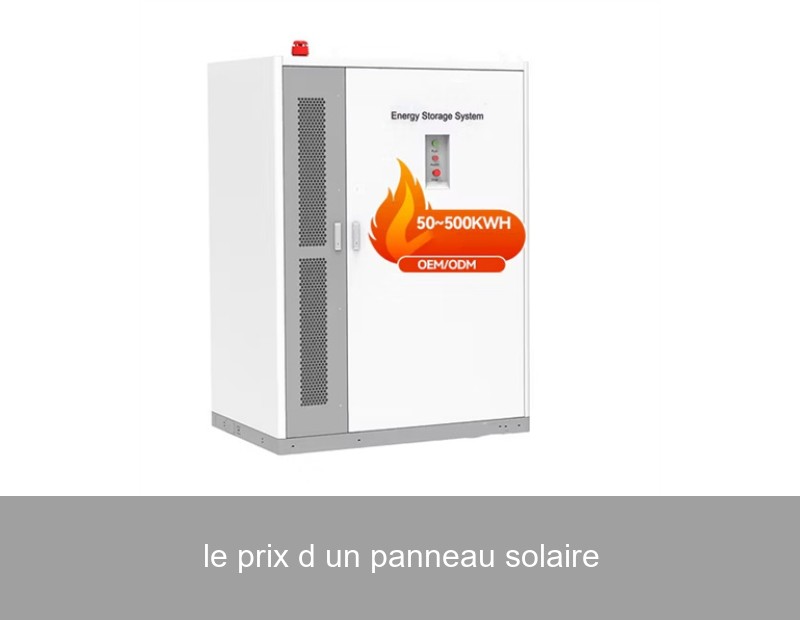
So, you're thinking about solar power. One of the very first questions that pops up is, naturally, "le prix d'un panneau solaire" – the price of a solar panel. You might search online and see figures like €200 or €300 per panel. It seems straightforward, right? But here's the professional truth we at Highjoule have learned since 2005: focusing solely on that per-panel sticker price is like buying a car based only on the cost of a single tire. The real value, and the real cost, lies in the complete system and the intelligent energy ecosystem it creates.
The Price Tag Puzzle: What You're Really Paying For
Let's demystify that initial price tag. A modern photovoltaic (PV) panel's cost is influenced by several key factors:
- Panel Technology: Monocrystalline panels (high efficiency, sleek look) typically cost more than polycrystalline. Emerging technologies like bifacial panels, which capture light from both sides, command a premium.
- Efficiency Rating: A panel that converts 22% of sunlight into electricity will be priced higher than one at 18% because it generates more power in the same roof space.
- Power Output (Wattage): A 450-watt panel will cost more than a 350-watt panel, but it also delivers more energy.
- Brand & Warranty: Established manufacturers with robust 25+ year performance warranties often have higher prices, reflecting quality and long-term reliability.
According to data from the International Energy Agency (IEA), module prices have dropped dramatically over the last decade, making the hardware itself increasingly accessible. But this is only the beginning of the story.
Breaking Down the Cost: The Complete Picture
When you get a quote for a solar installation, the panels themselves often account for only about 15-25% of the total project cost. The rest? That's the "balance of system" (BOS), and it's crucial for performance and safety.
| Cost Component | Approx. Share of Total | What It Includes |
|---|---|---|
| Solar Panels (Modules) | 15-25% | The physical PV panels you see on the roof. |
| Inverter(s) & Power Electronics | 10-15% | The "brain" that converts DC solar power to usable AC power for your home/business. |
| Mounting System & Hardware | 10-15% | The racking that securely attaches panels to your roof or ground. |
| Installation Labor & Soft Costs | 30-40% | Professional installation, permits, design, engineering, and inspections. |
| Energy Storage System (Battery) | Variable (Key Addition) | Stores excess solar energy for use at night or during outages, maximizing self-consumption. |
As you can see, the inverter is a critical piece. And today, the most advanced systems integrate storage from the start. This brings us to the most important shift in thinking: your goal isn't just to buy panels; it's to minimize lifetime energy costs and achieve energy independence.
Image Source: Unsplash (Professional photography of solar installation)
Beyond the Panel: The True System Cost and Value
Think about it this way: a solar panel produces power when the sun shines. But what about evenings, when energy demand often peaks? Without storage, you might be exporting excess power to the grid at low rates only to import expensive power later. This drastically reduces the financial and practical return on your solar investment.
This is where the conversation evolves from "le prix d'un panneau solaire" to "the value of an integrated energy system." The most sophisticated solutions now treat solar generation and intelligent storage as one cohesive unit.
Case Study: Real Numbers from a German Dairy Farm
Let's look at a real example from Bavaria, Germany. A mid-sized dairy farm installed a 50 kW solar array on their barn roofs in 2020. The panels alone cost around €35,000. However, about 40% of their solar generation was being fed into the grid during the day, while they operated feed mixers and cooling systems mostly in the early morning and evening, buying power at higher rates.
In 2022, they partnered with Highjoule to retrofit a Highjoule HES-30 commercial battery storage system. The additional investment was significant, but the results transformed their energy economics:
- Self-Consumption Rate increased from 60% to over 85%.
- They could participate in automated grid services, earning small revenue streams by providing grid stability.
- Their calculated payback period for the entire system (solar + storage) was reduced by nearly 2 years due to optimized consumption and avoided peak charges.
The farm manager's insight was telling: "The panels were the muscle, but the Highjoule battery and its smart controller became the brain. Now we run more on our own sun, day and night."
Highjoule: Where Intelligent Storage Maximizes Your Solar Investment
At Highjoule, our role isn't to sell you panels. As a global leader in advanced energy storage since 2005, we provide the intelligence that makes your solar investment work harder. Our systems are designed to seamlessly integrate with new or existing solar arrays for homes, businesses, and microgrids.
Consider our Residential Energy Hub series. It's more than just a battery. It's an integrated system that:
- Dynamically manages energy flow, prioritizing solar self-consumption to shield you from volatile utility rates.
- Provides backup power during grid outages, keeping essential loads running.
- Features scalable capacity, allowing you to start with what you need and expand as your needs grow.
For commercial and industrial clients, our Containerized Battery Energy Storage Systems (BESS) offer utility-scale storage that can turn a large solar installation into a predictable, controllable energy asset. This is crucial in markets like California or parts of Europe with time-of-use rates that can vary by 300%.

Image Source: Unsplash (Example of a modern home battery installation)
Future-Proofing Your Investment
The energy landscape is shifting rapidly. Governments are phasing out generous feed-in tariffs, as noted in U.S. Department of Energy studies, and moving towards models that reward self-sufficiency and grid support. In this new reality, the simple question of "le prix d'un panneau solaire" becomes a gateway to a more strategic discussion.
Your investment should be resilient. It should adapt to changing electricity rates, evolving household or business demands, and even enable participation in future energy markets. This requires a platform built with intelligence and flexibility at its core—principles that have guided Highjoule's product development for nearly two decades.
So, as you evaluate your move to solar, what will be the true measure of your system's value: the upfront cost per panel, or the lifetime cost and control over every kilowatt-hour you produce?
 Inquiry
 Online Chat