


Lightweight Solar Panels: The Game-Changer for Modern Energy Independence
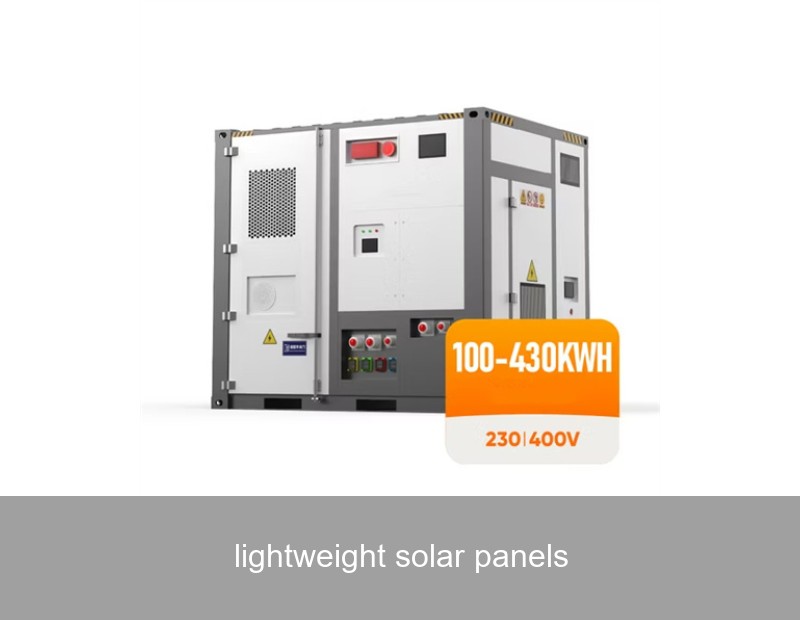
Imagine powering your home, business, or adventure with the sun, without the need for heavy, cumbersome, and structurally demanding traditional panels. This is no longer a futuristic dream but a present-day reality, thanks to the rapid evolution of lightweight solar panels. As energy costs soar and the urgency for sustainable solutions intensifies, these innovative panels are breaking down barriers to solar adoption across Europe and the United States. They offer a unique blend of flexibility, portability, and ease of installation that is revolutionizing how we think about capturing solar energy. For companies like Highjoule, a global leader in advanced energy storage systems since 2005, integrating these panels with intelligent storage is key to creating truly resilient and efficient power solutions for commercial, industrial, residential, and microgrid applications.
Table of Contents
What Are Lightweight Solar Panels? Shedding Pounds, Not Performance
Traditional silicon photovoltaic (PV) panels are workhorses, but they come with significant heft—often weighing 40-50 pounds (18-23 kg) per panel. This requires robust, often reinforced, roofing structures and complex mounting systems. Lightweight solar panels, typically using thin-film technologies like CIGS (Copper Indium Gallium Selenide) or advanced mono-crystalline cells on flexible polymers, can weigh as little as 5-15 pounds (2-7 kg) for a comparable output area. Think of it as the difference between carrying a brick and a hardcover book. This dramatic reduction is achieved by eliminating the heavy aluminum frame and thick glass casing, using instead durable, weather-resistant laminates.

Image Source: Unsplash - A visual example of the flexibility and thin profile of modern lightweight solar technology.
But here’s the common question: "Do lighter panels mean less power?" The answer is a confident no. While efficiency ratings per square foot might vary between technologies, the overall system performance is often comparable or even superior in real-world conditions, especially in low-light or high-temperature environments. The true value lies in their versatility.
Key Characteristics of Lightweight Solar Technology:
- Low Weight: 70-80% lighter than traditional framed glass panels.
- Flexibility: Many can conform to curved surfaces like RV roofs, boat decks, or certain architectural features.
- Low-Profile Installation: Can be adhered, bonded, or using low-penetration mounts, reducing installation time and structural impact.
- Durability: Often more resistant to hail and impact due to their polymer construction.
The Data Behind the Weight Advantage: More Than Just a Number
The shift to lightweight solar isn't just about convenience; it's driven by compelling economic and logistical data. A study by the National Renewable Energy Laboratory (NREL) highlights that "balance of system" costs—including mounting, racking, and labor—can constitute up to 30% of a total solar installation. Lightweight panels slash these costs dramatically.
| Installation Factor | Traditional Heavy Panel | Lightweight Solar Panel |
|---|---|---|
| Average Weight per m² | 12-15 kg | 2.5-6 kg |
| Typical Mounting System | Aluminum rails, heavy anchors, full penetration | Adhesive, bonding, or lightweight non-penetrating ballast |
| Installation Crew Size/Time | Larger crew, longer duration | Smaller crew, faster deployment |
| Suitable Roof Types | Reinforced asphalt, metal, tile; often requires structural review | Asphalt, metal, membrane, foam; ideal for weight-sensitive roofs |
This data reveals a clear picture: lightweight solar panels open the solar market to a vast array of buildings previously considered unsuitable. Think of large warehouses with lightweight metal roofs, historic buildings with structural limitations, or commercial facilities where operational downtime for installation must be minimized.
Case Study: A UK Retail Park's Rooftop Revolution
Let's look at a real-world example from the European market. A large retail park in the Midlands, UK, built in the 1990s, wanted to reduce its grid dependence and carbon footprint. Its expansive, lightweight steel roof structure could not support the weight of a conventional PV system without prohibitively expensive reinforcement. The solution was a 500 kWp installation using state-of-the-art lightweight, flexible panels adhered directly to the roof membrane.

Image Source: Unsplash - Representative image of a large commercial rooftop ideal for lightweight solar deployment.
- Project Size: 500 kWp (kilowatt peak) capacity.
- Panel Weight: 5.8 kg/m² (vs. a projected 18 kg/m² for a traditional system).
- Installation Time: Completed 40% faster than a traditional rack-mounted system estimate.
- Structural Cost Saving: Avoided £200,000 in roof reinforcement costs.
- Annual Output: ~450,000 kWh, covering approximately 35% of the park's base load electricity.
This case underscores a critical insight: The business case for solar isn't just about panel efficiency. It's about total project viability. By eliminating structural upgrade costs and reducing installation complexity, lightweight panels made the entire project financially feasible, delivering a faster return on investment and unlocking a new asset—the previously unusable rooftop.
Applications Beyond the Rooftop: Energy Where You Need It
The potential of lightweight solar panels extends far beyond fixed commercial rooftops. Their portability and resilience are catalyzing new use cases:
- Mobile & Off-Grid Power: Integrated into the roofs of electric vans, RVs, and boats for auxiliary power, extending range and enabling true off-grid living.
- Emergency & Disaster Response: Rapidly deployable solar arrays that can be rolled out or carried to disaster zones to power communications and medical equipment.
- Building-Integrated Photovoltaics (BIPV): Seamlessly integrated into facades, awnings, and carport canopies, where weight and aesthetics are paramount.
- Agricultural Applications: Installed on greenhouse roofs or lightweight structures over crops, providing power for irrigation and sensors without shading.
The Critical Link: Pairing with Smart Energy Storage
Here’s where the story gets even more powerful. Solar panels, lightweight or traditional, generate power when the sun shines. To achieve true energy independence and maximize self-consumption, you need to store that energy for use at night or during peak tariff periods. This is where Highjoule's expertise comes into play. A lightweight solar panel system's value is multiplied when paired with a Highjoule Intelligent Battery Storage System (IBSS).
Highjoule's systems, designed for both residential and commercial scale, do more than just store energy. They manage it intelligently. Our platform can:
- Optimize charging cycles from your solar array based on weather forecasts and consumption patterns.
- Provide backup power during grid outages, ensuring critical operations continue.
- Participate in grid services (where available), creating an additional revenue stream by providing stability to the local network.
For a commercial client with a new lightweight solar array, integrating a Highjoule IBSS means they can shift their solar energy to power evening operations, avoid costly demand charges from the utility, and build a resilient microgrid. The lightweight panels make the solar installation possible on their roof; the Highjoule storage makes the entire energy system smart, efficient, and financially optimal.
Future Trends and Considerations
The trajectory for lightweight solar panels points toward even higher efficiencies, greater durability, and further integration. Perovskite solar cells, for instance, promise a new leap in lightweight, highly efficient, and potentially lower-cost solar technology. As these technologies mature, we can expect them to become a standard option for a majority of installations.
When considering lightweight solar, it's essential to partner with an expert who understands the full system integration. Questions to ask include: What is the panel's long-term degradation rate? What is the proven method of attachment for my specific roof type? And most importantly, how will the generated energy be stored and managed for maximum benefit?
 Inquiry
 Online Chat