


Unlocking New Potential with Flexible Solar Panels
Imagine a solar panel that can bend, curve, and conform to surfaces previously off-limits to traditional, rigid glass modules. This isn't science fiction; it's the reality of flexible solar panels. For homeowners, adventurers, and businesses across Europe and the US, these innovative panels are revolutionizing how and where we can harness the sun's power. But as their popularity surges, a critical question emerges: are these flexible wonders a perfect fit for every project, or do they come with unique considerations? Let's peel back the layers and explore the true potential of flexible solar technology.
How Flexible Solar Panels Work: A Quick Tech Dive
Traditional silicon panels are built on thick, glass substrates, making them heavy and brittle. Flexible solar panels, however, take a different path. Most use thin-film photovoltaic materials, like amorphous silicon (a-Si) or Copper Indium Gallium Selenide (CIGS), or ultra-thin crystalline silicon cells. These light-absorbing layers are deposited or laminated onto flexible substrates such as advanced polymers or thin metal sheets.
The result is a panel that is significantly lighter—often 70% lighter than glass panels—and can withstand bending to a certain radius without cracking. It's crucial to understand that "flexible" doesn't mean "floppy." These panels are designed for conformability during installation onto curved surfaces like RV roofs, boat hulls, or certain architectural structures, not for repeated flexing in daily use.

Image Source: Unsplash (Photographer: American Public Power Association)
Key Benefits and Game-Changing Applications
The unique properties of flexible solar panels open doors to applications where traditional panels simply can't go. Let's break down their advantages and ideal use cases.
Major Advantages of Going Flexible
- Lightweight & Low-Profile: Drastically reduces weight load and wind profile, crucial for vehicles and older roofs.
- Versatile Installation: Can be bonded directly to curved or irregular surfaces using adhesive, reducing drilling and racking needs. Durability: Many are highly resistant to hail impact and minor debris thanks to their polymer construction.
- Portability: Perfect for temporary setups, camping, marine use, or emergency power.
Where Flexible Solar Panels Shine (Pun Intended)
| Application | Why Flexible Panels are Ideal |
|---|---|
| Recreational Vehicles (RVs) & Boats | Conform to curved roofs, lightweight, low clearance. |
| Commercial & Industrial Buildings with Weight-Limited Roofs | Enable solar on older warehouses or buildings where structural reinforcement is cost-prohibitive. |
| Off-Grid Cabins & Remote Monitoring Stations | Easier to transport via air or rough terrain and install on unconventional structures. |
| Architectural Integration | Can be integrated into canopies, facades, and curved surfaces for aesthetic, building-integrated photovoltaics (BIPV). |
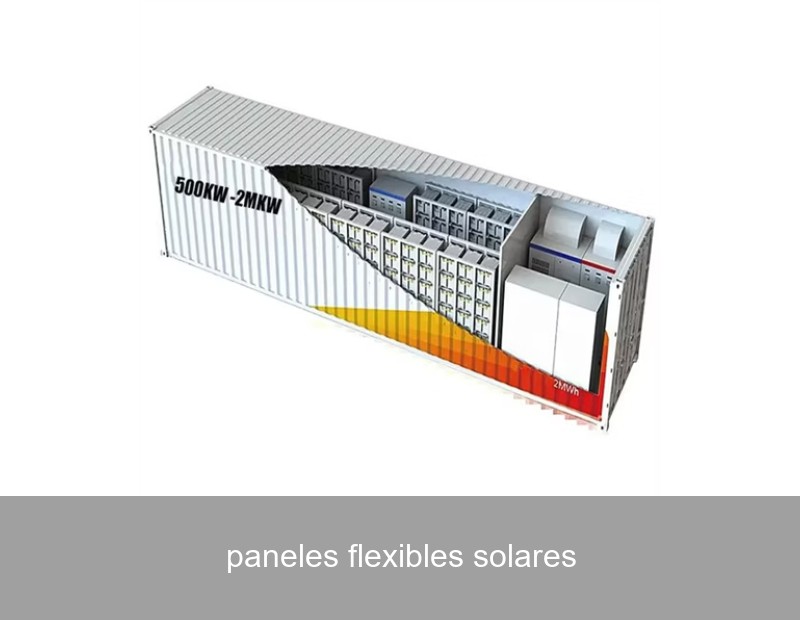
It's here that the story of solar power expands. While flexible solar panels capture energy from challenging surfaces, maximizing that energy's value requires intelligent management. This is where a complete system approach becomes vital. Companies like Highjoule, with nearly two decades of expertise, don't just see a panel; they see a critical component within a larger energy ecosystem. Highjoule's smart energy storage systems are designed to integrate seamlessly with diverse solar inputs, whether from traditional rooftop arrays or innovative flexible installations. By storing excess solar generation, their systems ensure that the unique power generated by your flexible panels is available on-demand, day or night, turning a versatile energy source into a reliable power solution for homes, businesses, and microgrids.
Real-World Case Study: Powering Remote Research in the Scottish Highlands
Let's move from theory to practice. A compelling example comes from an ecological research station in the remote Scottish Highlands. The team needed to power sensitive monitoring equipment for a multi-year biodiversity study. The challenges were significant: no grid connection, a protected stone building with a curved, weight-limited roof, and harsh weather with frequent snow and hail.
A traditional solar array was impossible. The solution was a custom 2.4 kW system using high-efficiency, adhesive-mounted flexible solar panels that conformed to the historic roof's curve. The energy was not used directly but fed into a robust, weatherproof battery storage system capable of withstanding extreme cold and long periods of low solar irradiance.
- Installation Time: Reduced by 60% compared to a hypothetical rack-mounted system due to no roof penetrations. Weight Load: Less than 3 kg/m², well within the roof's safe limits.
- System Uptime: The research station maintained 99.8% power availability over 18 months, even during winter storms, thanks to the resilience of the flexible panels and the optimized storage system.
This case highlights a crucial insight: the success of flexible solar panels in demanding environments is often dependent on the quality and intelligence of the storage system they're paired with. It's a synergistic relationship.

Image Source: Unsplash (Photographer: Chris Lawton)
Choosing the Right System: More Than Just the Panel
So, you're considering flexible solar panels. Exciting! But before you proceed, it's essential to look at the bigger picture. The panel is only one part of your energy equation.
Critical Considerations Before You Buy
- Efficiency vs. Flexibility: Flexible panels generally have lower efficiency rates (typically 15-20%) than premium rigid monocrystalline panels (22%+). You may need more surface area to achieve the same power output.
- Longevity and Degradation: Check the product's warranty and expected degradation rate. Some thin-film panels have better performance in high heat and low light, but long-term data is still growing compared to crystalline silicon. A reputable source like the National Renewable Energy Laboratory (NREL) provides ongoing research on thin-film technologies.
- The Balance of System (BOS): This is where expertise matters most. Your system needs a compatible charge controller, wiring, and most importantly, an inverter and battery storage system that can handle the specific output profile of your panels and your load requirements.
This last point on system integration is where partnering with an expert pays dividends. Highjoule's approach is to design from the load backward. Their engineers consider your unique energy profile, the characteristics of your chosen solar technology (like flexible panels), and then specify an integrated storage and management system that optimizes for longevity, safety, and return on investment. Whether it's a residential setup with limited roof space or a commercial microgrid needing seamless integration of diverse generation sources, the right storage platform transforms solar from an intermittent source into a firm, dispatchable asset.
The Future of Flexible Solar Technology
The innovation in flexible solar panels is accelerating. Researchers are pushing the boundaries with perovskite solar cells, which promise higher efficiencies and even greater flexibility, though commercial durability remains a focus. The potential for vehicle-integrated photovoltaics (VIPV) on electric cars and trucks is a particularly exciting frontier, turning every vehicle into a power-generating asset. For an overview of these emerging trends, the U.S. Department of Energy's Solar Energy Technologies Office offers valuable insights.
As these panels evolve, so too must the systems that manage their power. The future lies in hyper-intelligent energy management systems that can dynamically optimize charging, storage, and discharge from a mosaic of generation sources—rigid solar, flexible solar, wind—based on weather predictions, usage patterns, and grid signals. Companies at the forefront of storage, like Highjoule, are already developing these next-generation platforms, ensuring that as solar technology diversifies, our ability to harness it becomes even more sophisticated and user-centric.

Image Source: Unsplash (Photographer: Possessed Photography)
Your Next Step Towards Energy Independence
The world of solar energy is no longer one-size-fits-all. Flexible solar panels have democratized access to the sun, empowering us to generate clean power from our RVs, boats, and unconventional buildings. They are a testament to human ingenuity in the quest for sustainability. But their true potential is unlocked only when paired with robust and intelligent energy storage.
So, as you contemplate integrating flexible solar into your life or business, we leave you with this question: How will you design not just your solar generation, but your entire energy ecosystem, to be as resilient, efficient, and adaptable as the innovative panels on your roof?
 Inquiry
 Online Chat