


Unlocking Energy Independence: The Power of a 17.5 kWh Lithium Battery
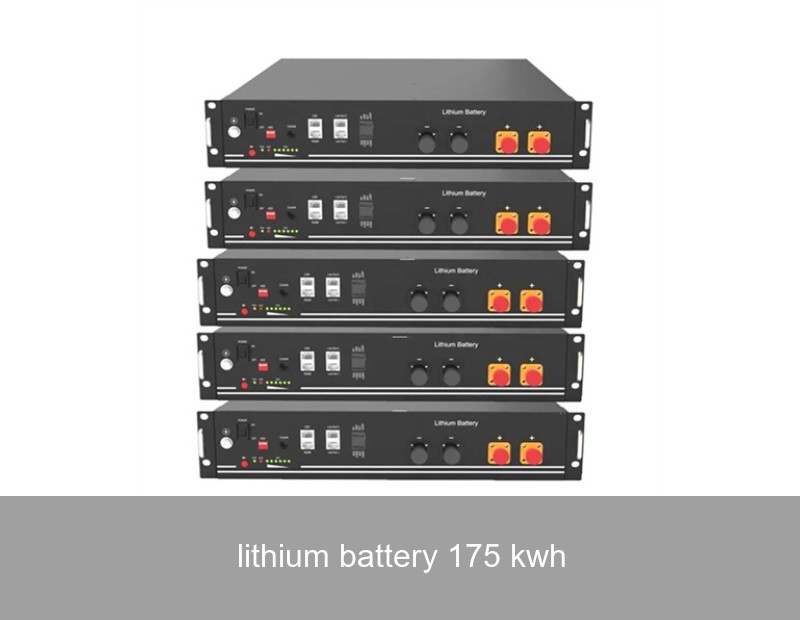
Imagine a world where a power outage doesn't plunge your home into darkness or halt your business operations. Picture seamlessly harnessing the sun's energy not just when it's shining, but around the clock. This is no longer a distant dream; it's the reality enabled by advanced energy storage, with the lithium battery 17.5 kWh emerging as a sweet spot for many households and small businesses. This specific capacity represents a pivotal step towards true energy resilience, balancing substantial power reserves with practical installation. Let's explore why this technology is revolutionizing how we think about and use electricity.
Table of Contents
- The Phenomenon: From Grid Dependency to Energy Autonomy
- The Data: Why 17.5 kWh Hits the Mark
- The Case Study: A German Household's Journey to 95% Self-Sufficiency
- The Insight: More Than Just Backup Power
- The Highjoule Solution: Engineered for Performance and Intelligence
- Your Next Step: Is a 17.5 kWh System Right for You?
The Phenomenon: From Grid Dependency to Energy Autonomy
Across Europe and the United States, a quiet revolution is underway. Homeowners and business operators are increasingly frustrated by volatile energy prices and the growing frequency of grid instability due to extreme weather events. The initial solution for many was solar panels. However, a critical limitation soon became apparent: solar generation peaks in the middle of the day, often when energy consumption is lowest. Without a way to store that excess energy, it's fed back to the grid for minimal compensation, while households still draw expensive power from the grid in the evenings. This paradox highlights the missing link: intelligent energy storage. The ability to capture surplus solar energy for later use is the key to unlocking the full value of renewable investments, and that's precisely where a robust lithium battery 17.5 kWh system comes into play.

Image Source: Unsplash - A modern home integrating solar and storage for energy independence.
The Data: Why 17.5 kWh Hits the Mark
Why is 17.5 kWh such a significant capacity? Let's break it down with some relatable numbers. The average U.S. household consumes roughly 30 kWh per day, while in Germany, it's closer to 10-12 kWh per day for a energy-conscious household. A 17.5 kWh battery doesn't just offer backup; it enables strategic energy management.
- Extended Backup: It can power essential loads (refrigeration, lighting, communication, heating systems) for 24-48 hours or more during an outage, depending on usage.
- Daily Cycling: For a home with a 8-10 kW solar array, a 17.5 kWh battery can store nearly all daytime surplus, drastically reducing evening grid draw to near zero.
- Financial Logic: It provides sufficient capacity to participate effectively in utility demand response programs or to avoid peak-time tariffs, where electricity can cost 2-3 times the off-peak rate.
Consider this comparison table for a typical 4-person household with a 9 kW solar array:
| Scenario | Without Storage | With a 17.5 kWh Lithium Battery |
|---|---|---|
| Evening Grid Reliance | High (6-8 kWh from grid) | Low to None (0-2 kWh from grid) |
| Self-Consumption of Solar | ~30-40% | ~70-90% |
| Impact of 4-Hour Outage | Full blackout | Seamless operation of critical loads |
The Case Study: A German Household's Journey to 95% Self-Sufficiency
Let's look at a real-world example from Bavaria, Germany. The Schmidt family, living in a detached home, installed a 11 kWp photovoltaic system in 2020. While they were happy with their reduced bills, they were still exporting over 60% of their summer production and buying power in winter. In early 2023, they decided to integrate a Highjoule HES-C Series storage system with a usable capacity of 17.5 kWh.
The Results (12-Month Period):
- Grid Independence: Their annual self-sufficiency rate jumped from 35% to 95%.
- Financial Savings: Their annual electricity cost decreased from €1,150 to under €200, primarily grid fees and winter top-ups.
- Energy Security: During a regional grid fault in December 2023 that lasted 9 hours, their home continued operating normally. The system's intelligent management prioritized heat pump operation and essential circuits, using only 45% of the battery's capacity.
"The decision wasn't just about savings," Mr. Schmidt noted. "It was about taking control. We no longer watch the weather forecast with anxiety about our heating costs. The Highjoule system's app shows us exactly how we are using and storing energy, making us active participants in our energy future."
The Insight: More Than Just a Battery Box
The Schmidt family's experience underscores a crucial insight: a lithium battery 17.5 kWh system is not a commodity product. Its performance, safety, and longevity are dictated by the quality of the battery cells (like premium LiFePO4 chemistry), the sophistication of the Battery Management System (BMS), and the intelligence of the system's software. A superior BMS doesn't just protect the battery; it optimizes every charge and discharge cycle to maximize lifespan, which can be the difference between a system lasting 10 years or over 15. Furthermore, integration capability is key—the system must communicate flawlessly with existing or new solar inverters, home energy management systems, and even electric vehicle chargers.

Image Source: Unsplash - Precision engineering inside a modern battery energy storage system.
The Highjoule Solution: Engineered for Performance and Intelligence
This is where Highjoule's nearly two decades of expertise comes to the forefront. We understand that a lithium battery 17.5 kWh unit is the heart of a much broader energy ecosystem. Our HES (Highjoule Energy Storage) Series is designed from the ground up for the demands of the European and North American markets.
Our flagship product for residential and light commercial applications, the HES-C17, delivers exactly 17.5 kWh of usable energy. Here’s what sets it apart:
- Ultra-Safe LiFePO4 Chemistry: Renowned for thermal stability and long cycle life, exceeding 6,000 cycles while maintaining high capacity.
- Adaptive AI Software: Our proprietary JouleMind OS learns your energy consumption patterns and weather forecasts to optimize charging and discharging strategies, not just for today, but for the week ahead.
- Scalable & Hybrid-Ready: Starting with a 17.5 kWh unit? You can easily add more modules later. The system is also designed for future integration with other renewable sources and generators.
- Professional Monitoring & Support: Every Highjoule system includes 24/7 cloud-based monitoring. Our platform provides actionable insights and alerts, and our network of certified installers ensures seamless setup and service.
For commercial and microgrid applications, our HES-M Series modular systems allow for scalable configurations far beyond 17.5 kWh, providing robust, grid-supportive solutions for businesses, schools, and communities aiming to stabilize energy costs and enhance sustainability.
Your Next Step: Is a 17.5 kWh System Right for You?
The journey to energy independence is personal. The right storage capacity depends on your energy consumption, solar production, backup goals, and local utility policies. A lithium battery 17.5 kWh system is often the ideal cornerstone for energy-aware families and small-to-medium businesses seeking a transformative solution.
So, we leave you with this question to ponder: What would you power first to bring security and stability to your home or business if the grid went down tomorrow? Visualizing that answer is the first step. The next step is to have a data-driven conversation. We encourage you to review your last 12 months of electricity bills, note your critical loads, and then reach out to a Highjoule-certified energy partner. They can provide a detailed analysis to show how a tailored storage solution can turn your energy vision into a resilient, cost-effective reality.
 Inquiry
 Online Chat