


Renewable Hybrid Energy Systems: The Smart Path to Energy Independence
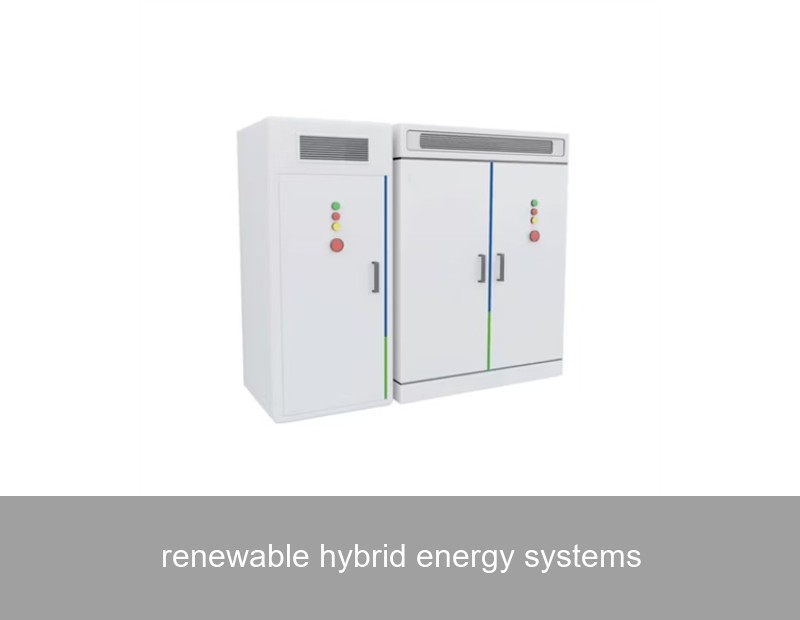
Have you ever watched a solar panel sit idle on a cloudy day, or a wind turbine stand still during a calm, wondering how we can truly rely on these clean but intermittent sources? You're not alone. This is the fundamental challenge of the energy transition, and the answer lies in a powerful, integrated approach: renewable hybrid energy systems. These intelligent systems combine multiple renewable sources, like solar and wind, with advanced battery storage and smart management to create a resilient, reliable, and cost-effective power solution. For businesses, communities, and homeowners, particularly in regions like Europe and the U.S. with ambitious decarbonization goals, mastering this hybrid approach is no longer a luxury—it's a strategic necessity for energy security and sustainability.
What Are Renewable Hybrid Energy Systems?
At its core, a renewable hybrid energy system is a smartly engineered ecosystem. Think of it like a well-coordinated team. Instead of relying on a single star player (like only solar PV), it brings together complementary talents: solar panels that generate power during the day, wind turbines that can produce at night or during storms, and most critically, a battery energy storage system (BESS) that acts as the team's MVP, storing excess energy for when it's needed most. The true "brain" of the operation is an advanced energy management system (EMS) that makes real-time decisions on where to draw power from, what to store, and how to optimize for cost or carbon goals.

Image Source: Unsplash - A visual representation of complementary solar and wind generation.
The Data Advantage: Why Hybrids Outperform Single Sources
The phenomenon is clear: single-source renewables create a "feast or famine" power profile. The data, however, reveals the compelling solution. Studies show that hybridizing solar and wind can smooth power output by over 50% compared to either source alone, because their generation profiles are often anti-correlated. For instance, the National Renewable Energy Laboratory (NREL) has published extensive analysis showing that co-located wind and solar plants can achieve higher capacity factors and reduce grid integration challenges.
Let's break this down with a simple table comparing system types:
| System Type | Key Strength | Primary Limitation | Grid Independence |
|---|---|---|---|
| Solar-Only + Grid | Low daytime energy costs | Zero output at night; curtailment | Low |
| Wind-Only + Grid | Can generate 24/7 in right location | Highly variable; potential noise | Medium |
| Solar+Wind+Storage Hybrid | High reliability, optimized self-consumption | Higher upfront investment | High to Very High |
The logic ladder here is straightforward: Phenomenon (intermittency) → Data (hybrids smooth output by 50%+) → leads us to seek a tangible Case Study to see the theory in action.
A Real-World Case: Stabilizing a Microgrid in Southern Europe
Consider a practical example from a Mediterranean island community in Greece. This location had excellent solar resources but relied heavily on expensive and polluting diesel generators, especially for evening peak demand and during the tourist season when wind was low. Their challenge was a classic "renewable penetration wall."
The solution was a custom-designed renewable hybrid energy system integrating:
- 2.5 MW of expanded solar PV capacity
- 1.8 MW of new wind capacity
- A central 4 MWh Highjoule GridMaster BESS with advanced lithium-iron-phosphate (LFP) chemistry
- Highjoule's proprietary Harmony EMS platform for predictive control
The results, after 18 months of operation, were transformative:
- Diesel fuel consumption reduced by 89%, saving over €400,000 annually.
- Renewable penetration increased from 35% to 92% of annual load.
- The EMS, using weather forecasting, pre-charges the battery ahead of low-wind periods, ensuring seamless power.

Image Source: Unsplash - Example of a containerized battery storage system.
This case exemplifies the PAS framework: The Problem (cost, pollution, low renewable share) was addressed by the Agitation (showing the limitations of single-source renewables) and finally Solved by the integrated hybrid solution.
Key Components of a Successful Hybrid System
Building a robust system isn't just about connecting different technologies. It requires careful selection and seamless integration of four pillars:
1. Complementary Generation Sources
Solar PV and wind are the most common pair, but others include hydropower or even renewable-based hydrogen. The goal is to cover each other's seasonal and diurnal gaps.
2. The Storage Backbone: Battery Energy Storage System (BESS)
This is the linchpin. A high-quality BESS must offer:
- High Cycle Life & Safety: Technologies like LFP are preferred for their longevity and thermal stability.
- Scalability: The ability to start small and expand capacity as needs grow.
- Grid Services Capability: Beyond backup, modern BESS can provide frequency regulation, voltage support, and peak shaving.
3. The Intelligent Brain: Energy Management System (EMS)
This software platform is what transforms a collection of parts into a smart system. It uses algorithms, weather data, and load forecasts to:
- Decide the optimal charge/discharge cycles for the battery.
- Prioritize renewable self-consumption.
- Interface with the grid or diesel generators if needed.
4. Robust Power Conversion & Integration
High-efficiency inverters and transformers that can handle multiple input sources and ensure stable AC power output are critical engineering components.
Highjoule's Role: Intelligent Integration for Maximum Value
Since 2005, Highjoule has evolved from a battery technology provider to a global leader in complete, intelligent hybrid energy solutions. Our expertise lies not just in supplying top-tier hardware, but in the sophisticated integration that unlocks the full potential of a renewable hybrid energy system. For our clients across Europe and North America, we provide:
- The Highjoule Product Suite: From our compact HomeStack for residential applications to our modular, utility-scale GridMaster BESS, all designed with hybrid compatibility as a core principle.
- The Harmony EMS Platform: Our cloud-connected brain offers real-time monitoring, predictive analytics, and customizable optimization strategies (e.g., maximize ROI or maximize carbon savings).
- End-to-End Service: We handle feasibility studies, system design, commissioning, and ongoing performance management, ensuring your hybrid system delivers on its promises for decades.
Our approach demystifies the complexity. We assess your site's specific resource profile (solar irradiance, wind maps, load patterns) and economic drivers (utility rates, incentives like the U.S. ITC or EU programs) to design a system that is both technically elegant and financially sound. You can learn more about grid integration best practices from authorities like the U.S. Department of Energy.
Future Trends and Your Next Step
The landscape is rapidly advancing. We're seeing increased pairing of hybrid systems with electric vehicle (EV) charging depots, creating integrated energy hubs. Artificial intelligence is taking EMS to the next level, enabling even more precise forecasting and autonomous trading in energy markets. The direction is clear: the future is integrated, intelligent, and decentralized.
So, as you contemplate your organization's or community's energy resilience and sustainability goals, ask yourself this open question: What specific energy challenge—be it price volatility, reliability concerns, or carbon reduction targets—could be transformed from a vulnerability into a strength by the intelligent integration of multiple renewable sources and storage?
The journey to energy independence starts with a conversation about your unique context. What's the first step you'll take to explore your hybrid potential?
 Inquiry
 Online Chat