


Understanding Solar Panels System Price: A Smart Investment for Your Energy Future
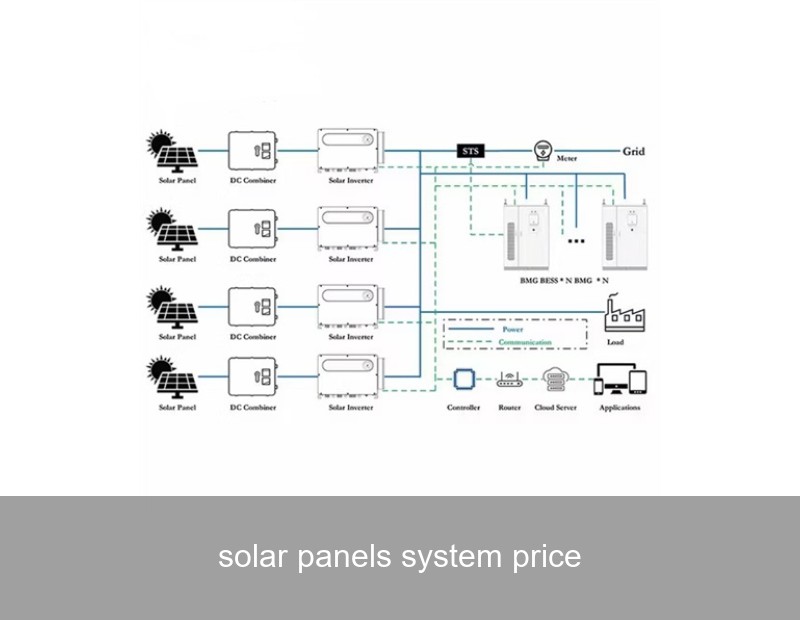
Table of Contents
- Introduction: Beyond the Sticker Shock
- The Real Cost Breakdown of a Solar Panel System
- Key Factors Influencing Your Solar Panels System Price
- The Game-Changer: How Energy Storage Affects Price and Value
- Real-World Impact: A Case Study from California
- Highjoule's Integrated Approach: Maximizing Return on Your Solar Investment
- Future-Proofing Your Investment
If you've ever looked into powering your home or business with the sun, the first thing you likely searched was "solar panels system price." It's a natural starting point, but here's a little secret from the industry: focusing solely on that upfront number is like buying a car based only on the showroom price, ignoring fuel efficiency, maintenance costs, and resale value. The true cost of solar is better understood as an investment—one with significant long-term returns, energy independence, and environmental benefits. Let's demystify what goes into that price and how to ensure you get the best value for every dollar or euro spent.
Introduction: Beyond the Sticker Shock
The initial quote for a solar photovoltaic (PV) system can be substantial. However, in markets like the U.S. and Europe, the narrative has shifted dramatically from pure cost to value generation. With rising grid electricity prices and increasing climate volatility, a solar installation acts as a financial hedge. The key is to look at the Levelized Cost of Energy (LCOE)—the average net present cost of electricity generation over the system's lifetime. For solar, this figure has plummeted by over 80% in the last decade, making it competitive with, and often cheaper than, grid power in many regions. The question is no longer "Can I afford solar?" but "Can I afford not to invest in solar?"
The Real Cost Breakdown of a Solar Panel System
To understand the solar panels system price, we need to dissect it. It's not just panels on your roof.
| Cost Component | Typical Share of Total Price | What It Includes |
|---|---|---|
| Hardware (Panels, Inverters, Mounting) | ~50-60% | Solar panels, inverters (which convert DC to AC power), racking, and wiring. |
| Installation & Labor | ~20-25% | System design, engineering, permitting, and the physical installation. |
| Balance of System & Ancillaries | ~15-20% | Monitoring systems, electrical panels, safety equipment, and importantly, energy storage solutions. |
As you can see, the panels themselves are only part of the story. The inverter technology and the inclusion of a battery are critical decisions that impact both price and performance.

Image Source: Unsplash (Professional photography of solar installation)
Key Factors Influencing Your Solar Panels System Price
- System Size & Energy Needs: Measured in kilowatts (kW), this is the primary driver. A larger system to cover 100% of usage costs more upfront but delivers greater savings.
- Panel Efficiency & Quality: High-efficiency panels (e.g., monocrystalline) cost more per panel but generate more power in limited space, potentially requiring fewer panels overall.
- Inverter Type: Standard string inverters are cost-effective. Microinverters or DC optimizers, which maximize output per panel (especially in shaded areas), add to the cost but enhance yield and monitoring.
- Roof Complexity & Site Conditions: A simple, south-facing roof is easier and cheaper to install on than a multi-angled, steep, or slate roof.
- Local Incentives & Regulations: This is huge. The U.S. federal Investment Tax Credit (ITC) and various European subsidies (like Germany's EEG or net-metering schemes) can reduce net cost by 30% or more. Always factor in local incentives when evaluating a price quote.
- Energy Storage Integration: Adding a battery system increases the initial investment but unlocks greater savings, backup power, and energy independence. This is where the value proposition transforms.
The Game-Changer: How Energy Storage Affects Price and Value
This is a critical evolution in the solar conversation. A solar-only system exports excess power to the grid, often for a modest feed-in tariff. But what if you could store that excess and use it when the sun isn't shining, effectively buying far less from the grid at peak rates? This is the promise of integrated solar-plus-storage. While it increases the initial solar panels system price, the financial dynamics change profoundly. You maximize self-consumption, protect yourself from peak-time charges, and gain resilience during outages. In regions with time-of-use rates or less favorable net metering policies, the payback period for a system with storage can be highly attractive.
Real-World Impact: A Case Study from California
Consider a medium-sized commercial facility in California with a 100 kW solar array. Under the state's NEM 2.0 net metering, the economics were sound. However, with the shift to NEM 3.0, which significantly reduces compensation for exported solar energy, the financial model was upended. The facility partnered with Highjoule to integrate a 240 kWh H-Joule Cube industrial battery energy storage system (BESS).
- Goal: Shift from "export-focused" to "self-consumption and grid services."
- Solution: Highjoule's smart energy management system was configured to store excess solar generation from midday and discharge it during the 4-9 pm peak period when grid rates exceed $0.45/kWh.
- Outcome: The system reduced the facility's grid energy purchases during peak times by over 90%. The combined solar + storage system achieved a return on investment (ROI) in under 6 years, compared to an estimated 10+ years for solar alone under the new tariff. The BESS also provides backup power for critical loads, a valuable bonus. (California Energy Commission)

Image Source: Unsplash (Representative image of a commercial battery storage installation)
Highjoule's Integrated Approach: Maximizing Return on Your Solar Investment
At Highjoule, we view the solar panels system price as the entry point to a comprehensive energy solution. Since 2005, we've specialized in designing systems where solar and storage are not separate components but parts of a synergistic, intelligent whole.
Our H-Joule Home and H-Joule Cube battery systems are built with advanced lithium iron phosphate (LFP) chemistry, known for its safety, longevity, and stability. Paired with our proprietary energy management software, our systems don't just store energy; they intelligently decide when to charge, discharge, or hold based on weather forecasts, your consumption patterns, and real-time grid conditions. This dynamic optimization is what turns a static solar array into a responsive energy asset, dramatically improving the economics of your initial investment.
For businesses and microgrids, our services extend to providing grid-support services, participating in demand response programs, and creating truly resilient off-grid or backup power solutions. We help you see the full picture, ensuring your solar panels system price translates into the highest possible long-term value.
Future-Proofing Your Investment
The energy landscape is shifting rapidly. Electricity prices are volatile, grid infrastructure is aging, and climate-related disruptions are increasing. A solar-plus-storage system is a strategic investment in stability. When evaluating quotes, look beyond cost-per-watt. Consider the provider's expertise in system integration, the quality and warranty of the storage technology, and the intelligence of the software platform. A slightly higher initial investment with a company like Highjoule, which offers a fully integrated, smart, and service-backed solution, will almost always yield superior financial and operational outcomes over decades.
For the latest independent data on solar and storage costs and trends, reputable sources like the National Renewable Energy Laboratory (NREL) in the U.S. and the International Energy Agency (IEA) provide excellent, unbiased insights.
So, the next time you ponder the solar panels system price, ask yourself and potential providers this: How will this system not just generate power, but also manage, store, and optimize it to build my energy resilience and financial savings for the next 25 years? What specific storage-integrated solutions can you design for my unique energy profile and local market rules?
 Inquiry
 Online Chat