


Lithium Battery Generators: The Silent Power Revolution for Homes and Businesses
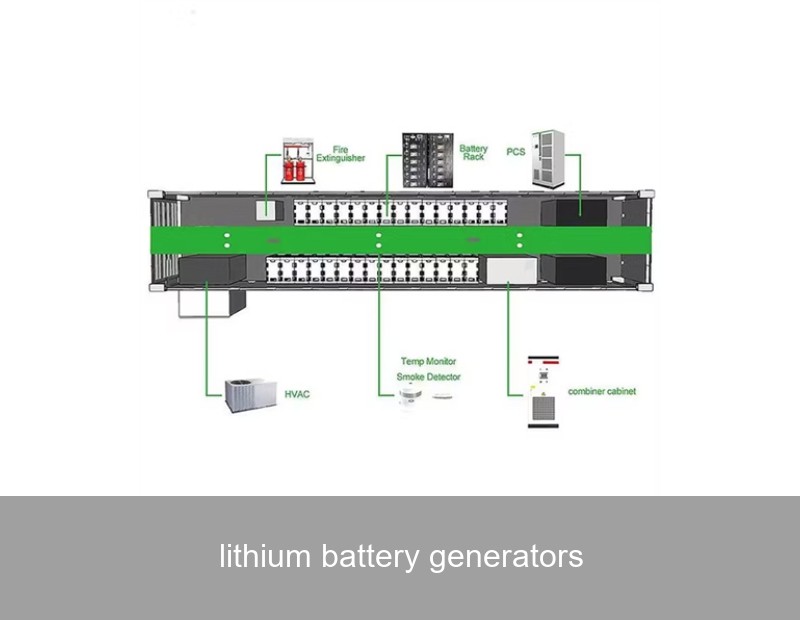
Imagine a power source that's as quiet as a whisper, emits zero fumes, and can be charged by the sun. That’s the reality of modern lithium battery generators. Gone are the days when backup power meant noisy, gas-guzzling machines. Today, a new wave of clean, intelligent energy storage is changing how we think about resilience and independence. For homeowners in California facing Public Safety Power Shutoffs or a factory manager in Germany navigating volatile energy costs, these systems are more than just backup; they're a strategic asset. This article dives into why lithium-ion technology is leading this shift and how companies like Highjoule are engineering solutions that are as smart as they are powerful.
Table of Contents
- The Problem: Beyond the Noise and Fumes
- The Data-Driven Shift to Lithium
- Case Study: A German Bakery's Recipe for Resilience
- Inside the Technology: What Makes a Superior Lithium Battery Generator?
- Highjoule's Role: Engineering Intelligent Storage Ecosystems
- The Future is Modular and Connected
The Problem: Beyond the Noise and Fumes
Traditional fossil fuel generators solve one problem—power outage—but introduce a host of others. The racket is a nuisance for neighborhoods. The exhaust is a health hazard and a carbon emission source. They require constant refueling, which is impractical during prolonged outages and defeats the purpose of "set-and-forget" backup. Most critically, they are passive devices. They can't integrate with solar panels, they don't optimize for cost, and they offer no visibility into your power usage. In our modern, connected world, we don't just need power; we need smart power.
The Data-Driven Shift to Lithium
The numbers speak volumes about lithium-ion's dominance in energy storage. According to the U.S. Department of Energy, the cost of lithium-ion batteries has plummeted by nearly 90% over the past decade[1]. Meanwhile, their energy density (the amount of energy stored per unit volume) has steadily improved. Let's break down the key advantages in a simple comparison:
| Feature | Traditional Gas Generator | Modern Lithium Battery Generator |
|---|---|---|
| Noise Level | 65-95 dB (Very Loud) | 0-40 dB (Near Silent) |
| Emissions | High (CO2, CO, NOx) | Zero at Point of Use |
| Maintenance | High (Oil changes, filter replacements) | Very Low (Primarily software updates) |
| Solar Integration | Not Possible (Typically) | Seamless & Recommended |
| Start-up Time | Several seconds to minutes | Milliseconds (Seamless backup) |
This isn't just about having a better battery. It's about enabling a system that can think. Advanced Battery Management Systems (BMS) monitor each cell for temperature, voltage, and health, ensuring safety and maximizing lifespan. When paired with smart inverters, these systems can perform "peak shaving"—drawing on stored battery power when grid electricity is most expensive—delivering tangible savings on utility bills.

Image Source: Unsplash - A sleek, modern residential battery storage installation.
Case Study: A German Bakery's Recipe for Resilience
Let's look at a real-world application. Bäckerei Schmidt (name changed for privacy), a mid-sized artisanal bakery in Bavaria, Germany, faced a dual challenge: unpredictable power quality affecting their sensitive proofing and cooling equipment, and rising energy costs eating into their margins. Their old diesel generator was too slow to react to micro-outages and couldn't be used indoors.
In 2022, they installed a Highjoule C&I PowerStack 50, a commercial-scale lithium battery storage system with 50 kWh capacity and a 30 kW inverter. The system was integrated with their existing rooftop solar PV. Here are the results after one year:
- 100% Uptime: Zero production loss due to grid fluctuations or short outages.
- €5,200 Annual Savings: Achieved through peak shaving and increased solar self-consumption (from 35% to over 70%).
- 4.8 Tonnes CO2 Avoided: By displacing diesel backup and maximizing renewable energy.
- 5-Year ROI: The system is on track to pay for itself in under five years, thanks to energy savings and available government incentives for commercial storage[2].
"For us, it's not just a battery," said the bakery's managing director. "It's a silent partner that ensures our ovens never stop and our costs stay predictable."
Inside the Technology: What Makes a Superior Lithium Battery Generator?
Not all lithium battery systems are created equal. When evaluating a solution, it's crucial to look beyond basic specs. Here are the engineering pillars of a high-performance system:
Cell Chemistry and Safety
While several lithium-ion chemistries exist, Lithium Iron Phosphate (LFP) has become the preferred choice for stationary storage. Why? It offers superior thermal and chemical stability, dramatically reducing fire risk. It also boasts a longer cycle life—often 6,000 cycles or more to 80% capacity. This means you can cycle it daily for well over 15 years.
The Brain: Advanced Battery Management System (BMS)
The BMS is the true intelligence. A top-tier BMS, like the one in Highjoule systems, performs active cell balancing, ensuring all cells wear evenly. It provides precise state-of-charge (SoC) readings, not crude estimates. Most importantly, it has multiple, redundant safety cut-offs for voltage, current, and temperature.
Grid Intelligence and Software
The hardware is only half the story. The software platform is what transforms a battery into a smart grid asset. Can it be programmed to charge from the grid when rates are low and discharge when they are high? Can it create a "virtual power plant" (VPP) to support the local grid during stress? These features are now at the forefront of energy management.

Image Source: Unsplash - Monitoring and managing energy storage system performance.
Highjoule's Role: Engineering Intelligent Storage Ecosystems
Since 2005, Highjoule has been at the forefront of this evolution, moving from simple backup to integrated energy ecosystems. Our product philosophy centers on modularity, intelligence, and sustainability. For the residential market, our HomePower Series offers scalable storage from 10 to 30 kWh, designed for seamless integration with any solar inverter. Its sleek, wall-mounted design and whisper-quiet operation make it a perfect fit for modern homes.
For commercial and industrial clients, like Bäckerei Schmidt, the C&I PowerStack line provides utility-grade power in a containerized or rack-mounted format. These systems are built to handle the rigorous demand of manufacturing lines, data centers, and retail complexes. Crucially, they come with Highjoule EnergyOS, a cloud-based platform that gives facility managers real-time control, automated cost-saving programs, and detailed reporting on energy savings and carbon footprint reduction.
Our approach is holistic. We don't just sell a box; we provide a complete power resilience audit, system design, installation support, and ongoing performance monitoring. We ensure our lithium battery generators are not just products, but long-term partnerships in energy independence.
The Future is Modular and Connected
The next frontier for lithium battery generators is their role as grid citizens. With vehicle-to-grid (V2G) and large-scale VPPs on the horizon, your home or business battery could one day automatically trade energy with the grid, creating a new revenue stream while supporting the broader transition to renewables. The technology is moving towards more modular "plug-and-play" designs, allowing capacity to be expanded as easily as adding another bookshelf.
So, the question is no longer if you need a backup power solution, but what kind of modern energy system you want to build. Will it be a noisy, reactive machine of the past, or a silent, intelligent partner for your sustainable future?
What is the single biggest energy challenge—be it cost, reliability, or sustainability—that your home or business is facing today, and how could a smarter approach to power change that equation?
 Inquiry
 Online Chat