


BLUETTI Power Station: Your Ultimate Guide to Portable and Home Energy Storage
Imagine a sudden power outage during a critical work-from-home meeting, or being caught off-grid with a dead phone while camping. Now, imagine having a silent, emission-free power source ready to spring into action. This is the reality offered by portable power stations like those from BLUETTI, a leading name in consumer energy storage. But what exactly is a "BLUETTI power station," and how does it fit into the broader, transformative landscape of energy storage that is empowering homes and businesses to achieve true energy independence? As a global leader in advanced energy storage systems, Highjoule understands that the desire for reliable, clean power is universal—from a portable device to a whole-house battery backup. Let's explore how this technology works and why it's more relevant today than ever.
Table of Contents
- What is a BLUETTI Power Station?
- How Does a Portable Power Station Work? The Tech Behind the Plug
- BLUETTI Power Station vs. Traditional Generators: A Clear Comparison
- Key Applications: When Do You Need a BLUETTI Station?
- Real-World Impact: A Case Study from California, USA
- Choosing the Right Power Station: Capacity, Power, and Features
- The Future of Energy Storage: Beyond the Portable Unit
- Highjoule's Expertise: Scaling from Personal to Grid-Level Solutions
What is a BLUETTI Power Station?
In simple terms, a BLUETTI power station is a large, sophisticated battery pack with built-in smart electronics. It stores electrical energy (typically from a wall outlet or solar panels) and provides it via various ports—AC outlets, USB ports, DC carports—to power or charge a wide range of devices, from laptops and smartphones to refrigerators and power tools. Unlike noisy, fume-emitting gas generators, these stations are silent, zero-emission, and can be used safely indoors. They represent the democratization of energy storage, putting control directly in the hands of consumers for recreation, emergencies, and daily supplementation.
How Does a Portable Power Station Work? The Tech Behind the Plug
Think of it as a middleman between an energy source and your gadgets. Its core components are:
- Battery Cell: The heart of the unit. Most modern stations like BLUETTI use Lithium Iron Phosphate (LiFePO4) batteries, known for their safety, longevity (3,000+ cycles), and stability compared to older lithium-ion types.
- Battery Management System (BMS): This is the brain. It protects the battery from overcharge, over-discharge, short circuits, and extreme temperatures, ensuring safety and maximizing lifespan.
- Inverter: Converts the stored DC (Direct Current) power into AC (Alternating Current) power that your household appliances use.
- Charge Controller (MPPT): In models with solar charging capability, a Maximum Power Point Tracking controller optimizes the energy harvest from connected solar panels, squeezing out every possible watt.
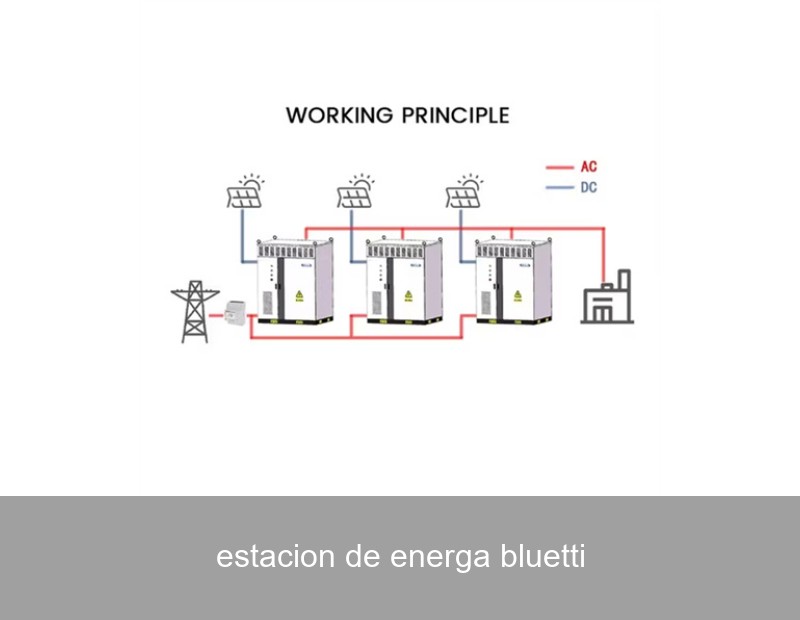
The process is a cycle: Charge (from grid or sun) → Store (in the high-density battery) → Invert & Deliver (via intelligent outlets). It’s a seamless microcosm of how larger, whole-property energy storage systems operate.
BLUETTI Power Station vs. Traditional Generators: A Clear Comparison
| Feature | BLUETTI (Battery) Power Station | Traditional Gas Generator |
|---|---|---|
| Noise Level | Silent (0-50 dB) | Very Loud (65-95 dB) |
| Emissions | Zero (Safe for indoors) | High CO2 & Fumes (Outdoor use only) |
| Maintenance | Minimal | High (Oil changes, filter replacements) |
| Start-up Time | Instantaneous | Pull-start, can be unreliable |
| Fuel Source | Solar & Grid (Free/Renewable) | Gasoline/Propane (Ongoing cost) |
| Lifespan | Long (5-10+ years, 3000+ cycles) | Shorter, degrades with use |
For most residential backup needs, especially for powering sensitive electronics and maintaining a quiet home environment, battery-based systems are becoming the preferred choice.

Image Source: Unsplash - A portable power station enables clean energy access anywhere.
Key Applications: When Do You Need a BLUETTI Station?
- Emergency Home Backup: Keep lights, communication devices, and a refrigerator running during grid outages caused by storms or blackouts.
- Outdoor Recreation & RV Life: Power your campsite, charge drones, cameras, and run small appliances off-grid.
- Mobile Work & Creative Projects: A reliable power source for tools, lighting, and equipment at remote job sites or for film and photography.
- Daily Power Bill Management: Some users pair a large-capacity station with solar panels to offset daytime grid usage, charging from the sun and using the stored energy during peak, expensive evening hours.
Real-World Impact: A Case Study from California, USA
The theoretical benefits become concrete when looking at real users. Consider the case of a homeowner in Sonoma County, California—an area prone to Public Safety Power Shutoffs (PSPS) due to wildfire risk. In 2022, during a scheduled 48-hour PSPS event, a family relied on a BLUETTI AC200MAX unit paired with two 200W solar panels.
- Devices Powered: A full-size refrigerator (intermittently), a modem/router, multiple phones/laptops, LED lighting, and a small coffee maker.
- Performance Data: The system maintained these critical loads for the full 48 hours. By using solar recharge during daylight hours, they avoided depleting the unit's 2,048Wh capacity, effectively creating a self-sustaining microgrid for their essentials.
- Outcome: The family avoided spoiled food, maintained contact with emergency services, and preserved a sense of normalcy and comfort during the outage. The total fuel cost was $0, and the operation was completely silent and safe inside their garage.
This mirrors, on a small scale, the resilience that Highjoule provides at the commercial and industrial level with our containerized battery energy storage systems (BESS), which can keep entire businesses or community microgrids operational during grid disturbances.
Choosing the Right Power Station: Capacity, Power, and Features
Navigating specs can be confusing. Here’s a quick guide:
- Capacity (Wh): The "size of the fuel tank." A 500Wh unit can theoretically run a 50W device for 10 hours. List your essential devices' wattage and required runtime to calculate your needs.
- Power Output (W): The "width of the hose." This determines what you can run. A 1,000W inverter can start a refrigerator (which has a high startup surge), while a 200W unit might only handle smaller electronics.
- Chemistry: Prioritize LiFePO4 for long-term value and safety.
- Solar Charging Input: If going off-grid, ensure high solar input wattage for faster recharging.
The Future of Energy Storage: Beyond the Portable Unit
The innovation in portable power stations is a direct reflection of the massive acceleration in the broader energy storage sector. According to the International Energy Agency (IEA), global grid-scale battery storage capacity is set to multiply exponentially this decade, driven by falling costs and policy support. The core technology—safer, longer-lasting batteries, smarter management software—trickles down from utility-scale to residential and portable applications. The future is integrated: imagine your EV battery, your home battery (like Highjoule's HOMESERIES), and your portable power station all communicating to optimize your energy usage, store excess solar, and provide unmatched resilience.

Image Source: Unsplash - Integrated home energy systems with solar and storage are the future.
Highjoule's Expertise: Scaling from Personal to Grid-Level Solutions
While portable units empower individuals, the challenges of energy security and sustainability are solved at a systemic level. This is where Highjoule, as a global advanced energy storage system provider since 2005, operates. We see the BLUETTI power station as a vital component in a larger energy ecosystem.
Our expertise lies in engineering robust, intelligent storage solutions for larger demands:
- Highjoule HOMESERIES: Whole-house battery systems that seamlessly integrate with solar installations, providing automatic backup power and significant bill savings through intelligent energy management.
- Commercial & Industrial (C&I) BESS: Tailored systems that help businesses reduce peak demand charges, participate in grid services, and ensure operational continuity.
- Microgrid Solutions: Designing and deploying independent energy networks that combine solar, wind, and large-scale battery storage for communities, islands, or industrial campuses, achieving true energy independence.
The same principles of battery safety, cycle life, and intelligent management that you look for in a portable device are engineered into our large-scale systems with even greater rigor. We bridge the gap between personal power and grid stability.
Ready to Take Control of Your Energy Future?
Whether you're researching your first portable power station for weekend adventures or your business is evaluating a multi-megawatt battery storage system to lock in energy costs and reduce carbon footprint, the journey begins with understanding the technology. The question is no longer if battery storage is needed, but how it will be integrated into your life or operations. What would you power first if you had a reliable, silent, and clean energy source at your fingertips, right now?
 Inquiry
 Online Chat