


Understanding the Lithium Battery Price in South Africa: A Gateway to Energy Freedom
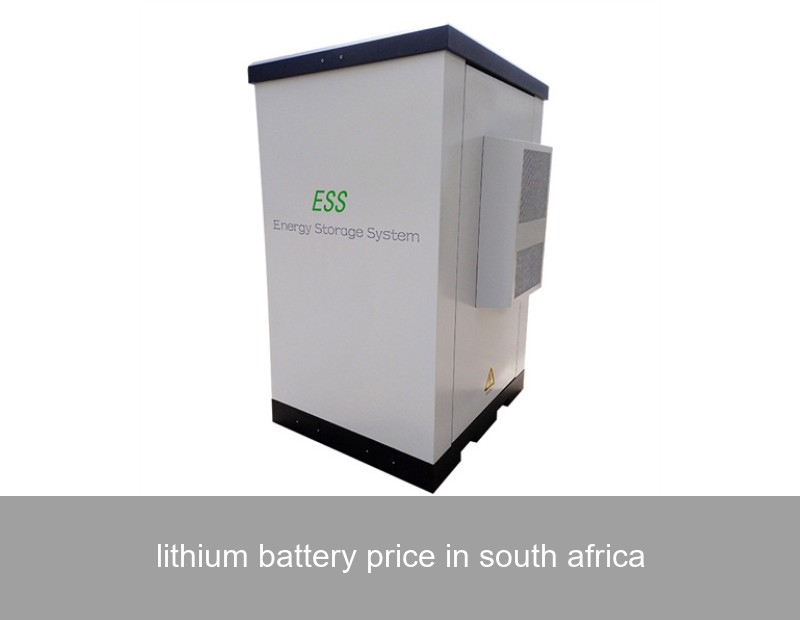
If you're a homeowner or business owner in South Africa, you've lived with a unique reality: load-shedding. It's not just an inconvenience; it's a disruption to daily life, productivity, and economic growth. For years, the high upfront cost of energy storage felt like an insurmountable barrier. But a quiet revolution is underway. The conversation is shifting from "Can we afford backup power?" to "What's the best value solution?" And at the heart of this shift is the evolving lithium battery price in South Africa. This trend isn't just about rand and cents; it's about unlocking reliable, sustainable power for millions. Let's unpack what's driving this change and what it truly means for your energy resilience strategy.
The Downward Trajectory: What's Driving the Lithium Battery Price in South Africa?
Globally, lithium-ion battery pack prices have fallen dramatically, dropping by over 90% in the last decade according to BloombergNEF's analysis. While South Africa's market has its own nuances—import duties, logistics, and currency fluctuations—the global tide is lifting local boats. The declining lithium battery price in South Africa is a result of several powerful, interconnected forces.
1. Supply Chain Maturation & Manufacturing at Scale
Think of it like the evolution of flat-screen TVs. What was once a luxury item is now commonplace due to massive, optimized factories. Lithium battery production has followed a similar path. Gigafactories around the world are achieving unprecedented economies of scale. This increased output, coupled with a more resilient and diversified supply chain for raw materials like lithium, cobalt, and nickel, is steadily applying downward pressure on costs worldwide, benefits that are gradually translating to the South African market.

Image: Advanced, automated manufacturing is key to driving down battery costs. (Credit: ThisisEngineering RAEng / Unsplash)
2. Technological Advancements & Energy Density
It's not just about making batteries cheaper; it's about making them better. Innovations in cell chemistry, such as Lithium Iron Phosphate (LFP), have become mainstream. LFP batteries offer excellent cycle life, superior thermal stability (a crucial safety feature), and are free of cobalt, making them more cost-effective and ethical. Furthermore, energy density—how much power you can store in a given space—keeps improving. This means a battery system installed today is more powerful, longer-lasting, and often more affordable per kilowatt-hour (kWh) than a system from just five years ago.
3. Market Dynamics & Local Competition
South Africa's acute energy needs have created a booming market. This demand attracts more international and local suppliers, fostering healthy competition. As a global leader, Highjoule has been part of this ecosystem, bringing our 18+ years of expertise to the region. Our approach is to offer not just a commodity battery, but a complete, intelligent Battery Energy Storage System (BESS). While the core component cost is trending down, the real value for customers lies in the total system performance, integration, and smart management—areas where Highjoule's solutions excel for commercial, industrial, and residential applications.
From Theory to Reality: A Johannesburg Business Park Case Study
Let's move beyond trends and look at real numbers. Consider a medium-sized business park in Johannesburg facing 4-6 hours of load-shedding daily. Running diesel generators was costing over R 85,000 per month in fuel and maintenance, not to mention the carbon emissions and noise.
In 2023, the management opted for a phased transition to solar-plus-storage. They installed a 500kW solar PV array coupled with a 1MWh Highjoule IntelliBESS solution. The system was designed to power critical common-area loads and provide partial backup to tenants during outages.
| Metric | Before (Diesel Only) | After (Solar + Highjoule BESS) |
|---|---|---|
| Monthly Energy Cost (Backup) | ~R 85,000 | ~R 12,000 (Grid top-up & system maintenance) |
| Monthly CO2 Emissions | ~25 tonnes | ~2 tonnes |
| Payback Period | N/A (Ongoing cost) | Estimated 4.2 years |
| System Uptime During Load-shedding | ~95% (Generator start delays) | 100% (Seamless transition) |
The project's success hinged on a nuanced analysis of the lithium battery price in South Africa as part of a total lifecycle cost. The higher initial investment in a quality, intelligent system was offset by massive operational savings, reliability, and sustainability gains. The Highjoule system's AI-driven energy management also optimizes solar self-consumption, further reducing grid dependence.
Looking Beyond the Sticker Price: What Truly Matters?
Focusing solely on the lowest rand-per-kWh battery quote can be a costly mistake. The true cost of ownership is defined by performance, safety, and longevity.
System Quality & Degradation
A cheap battery may degrade rapidly, losing 30% of its capacity in a few years, while a premium-grade LFP battery, like those used in Highjoule systems, can retain over 80% capacity after 6,000 cycles. Always ask for guaranteed cycle life and degradation rates in the warranty.
Integrated Safety & Thermal Management
Lithium batteries are safe when designed and managed correctly. Look for systems with robust Battery Management Systems (BMS), cell-level monitoring, and passive or active thermal control. Highjoule's solutions incorporate multi-layer safety protocols, ensuring stable operation even in South Africa's diverse climates.

Image: Professional installation and integrated safety systems are non-negotiable. (Credit: American Public Power Association / Unsplash)
The Intelligence Layer: It's About Brains, Not Just Brawn
This is where leading providers add immense value. A "dumb" battery just stores power. An intelligent BESS, like Highjoule's platform, makes decisions. It can:
- Prioritize solar charging during the day.
- Dispatch power during peak tariff hours to save money (time-of-use arbitrage).
- Provide grid services in the future.
- Be remotely monitored and updated for optimal performance.
This software intelligence maximizes your return on investment, making the discussion about lithium battery price in South Africa one about value, not just cost.
The Road Ahead: Where is the Lithium Battery Price in South Africa Headed?
Experts predict continued, though potentially slower, cost declines for lithium-ion batteries as technology improves. For South Africa, the future is also about localization and policy. The Department of Mineral Resources and Energy has outlined plans to support renewable integration. As local assembly and component sourcing grow, some supply chain costs could stabilize further. The real game-changer will be the evolution of the electricity market towards more decentralized, traded energy—a world where your battery isn't just a backup, but a revenue-generating asset. Highjoule's systems are designed with this future in mind, ensuring our customers' investments are future-proof.
Is Your Business or Home Ready to Reframe the Energy Cost Conversation?
The narrative around lithium battery price in South Africa is fundamentally optimistic. It's a story of increasing accessibility to technology that provides control, security, and sustainability. The question is no longer if you can consider energy storage, but how to select the right partner for this 15+ year investment. Will you choose based on the lowest initial price, or will you evaluate the total value—encompassing safety, intelligence, lifecycle cost, and the provider's global expertise in delivering reliable power solutions?
What specific energy challenge—be it unpredictable outages, soaring peak tariffs, or a sustainability goal—is most critical for you to solve in the next 12 months?
 Inquiry
 Online Chat