


Lithium Ion Battery Storage Temperature: The Silent Guardian of Performance and Safety
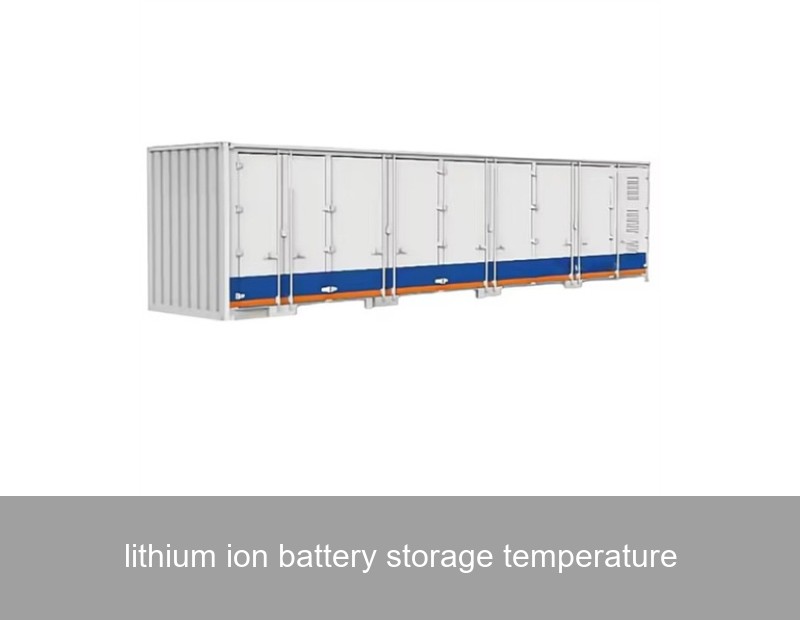
You've invested in a state-of-the-art lithium-ion battery energy storage system (BESS). You're expecting peak performance, a long lifespan, and, above all, safety. But did you know that a single, often overlooked factor can dramatically influence all three? We're talking about lithium ion battery storage temperature. It's not just about comfort; it's the fundamental environmental variable that dictates the health, efficiency, and longevity of your energy storage investment. For businesses, homeowners, and grid operators across Europe and the U.S., understanding this relationship is key to unlocking true value. At Highjoule, with nearly two decades of expertise in advanced energy storage, we engineer intelligent thermal management into every system because we know: controlling temperature is controlling destiny.
Table of Contents
- The Problem: Why Temperature is a Battery's Biggest Challenge
- The Science: How Temperature Dictates Battery Chemistry
- Finding the Sweet Spot: The Optimal Storage & Operation Range
- Real-World Impact: A Case Study from Southern Europe
- The Highjoule Solution: Proactive Thermal Management Built-In
- Best Practices for Battery Storage Temperature Management
The Problem: Why Temperature is a Battery's Biggest Challenge
Imagine your battery as a bustling chemical factory. Temperature is the pace at which this factory operates. Too cold, and the workers (lithium ions) move sluggishly, refusing to do their job. Too hot, and they become overactive, leading to chaotic reactions, accelerated wear and tear, and in extreme cases, thermal runaway—a dangerous chain reaction. This isn't theoretical. Studies consistently show that operating a lithium-ion battery at 35°C (95°F) versus 25°C (77°F) can double its rate of capacity degradation. For a system expected to last 15+ years, improper thermal management can cut its useful life and financial return in half.
The Science: How Temperature Dictates Battery Chemistry
Let's break down the effects across the temperature spectrum:
| Temperature Condition | Impact on Battery Chemistry | Resulting Performance Issues |
|---|---|---|
| Too Cold (<0°C / 32°F) | Increased electrolyte viscosity, reduced ionic conductivity. Lithium plating on the anode. | Drastic loss in usable capacity, high internal resistance, slow charging, permanent damage from plating. |
| Ideal (15°C - 25°C / 59°F - 77°F) | Stable, efficient electrochemical reactions. Minimal side reactions. | Maximum capacity, optimal charge/discharge rates, longest projected lifespan. |
| Too Hot (>35°C / 95°F) | Accelerated Solid Electrolyte Interphase (SEI) growth, electrolyte decomposition, cathode degradation. | Accelerated capacity fade, increased risk of thermal runaway, higher safety system demands. |
The key takeaway? Storing or cycling a battery outside its happy zone doesn't just temporarily lower performance—it causes cumulative, irreversible damage. Every hour spent at an elevated temperature chips away at the battery's total cycle life.

Image: Proactive thermal monitoring is critical for large-scale systems. Credit: ThisisEngineering RAEng via Unsplash.
Finding the Sweet Spot: The Optimal Storage & Operation Range
For long-term health, the consensus among battery experts is clear:
- Optimal Operating Temperature: 15°C to 25°C (59°F to 77°F). This is the target for daily charge/discharge cycles.
- Acceptable Storage Temperature (Long-term): 10°C to 30°C (50°F to 86°F), with a state of charge (SOC) around 50% for maximum calendar life.
- Critical Limits: Systems should have safeguards to prevent operation below -5°C (23°F) and above 45°C (113°F).
But how do you maintain this in a non-climate-controlled garage in Texas or during a Scandinavian winter? Passive cooling and heating are insufficient. This is where integrated, intelligent Battery Management Systems (BMS) with thermal control become non-negotiable.
Real-World Impact: A Case Study from Southern Europe
Consider a commercial winery in Andalusia, Spain. They installed a 100 kWh lithium-ion BESS in 2020 to manage peak shaving and use solar power at night. The storage container was placed in a shaded area but faced summer ambient temperatures regularly exceeding 40°C (104°F). The initial system had only basic vent fans.
The Data Tells the Story: Within 18 months, data logging showed:
- A 22% faster-than-expected capacity degradation.
- Internal battery temperatures sustained at 15-20°C above ambient during afternoon cycling.
- Increased cooling system runtime, leading to higher parasitic load (energy used to cool itself).
The Solution & Outcome: The winery partnered with Highjoule to retrofit an Active Thermal Management System (ATMS) onto their installation. This liquid-based cooling/heating system maintains a steady 22°C (72°F) coolant loop around the battery racks. After one year post-retrofit:
- Capacity degradation rate returned to manufacturer specifications.
- System efficiency (round-trip) improved by 4% due to reduced internal resistance.
- The projected lifespan of the asset was extended by an estimated 5 years, securing the ROI.
This case underscores that lithium ion battery storage temperature control isn't an optional extra; it's core to the economic equation.
The Highjoule Solution: Proactive Thermal Management Built-In
At Highjoule, we design our commercial, industrial, and residential storage solutions with the philosophy that thermal management is a first-class design requirement, not an afterthought. Our systems, like the Highjoule H-Series Commercial ESS, feature:
- Climate-Adaptive Liquid Cooling: Unlike simple air fans, our closed-loop liquid system actively removes heat from the core of battery cells, maintaining optimal temperature with 40% greater efficiency than passive methods.
- Predictive Thermal Algorithms: Our proprietary BMS doesn't just react to temperature—it predicts it. By analyzing charge/discharge schedules, weather forecasts, and historical data, it pre-cools or pre-heats the battery to prepare for upcoming events.
- Zonal Temperature Control: We monitor and manage temperature at the cell, module, and rack level, ensuring no "hot spots" develop that could lead to uneven aging or safety concerns.
- Wide Operational Envelope: Highjoule systems are rigorously tested to perform reliably from -20°C to 50°C ambient, making them suitable for diverse climates from the Nordic countries to the American Southwest.

Image: Advanced liquid cooling systems, like those used by Highjoule, ensure uniform cell temperatures. Credit: American Public Power Association via Unsplash.
Best Practices for Battery Storage Temperature Management
Whether you're evaluating a system or maintaining an existing one, follow these guidelines:
- Location, Location, Location: Install indoor systems in a temperature-buffered space. For outdoor containers, ensure adequate shade, ventilation, and, if in extreme climates, a dedicated HVAC unit.
- Embrace the Data: Regularly review your BMS temperature logs. Look for trends and correlations between ambient temperature, usage, and internal pack temperatures.
- Seasonal Adjustments: In winter, if possible, schedule charging right before use to minimize time at low temperatures. In summer, avoid full, high-power discharges during the hottest part of the day.
- Professional Assessment: Have a qualified technician, like Highjoule's global service network, perform an annual "thermal health check" using FLIR cameras and data analytics.
For more on general battery safety and best practices, the U.S. Department of Energy provides valuable resources.
Your System's Silent Partner
Managing lithium ion battery storage temperature is a continuous, silent partnership between your hardware and its intelligence. It's the difference between an asset that depreciates prematurely and one that delivers reliable, safe power for decades. As grid demands increase and storage becomes ever more critical, the systems that thrive will be those that master their own microclimate.
Is your current storage system's thermal management strategy reactive or predictive? What data points are you tracking to ensure your investment is protected from its most persistent environmental foe?
 Inquiry
 Online Chat