


Why the Lithium Iron Phosphate Battery is Redefining Energy Storage Safety and Longevity
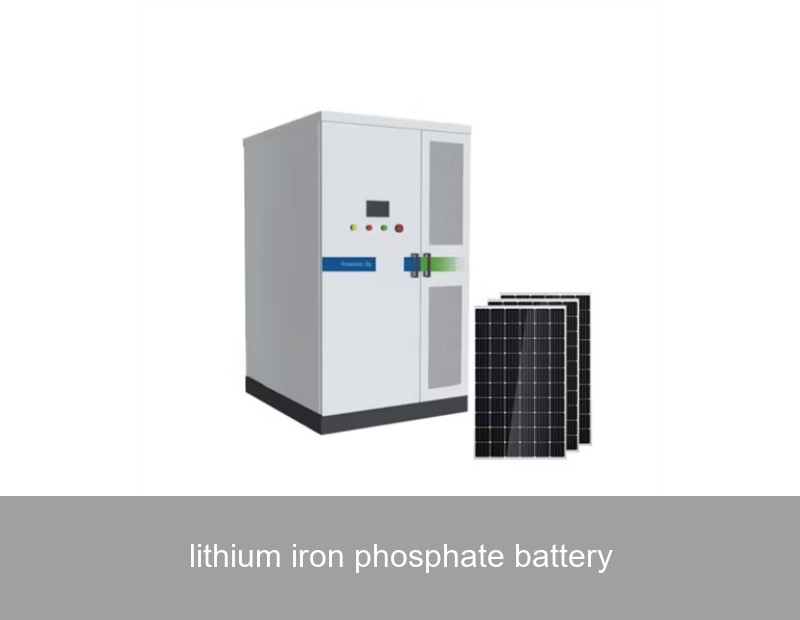
Have you ever wondered what's powering the quiet revolution in home energy storage or ensuring the smooth operation of a remote microgrid? More often than not, the answer lies in a specific type of battery chemistry: the lithium iron phosphate battery, or LFP. While the broader lithium-ion family gets most of the headlines, LFP technology is emerging as the unsung hero for applications where safety, lifespan, and reliability aren't just preferences—they're absolute requirements. For homeowners, businesses, and communities looking to harness renewable energy, the choice of battery chemistry fundamentally shapes the security and economics of their investment. Let's explore why LFP is becoming the cornerstone of modern, sustainable power solutions.
Table of Contents
- What is a Lithium Iron Phosphate (LFP) Battery?
- LFP vs. Other Lithium Chemistries: A Clear Comparison
- The Unmatched Safety Profile: Why Chemistry Matters
- Longevity and Total Cost: The LFP Economic Advantage
- Real-World Impact: A California Microgrid Case Study
- Highjoule's Commitment: Engineering with LFP at the Core
What is a Lithium Iron Phosphate (LFP) Battery?
At its heart, a lithium iron phosphate battery is a type of lithium-ion battery that uses lithium iron phosphate (LiFePO₄) as the cathode material. The anode is typically made of graphite. This specific chemistry, patented in the 1990s, creates an exceptionally stable crystal structure. Think of it as a very orderly and robust framework for lithium ions to move in and out of during charging and discharging. This inherent stability is the source of LFP's legendary safety and long cycle life, setting it apart from its cousins like NMC (Nickel Manganese Cobalt) or NCA (Nickel Cobalt Aluminum).
LFP vs. Other Lithium Chemistries: A Clear Comparison
Choosing a battery is a trade-off. To understand where LFP excels, let's look at the key metrics:
| Feature | Lithium Iron Phosphate (LFP) | Nickel-Manganese-Cobalt (NMC) |
|---|---|---|
| Energy Density | Moderate (~120-160 Wh/kg) | High (~150-220 Wh/kg) |
| Safety & Thermal Stability | Excellent. Very high tolerance to heat, resistant to thermal runaway. | Good, but more prone to thermal issues under stress. |
| Cycle Life | Exceptional (3,000 - 7,000+ cycles to 80% capacity) | Good (1,000 - 2,000+ cycles to 80% capacity) |
| Cost | Lower raw material cost (iron, phosphate). Often better long-term value. | Higher raw material cost (cobalt, nickel). | Environmental & Ethical Impact | Uses abundant, non-toxic materials. No critical cobalt. | Supply chain depends on scarce, expensive cobalt with ethical concerns. |
As the table shows, while NMC might pack more energy into a slightly smaller space (beneficial for electric vehicles), LFP's strengths align perfectly with stationary energy storage: safety, longevity, and sustainable economics.
The Unmatched Safety Profile: Why Chemistry Matters
You wouldn't install a fuel tank with a low ignition point inside your home. The same principle applies to your battery storage system. The LFP chemistry is intrinsically safer. Its strong phosphate bonds require much more heat to break down, making it highly resistant to thermal runaway—a chain reaction that can lead to fires in less stable batteries. For residential and commercial installations, especially when integrated into living or working spaces, this peace of mind is invaluable. It’s a primary reason why leading providers like Highjoule adopt LFP chemistry for their residential and commercial energy storage systems, ensuring robust protection is built into the very foundation of the product.

Image Source: Unsplash (Representative image of modern battery installation)
Longevity and Total Cost: The LFP Economic Advantage
Let's talk numbers. A typical quality LFP battery can deliver over 6,000 cycles while retaining 80% of its original capacity. If you cycle your home battery once daily, that translates to over 16 years of reliable service. This extraordinary cycle life dramatically reduces the levelized cost of storage (LCOS)—the total cost of owning and operating the battery per unit of energy discharged over its lifetime. You're not just buying a battery for today; you're investing in a durable asset that will support your energy independence for decades. This aligns perfectly with Highjoule's design philosophy for products like the Highjoule H2 Series for homes and the Highjoule C&I PowerStack for businesses, where maximizing return on investment through durable, low-maintenance technology is paramount.
Real-World Impact: A California Microgrid Case Study
The theory is compelling, but what does it look like on the ground? Consider the Stone Edge Farm Microgrid in Sonoma, California. This operational farm and winery sought complete energy resilience against wildfires and Public Safety Power Shutoffs (PSPS).
- Challenge: Ensure 100% uptime for critical operations, including water pumping and refrigeration, during extended grid outages.
- Solution: Implementation of a sophisticated microgrid featuring a substantial lithium iron phosphate battery storage system (over 400 kWh).
- Data & Outcome: During a multi-day grid outage, the LFP-based storage system provided seamless backup power. The system's stability and deep cycling capability were crucial. Project data indicates the batteries regularly cycle between 20% and 100% state of charge without degradation concerns, a testament to LFP's robustness. You can explore more about microgrid resilience from the National Renewable Energy Laboratory (NREL).
This case highlights how LFP's reliability is not just a datasheet promise but a critical enabler of real-world energy security.
Highjoule's Commitment: Engineering with LFP at the Core
Since 2005, Highjoule has been at the forefront of intelligent energy storage. Our experience across continents has solidified a core belief: sustainable power must be safe, reliable, and economically sound. That’s why LFP chemistry is the foundation for our core product lines. We don't just source LFP cells; we engineer complete systems around their strengths.
Our Residential H2 Series integrates LFP batteries with advanced power conversion and AI-driven energy management software. This allows homeowners in Europe and North America to maximize solar self-consumption, reduce electricity bills, and gain backup power—all with a system designed for a 20+ year lifespan. For our Commercial & Industrial and Microgrid solutions, we build modular LFP-based storage arrays. These systems provide critical services like peak shaving, demand charge reduction, and grid stability, all while operating safely in demanding environments. Highjoule's system-level engineering ensures that the innate benefits of the lithium iron phosphate battery are fully realized and enhanced for every application.

Image Source: Unsplash (Representative image of solar farm with storage)
Looking Ahead: What Does LFP Enable for Our Energy Future?
The rise of LFP technology is more than a trend; it's a fundamental shift enabling a more resilient and renewable-powered world. As grid demands evolve and the need for decentralized energy grows, the safety and longevity of LFP make it the ideal candidate for mass deployment. From empowering a single household to weather a storm to stabilizing a regional grid with high solar penetration, this chemistry is proving its mettle.
So, as you consider taking control of your energy future, whether for your home or your business, we leave you with this question: When evaluating energy storage, are you prioritizing the short-term specs or the long-term partnership with a technology designed to protect and perform for decades to come?
 Inquiry
 Online Chat