


Powering Through: Your Guide to a Reliable Solar System with Battery Backup in Sri Lanka
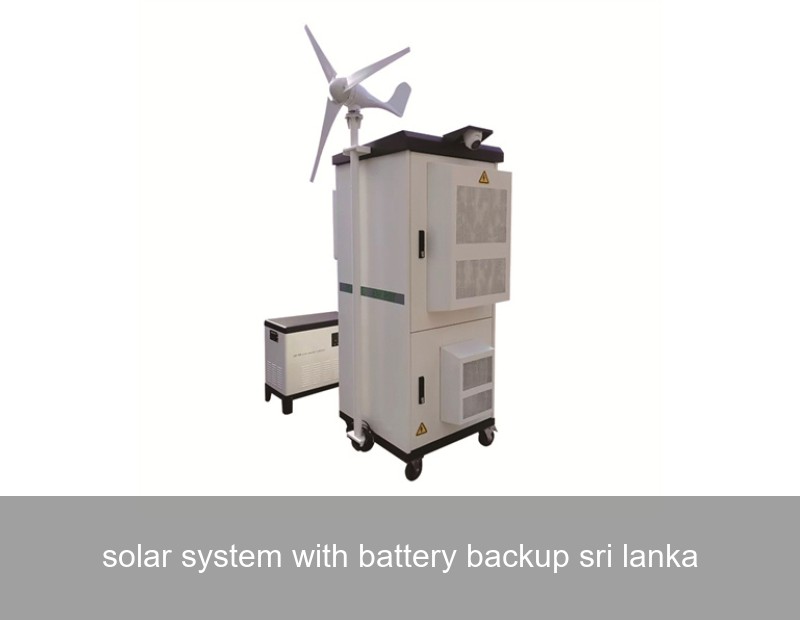
Imagine this: you've invested in solar panels for your home in Colombo or your tea factory in Kandy. The sun is shining, your meter is spinning backwards, and all is well. Then, the grid goes down—a not uncommon event in Sri Lanka. Suddenly, your solar panels stop too, leaving you in the dark. This frustrating phenomenon is a key reason why more homeowners and businesses across Sri Lanka are now looking beyond simple solar and opting for a robust solar system with battery backup. This integrated solution doesn't just save money; it ensures continuity, turning solar from a part-time supplement into a full-time power partner. For a nation navigating an energy transition, this technology is a game-changer.
Table of Contents
- The Sri Lanka Context: Why Solar Alone Isn't Enough
- How a Solar Battery Backup System Works: The Heart of Energy Independence
- Key Components of a Modern Solar-Plus-Storage System
- Case Study: A Hotel in Kegalle Finds 24/7 Power
- Choosing the Right System for Your Sri Lankan Home or Business
- Highjoule's Smart Solutions for the Sri Lankan Market
- The Future Outlook for Solar & Storage in Sri Lanka
The Sri Lanka Context: Why Solar Alone Isn't Enough
Sri Lanka's push for renewable energy is impressive, with solar playing a starring role. However, the national grid, while improving, still faces challenges with stability and load-shedding. Traditional grid-tied solar systems are designed to shut off during a blackout for safety reasons—to prevent feeding electricity back into the grid and endangering utility workers. This safety feature, ironically, leaves you powerless just when you need it most.
The data speaks volumes: According to a 2023 report, power outages, both scheduled and unscheduled, remain a significant cost for businesses and a disruption to daily life. The economic cost of unreliable power is substantial, affecting productivity, perishable goods, and overall quality of life. This is where adding a battery energy storage system (BESS) transforms the equation. It severs that dependency, allowing your solar panels to keep powering your essential loads independently during an outage.
How a Solar Battery Backup System Works: The Heart of Energy Independence
Think of your solar system with battery backup as a sophisticated energy manager. During the day, your solar panels generate DC electricity. An inverter converts this to AC power to run your appliances. Any excess energy, instead of being solely sent to the grid, is diverted to charge your battery bank. When the sun sets or the grid fails, the system automatically switches to drawing power from the batteries. It's a seamless transition that often happens in milliseconds—so fast your lights might not even flicker.
The core intelligence lies in the hybrid inverter or the separate system controller. This device constantly monitors grid status, solar production, battery charge, and household demand, making split-second decisions to optimize energy flow. Modern systems even allow you to set preferences via a smartphone app, like reserving a certain amount of battery capacity specifically for nighttime use or the next anticipated power cut.

Image: A modern lithium-ion home battery system, similar to solutions deployed in Sri Lanka. Source: Unsplash
Key Components of a Modern Solar-Plus-Storage System
- Solar Panels: The primary energy harvesters. High-efficiency monocrystalline panels are often recommended for Sri Lanka's climate to maximize roof space.
- Hybrid Inverter or Inverter + Controller: The system's brain. It manages DC-AC conversion and directs energy between solar, battery, grid, and home loads.
- Battery Bank: The energy reservoir. Lithium-ion (LiFePO4) batteries are now the standard for their long lifespan (10+ years), depth of discharge, and safety profile compared to older lead-acid types.
- Battery Management System (BMS): A critical safety and longevity component embedded in the battery that monitors cell voltage, temperature, and state of charge.
- Monitoring System: Provides real-time and historical data on energy production, consumption, and savings via a web portal or app.
Case Study: A Hotel in Kegalle Finds 24/7 Power
Let's look at a real-world application. The River View Resort in Kegalle, a mid-sized hotel catering to both local and international tourists, faced a critical problem: unpredictable power cuts were disrupting guest experience, spoiling food in cold storage, and forcing reliance on expensive, noisy diesel generators. In 2022, they decided to upgrade their existing 50kW solar array with a solar system with battery backup.
The solution included a 120kWh lithium-ion battery storage system paired with a set of advanced hybrid inverters. The results were transformative:
| Metric | Before System | After System Installation |
|---|---|---|
| Grid Dependency During Day | ~70% | ~10% (grid used only during peak demand or poor weather) |
| Generator Runtime | 6-8 hours/day | Less than 1 hour/month (for emergency testing) |
| Fuel Cost Savings | Baseline | Approx. LKR 450,000/month |
| Guest Complaints re: Power | Frequent | Zero since commissioning |
The hotel now uses solar to power daytime operations and charge the batteries. As evening falls and guest load increases, the system smoothly transitions to battery power, ensuring the restaurant, pool, and rooms remain fully operational without grid support. This case exemplifies how storage isn't just for outages; it's for intelligent, cost-effective energy management around the clock.
Choosing the Right System for Your Sri Lankan Home or Business
Sizing a system correctly is paramount. An undersized battery will leave you wanting more, while an oversized system may not offer a good return on investment. Key considerations include:
- Your Energy Consumption: Analyze your electricity bills to find your daily kWh usage.
- Backup Priorities: Do you need to back up the entire property (whole-home backup) or just critical loads (refrigerator, fans, lights, router)?
- Outage Duration: Consider the typical length of power cuts in your area.
- Future-Proofing: Are you planning to buy an electric vehicle or add air conditioning?
Consulting with a qualified, experienced installer who can perform a detailed site assessment and load audit is the most crucial step. They can model solar production for your specific location in Sri Lanka and design a system that meets your budget and resilience goals.
Highjoule's Smart Solutions for the Sri Lankan Market
As a global leader in advanced energy storage since 2005, Highjoule understands the unique demands of markets like Sri Lanka. Our products are engineered for reliability in diverse climates and grid conditions. For Sri Lankan homeowners and businesses seeking a superior solar system with battery backup, Highjoule offers integrated solutions featuring our H-PowerStack™ lithium-ion batteries and IntelliHub™ energy management system.
The H-PowerStack™ is built with robust LiFePO4 chemistry, ideal for high-cycle applications and warmer temperatures. It's modular, allowing you to start with a base capacity and expand as your needs grow. The heart of the system, the IntelliHub™, goes beyond simple switching. It uses predictive algorithms to learn your consumption patterns and optimize when to use solar, store energy, or draw from the grid, maximizing self-consumption and savings. For commercial and industrial applications, Highjoule's Microgrid Controller can even orchestrate multiple power sources—solar, battery, and generator—into a stable, independent microgrid, a perfect solution for factories, farms, and resorts.

Image: Commercial rooftop solar installation, a key component for business energy independence. Source: Unsplash
The Future Outlook for Solar & Storage in Sri Lanka
The trajectory is clear. As battery costs continue a long-term decline and grid modernization progresses, solar-plus-storage will move from a premium resilience product to a standard, value-driven energy solution. Government policies and utility programs that encourage self-consumption and grid services (like feeding stored energy back during peak demand) will further accelerate adoption. The technology is evolving towards AI-driven systems that autonomously maximize economic returns.
For more in-depth information on global battery storage trends and technology, you can refer to authoritative sources like the International Energy Agency (IEA) or IRENA.
So, as Sri Lanka continues its journey towards a brighter energy future, the question isn't just about generating clean power, but about controlling it. What would uninterrupted power allow you to protect, create, or achieve in your home or business tomorrow?
 Inquiry
 Online Chat