


Understanding Lithium Solar Batteries Price in Kenya: A Smart Investment Guide
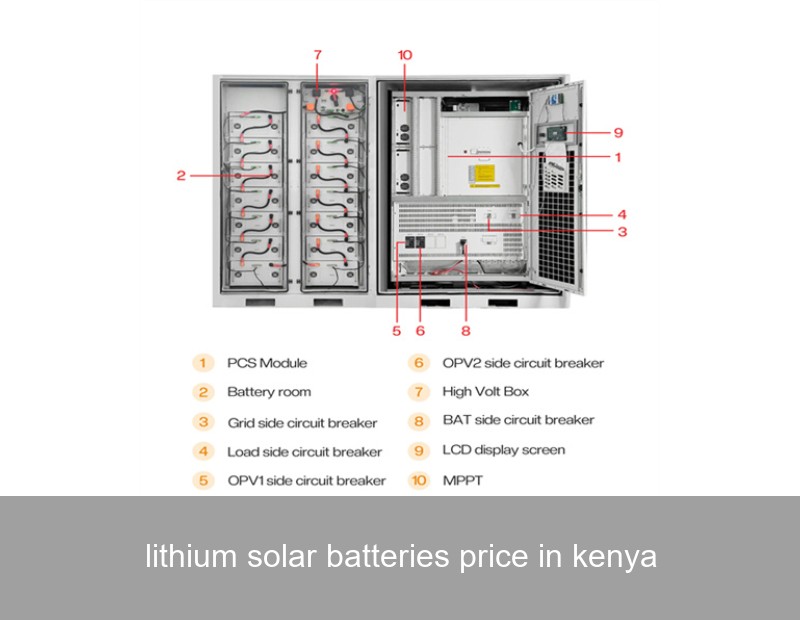
If you're exploring solar energy in Kenya, you've likely encountered a crucial question: what determines the lithium solar batteries price in Kenya, and is the investment truly worth it? As power needs grow and grid reliability remains a concern, Kenyans are increasingly turning to solar-plus-storage solutions. The upfront cost of a lithium-ion battery system can seem significant, but the real story unfolds when you look beyond the price tag. Let's demystify the costs, value, and long-term benefits of integrating lithium solar batteries into your energy plan.
Table of Contents
The Price Puzzle: More Than Just a Number
When you search for lithium solar batteries price in Kenya, you'll find a wide range. Quotes can vary from KES 80,000 to over KES 500,000 for a typical home system. This variance isn't random; it reflects differences in battery quality, capacity, lifespan, and intelligence. A cheaper battery might have a lower upfront cost but a shorter lifespan and lower usable capacity. The key metric isn't the initial price, but the Levelized Cost of Storage (LCOS)—the total cost of owning and operating the battery per kWh of electricity it delivers over its lifetime.
Think of it like buying a car. The sticker price is one thing, but fuel efficiency, maintenance costs, and resale value determine the real cost of ownership. Similarly, a premium lithium battery from a reputable provider like Highjoule, with a 10-year warranty and high cycle life, often proves more economical in the long run than a lesser-known alternative.
Breaking Down the Cost Components
What are you actually paying for? The lithium solar batteries price in Kenya is an amalgamation of several factors:
- Core Battery Technology: Lithium Iron Phosphate (LFP) is the dominant, safest chemistry for solar storage in Kenya, preferred over older NMC variants for its stability in warmer climates and longer cycle life.
- Battery Capacity & Depth of Discharge (DoD): Price scales with usable energy (kWh). A battery with a 5kWh capacity and 90% DoD offers more usable energy than one with 5kWh and 80% DoD.
- Inverter/Charger Integration: A hybrid inverter or a dedicated battery inverter is essential. Some systems, like Highjoule's integrated units, combine these for higher efficiency and simpler installation.
- Battery Management System (BMS): The brain of the system. A sophisticated BMS protects the battery, optimizes performance, and extends its life—a critical value-add often reflected in the price.
- Installation, Warranty, and After-Sales Support: Professional installation ensures safety and performance. A robust warranty (e.g., 10 years) and local technical support provide peace of mind and long-term value.
| System Component | Impact on Price | Highjoule's Value Proposition |
|---|---|---|
| Battery Cells (LFP Chemistry) | High - Core cost driver | Uses top-grade, automotive-grade LFP cells for maximum safety and longevity in Kenyan conditions. |
| Integrated Power Conversion | Medium-High | Our systems often include a high-efficiency hybrid inverter, reducing overall system cost and complexity. |
| Smart Energy Management | Medium - Adds intelligence | Proprietary software allows for load scheduling, grid interaction optimization, and remote monitoring. |
| Warranty & Local Support | Built into price | Comprehensive warranty backed by a global company with a network of local partners for reliable service. |
A Kenyan Case Study: From Cost to Return
Let's move from theory to practice. Consider a mid-sized dairy farm in Nakuru County. Facing daily power outages and high grid tariffs (approx. KES 25/kWh), the farm invested in a 20kW solar PV array coupled with a 40kWh Highjoule lithium-ion battery storage system.
- Challenge: Unreliable power jeopardized milk refrigeration and operational continuity.
- Solution: A Highjoule HES-40 commercial storage system with intelligent controls. Results (Data after 18 months):
- Grid electricity consumption reduced by 85%.
- Complete power backup for critical cooling loads.
- Payback period calculated at 5.2 years, factoring in saved grid costs, avoided diesel generator expenses (fuel & maintenance), and increased productivity.
- The system is projected to operate for over 12 years, delivering significant "free" energy after the payback point.
This case illustrates that the lithium solar batteries price in Kenya is an investment that generates a tangible financial return, not just an expense. It transforms energy from a volatile cost into a managed asset. For more on Kenya's energy landscape, see the International Energy Agency's Kenya overview.

Image Source: Unsplash - Representative image of solar installation in an agricultural setting.
Highjoule's Tailored Solutions for the Kenyan Market
At Highjoule, we understand that the Kenyan market requires robust, adaptive, and intelligent storage solutions. Our approach to the lithium solar batteries price in Kenya conversation is centered on delivering total lifetime value. Our product range for the commercial and industrial sector, like the HES Series, is engineered for high cycle life and peak performance in diverse climates.
For residential and small business applications, our modular Highjoule HomePower systems allow for scalable capacity. You can start with a base unit and expand as your needs and budget grow. This modularity directly addresses the upfront cost concern by providing a flexible entry point. All our systems are managed by the Highjoule EnergyOS™, a smart platform that learns your consumption patterns, maximizes self-consumption of solar power, and can even enable participation in future grid services. By prioritizing system intelligence and durability, we ensure that every shilling invested yields the highest possible return in energy security and savings.
Making the Decision: Key Factors Beyond Price
When evaluating quotes for lithium solar batteries price in Kenya, ask these critical questions:
- What is the warranted cycle life and throughput? (e.g., 6,000 cycles at 90% DoD to 70% remaining capacity).
- Is the BMS designed for thermal management in warmer climates? Battery longevity in Kenya's climate is non-negotiable.
- Does the price include a compatible, high-efficiency inverter and professional commissioning?
- Is there local technical expertise for installation and maintenance? A battery without support is a future liability.
Authoritative resources like the U.S. Department of Energy's storage basics can help build your foundational knowledge.

Image Source: Unsplash - Close-up of a modern energy storage battery system.
Your Energy Future
The conversation about lithium solar batteries price in Kenya is ultimately a conversation about energy independence, business resilience, and long-term planning. With the right partner and a focus on quality and total cost of ownership, solar storage becomes a cornerstone of a modern, reliable, and cost-effective energy strategy.
What specific energy challenge—be it unpredictable bills, frequent outages, or a desire to go green—is driving you to consider solar batteries, and how can we help you model the true long-term value for your home or business?
 Inquiry
 Online Chat