


Navigating the Landscape of Top Solar Inverter Brands for Your Energy Independence
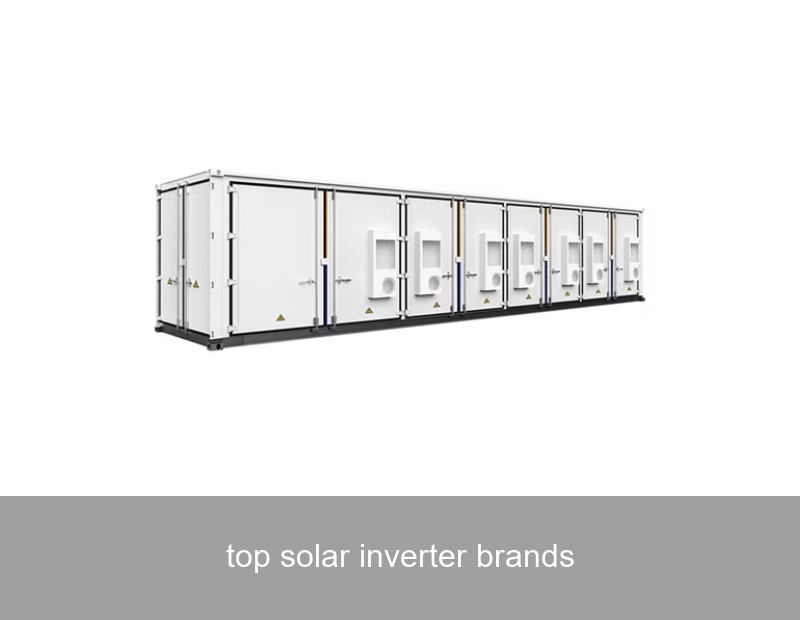
So, you've decided to harness the sun's power. You've researched panels, considered your roof's potential, and maybe even calculated some enticing savings. But here's a question that often gets overshadowed by glossy solar cell specs: what about the brain and the heart of the entire operation? We're talking, of course, about your solar inverter. Choosing among the top solar inverter brands isn't just a checkbox; it's arguably the most critical decision for your system's long-term performance, reliability, and return on investment. While panels capture sunlight, the inverter is the sophisticated maestro that converts that raw DC power into usable AC electricity for your home or business, all while managing safety, grid communication, and, increasingly, energy storage. Let's demystify what separates the market leaders from the rest.
The Heart of Your System: More Than Just Conversion
Think of your solar array as a team of athletes. The panels are the muscles, generating raw power. The inverter is the coach and the strategist. It doesn't just convert DC to AC (its primary job); it ensures every panel performs at its peak, protects your home and the grid from electrical faults, and provides the data insights you need to track your energy production and consumption. A top-tier inverter from one of the leading solar inverter brands maximizes energy harvest—even on cloudy days or with partial shading—ensures decades of reliable service, and seamlessly integrates with the smart energy ecosystems of tomorrow.

Image Source: Unsplash - A reliable inverter is the cornerstone of any efficient solar system.
Key Criteria for Evaluating Top Solar Inverter Brands
How do you cut through the marketing and identify a genuinely top performer? Here are the non-negotiable factors industry experts and seasoned installers prioritize:
- Efficiency: This is the golden metric. It represents the percentage of DC power from the panels that is successfully converted to AC. Top brands consistently offer peak efficiencies of 98% or higher. Every percentage point lost is energy—and money—literally vanishing into thin air.
- Reliability & Warranty: The inverter is the most likely component to need service. Leading brands back their products with extended warranties, often 10 to 25 years. This isn't just a promise; it's a reflection of confidence in their component quality and manufacturing.
- Technology Type: Do you need a traditional string inverter, module-level power electronics (MLPEs) like microinverters or DC optimizers, or a hybrid inverter? The best brand for you depends on your site's specifics (shading, roof orientation) and your goals (future battery storage).
- Monitoring & Smart Features: Comprehensive, user-friendly monitoring platforms are now standard among top solar inverter brands. Look for systems that offer real-time data, detailed analytics, and the ability to diagnose issues remotely.
- Grid Services & Future-Proofing: As grids modernize, inverters must be smart grid-ready. Features like advanced frequency-watt response, voltage regulation, and the seamless integration of battery storage are hallmarks of forward-thinking brands.
| Type | Best For | Key Advantage | Consideration |
|---|---|---|---|
| String Inverter | Simple, unshaded roofs; cost-effective systems. | Lower upfront cost, proven technology. | Performance can be limited by the weakest panel in the "string." |
| Microinverters | Complex roofs with shading, multiple orientations. | Panel-level optimization and monitoring, enhanced safety. | Higher initial investment per panel. |
| Hybrid Inverter | Anyone planning or considering battery storage. | All-in-one unit for solar + storage, often with backup power functionality. | Requires careful sizing for both solar and future battery capacity. |
A Closer Look at Leading Players
The global market for top solar inverter brands is dynamic, with established giants and innovative specialists. In Europe and North America, names like Fronius, SMA, and SolarEdge are often synonymous with quality and reliability for string and optimized string solutions. Enphase has virtually defined the microinverter category with its robust ecosystem. Meanwhile, companies like Huawei and Growatt have made significant inroads with technologically advanced and competitive offerings. According to industry reports from sources like Wood Mackenzie, these brands consistently lead in shipment volumes and technological adoption. But beyond the panel-level conversation, a new category of system-level intelligence is emerging, which is where companies like Highjoule redefine the value proposition.
The Highjoule Difference: Where Inverters Meet Intelligence
At Highjoule, we view the inverter not as a standalone component, but as the core intelligence hub of a comprehensive energy management system. Since 2005, our focus has been on integrating advanced power electronics with sophisticated software to deliver truly smart, efficient, and sustainable power solutions. While we partner with and support installations using the leading solar inverter brands, our expertise shines in how we orchestrate these components.
Our H-Energy Platform is designed to work seamlessly with top-tier hybrid inverters, layering on advanced energy arbitration logic. This means our system doesn't just convert and store energy; it makes millisecond-by-millisecond decisions on whether to use solar power directly, store it in our high-density battery systems, sell it back to the grid, or use it for critical backup. For commercial and industrial clients, this intelligence translates into substantial demand charge reduction and enhanced power quality. For residential users, it means maximizing self-consumption and achieving true energy independence. We ensure that whichever top inverter brand is right for your physical installation is fully leveraged by our digital brain to optimize your financial and energy outcomes.

Image Source: Unsplash - Integrated systems combining solar, inverters, and storage are the future of home energy.
Real-World Impact: A Case Study from Bavaria
Let's move from theory to practice. Consider a mid-sized dairy farm in Bavaria, Germany. They installed a 100 kW solar array using a reputable European string inverter brand. While production was good, they struggled with high evening energy costs and had no backup for critical cooling systems. Simply adding batteries wasn't enough; they needed a brain.
Highjoule's solution integrated their existing inverter with our H-ESS (Energy Storage System) and the H-Energy Platform. The results, monitored over 12 months, were compelling:
- Self-Consumption Rate Increased: From 35% to over 80%, drastically reducing grid purchases.
- Demand Charges Mitigated: By intelligently discharging the battery during short periods of peak load (like milking and cooling cycles), the farm reduced its grid demand peak by 40%, leading to significant monthly savings on capacity charges.
- Reliability Achieved: The system now provides seamless backup power for critical refrigeration, securing the farm's primary assets against grid outages.
This case, documented in partnership with the local utility, shows that the value of choosing a top solar inverter brand is multiplied when it's part of an intelligently managed system. The inverter's reliable conversion was a given; Highjoule's platform unlocked its full economic and operational potential. You can explore more about grid service functionalities in reports from the U.S. Department of Energy's Solar Energy Technologies Office.
The Future of Solar Inversion: Beyond Conversion
The trajectory for top solar inverter brands is clear: they are evolving into multi-functional energy management interfaces. The next generation will be defined by their software capabilities and grid interactivity. We're talking about inverters that can automatically form microgrids during outages, participate in real-time virtual power plants (VPPs) to balance regional grid load, and even communicate with your electric vehicle charger to optimize charging schedules based on solar production.
This is the frontier Highjoule is actively working on. Our ongoing R&D focuses on creating even more adaptive algorithms that can respond to real-time grid signals (like dynamic electricity pricing) and weather forecasts to pre-charge batteries before a cloudy period or a predicted grid stress event. It's about moving from passive conversion to active, predictive grid partnership.
So, as you evaluate the top solar inverter brands for your project, we invite you to ask a broader question: Is your goal just to install solar, or is it to achieve a resilient, optimized, and intelligent energy ecosystem? What energy challenge—be it soaring bills, unreliable power, or sustainability targets—are you truly aiming to solve?
 Inquiry
 Online Chat