


Power Station Panel Solar: The Modern Energy Hub for Your Home and Business
Have you ever looked at your rising electricity bill and wondered if there was a more self-sufficient way? Or perhaps you've been intrigued by the sight of solar panels on a neighbor's roof but weren't sure where the energy goes. The answer increasingly lies in a powerful combination: the power station panel solar system. This isn't just about generating clean electricity; it's about creating a personal, intelligent energy hub that captures, stores, and manages solar power for use anytime—day or night. For homeowners and businesses across Europe and the U.S., this integrated solution is transforming how we think about energy independence, resilience, and cost control.
Table of Contents
The Problem: Solar Power's Greatest Limitation
Traditional solar panel systems have a well-known Achilles' heel: they only produce energy when the sun is shining. This creates a fundamental mismatch. Your home's energy demand often peaks in the early morning and evening, while solar production soars in the middle of the day. Without a way to store that midday surplus, it gets exported to the grid, often for minimal compensation, leaving you to buy expensive power from the utility when your panels are idle.
This imbalance is more than an inconvenience. It means solar systems alone cannot provide backup power during grid outages—when the grid goes down, standard solar inverters shut off for safety. For businesses, this can mean lost revenue and operational chaos. For families, it can mean spoiled food, discomfort, and vulnerability.
The Solution: The Integrated Power Station
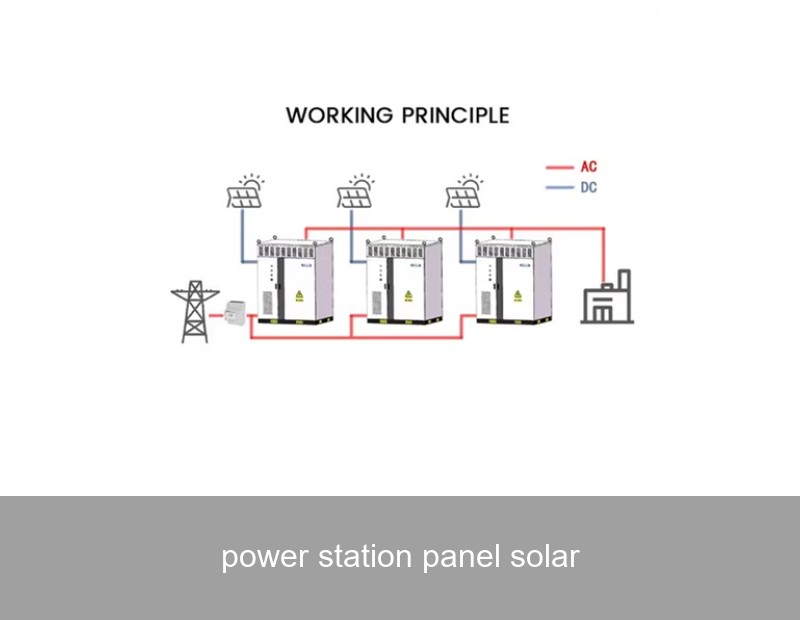
This is where the modern solar power station concept comes in. Think of it not as a simple set of panels, but as a complete, on-site energy ecosystem. It seamlessly integrates three core elements:
- Generation (The Panels): High-efficiency solar panels convert sunlight into direct current (DC) electricity.
- Storage (The Battery): A sophisticated battery energy storage system (BESS) captures excess solar energy for later use.
- Management (The Brain): An intelligent inverter and energy management system (EMS) orchestrates the entire flow, deciding when to charge the battery, power your home, or export to the grid.

This integration is where companies like Highjoule excel. With nearly two decades of experience since 2005, Highjoule designs smart, efficient, and sustainable power solutions that turn this concept into a reliable reality. Their systems are engineered to maximize self-consumption of solar energy, sometimes exceeding 80% or more, dramatically reducing reliance on the volatile grid.
Key Components of a Modern Solar Power Station
Let's break down the technology that makes a panel solar power station so effective.
1. Advanced Solar Panels
Today's panels are far more efficient and durable. Monocrystalline silicon panels, often with PERC (Passivated Emitter and Rear Cell) technology, are the industry standard for high-performance residential and commercial installations, offering efficiencies over 22%.
2. The Heart: The Battery Storage System
The battery is the cornerstone of the power station. Lithium-ion phosphate (LFP) chemistry has become the preferred choice for stationary storage due to its long lifespan, safety, and stability.
| Battery Consideration | Why It Matters |
|---|---|
| Usable Capacity (kWh) | Determines how much solar energy you can store for nighttime or outages. |
| Power Rating (kW) | Defines how many appliances you can run simultaneously from the battery. |
| Depth of Discharge (DoD) | A high DoD (e.g., 90%) means you can use more of the battery's stated capacity without harming it. |
| Cycle Life | Indicates how many charge/discharge cycles the battery is rated for, directly related to its warranty and longevity. |
Highjoule's storage solutions, like their H-Series residential batteries and MegaLine commercial systems, are built with these principles at their core. They feature high-cycle-life LFP cells, scalable capacity, and are designed for seamless integration with both new and existing solar arrays.
3. The Intelligence: Inverter & Energy Management
The inverter converts DC from the panels and battery to AC for your home. Modern hybrid inverters can do this while managing multiple energy sources. Coupled with smart software, like Highjoule's EnergyOS, the system learns your consumption patterns, weather forecasts, and electricity rates to optimize energy flow automatically. It can prioritize solar self-consumption, schedule battery charging during low-rate periods, and even participate in grid services where available.
A Real-World Case: The German Bakery's Resilience Story
Theory is one thing, but real data tells the compelling story. Consider a mid-sized artisan bakery in Bavaria, Germany. Facing frequent short grid fluctuations and high energy costs for their ovens and refrigeration, they installed a power station panel solar system in early 2022.
- System Size: 50 kW solar rooftop array + a 120 kWh Highjoule MegaLine battery storage system.
- Goal: Ensure uninterrupted production during grid issues and reduce energy costs.
- Result (12-month data): The bakery achieved 92% energy self-sufficiency. Their energy costs were reduced by 68% annually. Crucially, the system provided seamless backup power during 14 recorded grid micro-outages, preventing an estimated €15,000 in lost production and spoiled inventory. The system's intelligent management also allowed them to sell small amounts of stored power back to the grid during peak price hours, creating an additional revenue stream.
This case underscores the dual value proposition: resilience and economics. It's a powerful example of how modern storage moves solar from a supplemental energy source to a primary, controllable power station. You can explore more about Germany's energy transition and storage incentives on the Clean Energy Wire website.

Choosing the Right System for Your Needs
Whether for a home or a business, selecting a solar panel power station requires careful planning. Here are key questions to ask:
- What are your primary goals? (Bill savings, backup power, carbon footprint reduction?)
- What is your critical load? Identify the appliances or machinery that must stay on during an outage.
- Is your roof suitable for solar? Orientation, shading, and structural integrity are key.
- What are the local regulations and incentives? Programs like the U.S. Investment Tax Credit (ITC) or various European Union grants can significantly impact ROI.
This is where partnering with an experienced provider like Highjoule is invaluable. They don't just sell hardware; they provide end-to-end solutions from initial energy audit and system design to professional installation, commissioning, and ongoing monitoring. Their expertise ensures your system is sized correctly, compliant with all local codes, and optimized for your specific energy profile and goals.
The Future is Intelligent and Decentralized
The evolution of the power station panel solar is heading towards even greater intelligence and grid interaction. We are moving towards virtual power plants (VPPs), where thousands of distributed home and business systems are aggregated to act as a single, large power plant, providing stability to the wider grid. Highjoule is actively pioneering in this space, developing systems ready for VPP participation, allowing owners to potentially earn more from their energy assets.
The technology is here, the economics are increasingly favorable, and the need for energy resilience is clearer than ever. So, the question isn't just whether you should get solar panels, but whether you're ready to own a complete, intelligent power station. What would energy security and control mean for your home or business tomorrow, if you started planning for it today?
 Inquiry
 Online Chat