


Essential Materials Needed for a Solar System Project: Your Complete Guide
Thinking about harnessing the sun's power? You're not alone. The journey to energy independence starts with understanding the fundamental materials needed for a solar system project. This isn't just about buying a few panels; it's about assembling a sophisticated, integrated energy ecosystem. Whether you're a homeowner in California, a business owner in Germany, or a community planner, knowing what goes into a solar installation is the first step toward a successful, efficient, and durable system. Let's break down the essential components, from the obvious to the often-overlooked, and explore how choosing the right technology partner, like Highjoule, can make all the difference.
Table of Contents
- The Core Components: More Than Just Panels
- Beyond the Basics: Balance of System (BOS) Materials
- The Storage Evolution: A Critical Modern Material
- Highjoule's Role: Integrating Intelligence into Your Materials List
- Planning Essentials: Permits, Monitoring, and Maintenance
The Core Components: More Than Just Panels
At its heart, a photovoltaic (PV) system converts sunlight into electricity. The primary materials list is straightforward, but the quality and specifications of each item determine your system's lifetime performance.
- Solar Panels (PV Modules): These are the workhorses, typically made of silicon cells (monocrystalline or polycrystalline). High-efficiency panels generate more power in limited space, a key consideration for residential rooftops.
- Inverters: The brains of the operation. Panels produce direct current (DC); your home uses alternating current (AC). Inverters convert DC to AC. Options include string inverters, microinverters (on each panel), and the increasingly popular hybrid inverters that work with batteries.
- Mounting System & Racking: This is the skeleton that secures panels to your roof or the ground. It must be engineered for local weather conditions—from heavy snow loads in the Alps to high winds in Florida. Materials are typically anodized aluminum for corrosion resistance.

Image Source: Unsplash - Showing solar panel mounting system details.
Beyond the Basics: Balance of System (BOS) Materials
This is where projects often face unexpected costs or complexity. The Balance of System encompasses all the other crucial materials needed for a solar system project.
| Category | Specific Materials | Purpose |
|---|---|---|
| Electrical & Safety | DC/AC cabling, conduit, combiners, disconnects, circuit breakers | Transports power safely, meets electrical code requirements. |
| Power Management | Charge controllers (for off-grid), energy meters | Regulates battery charging, measures energy production/consumption. |
| Protection | Surge protection devices (SPDs), grounding equipment | Protects investment from lightning and electrical surges. |
Neglecting to budget for high-quality BOS materials can lead to efficiency losses, safety hazards, and system downtime. According to the National Renewable Energy Laboratory (NREL), BOS costs can represent a significant portion of total system costs, emphasizing the need for careful selection.
Case Study & Real-World Data: A German Bakery's Success
Let's look at a real example. "Bäckerei Schmidt," a mid-sized bakery in Bavaria, Germany, faced rising energy costs and wanted to stabilize operations. Their project list of materials needed for a solar system project included:
- 45 kWp of high-efficiency monocrystalline panels
- A three-phase commercial string inverter
- A robust rooftop mounting system
- Crucially, a 40 kWh Highjoule Harmony commercial battery storage system.
The result? The system now covers 65% of the bakery's total electricity demand directly. The Highjoule battery stores excess midday solar production to power the ovens during the early morning bake and evening peaks, reducing grid reliance by over 80%. In its first year, the project cut energy costs by €8,500 and reduced CO2 emissions by 32 tonnes. This case highlights that the most valuable "material" added wasn't just another panel—it was intelligent storage.
The Storage Evolution: A Critical Modern Material
Today, a complete solar project is incomplete without considering storage. Batteries have become a fundamental material in the modern energy toolkit. They transform solar from an intermittent source into a reliable, 24/7 power solution. For homeowners, this means power during blackouts and maximizing self-consumption. For businesses, it means demand charge reduction and energy resilience.
Lithium iron phosphate (LFP) battery chemistry is now the industry standard for safety, longevity, and performance. When selecting a battery, look beyond just capacity. Consider its depth of discharge, round-trip efficiency, warranty, and—importantly—the intelligence of its built-in energy management system.
Highjoule's Role: Integrating Intelligence into Your Materials List
This is where Highjoule transforms a simple list of components into a seamless energy solution. Since 2005, we've evolved from providing components to delivering integrated, smart systems. Our approach simplifies the complexity for you.
For residential clients, the Highjoule Hearth series is an all-in-one storage solution that pairs seamlessly with new or existing solar arrays. It includes the LFP battery, hybrid inverter, and advanced management software in one compact unit, eliminating the hassle of sourcing and integrating multiple components.
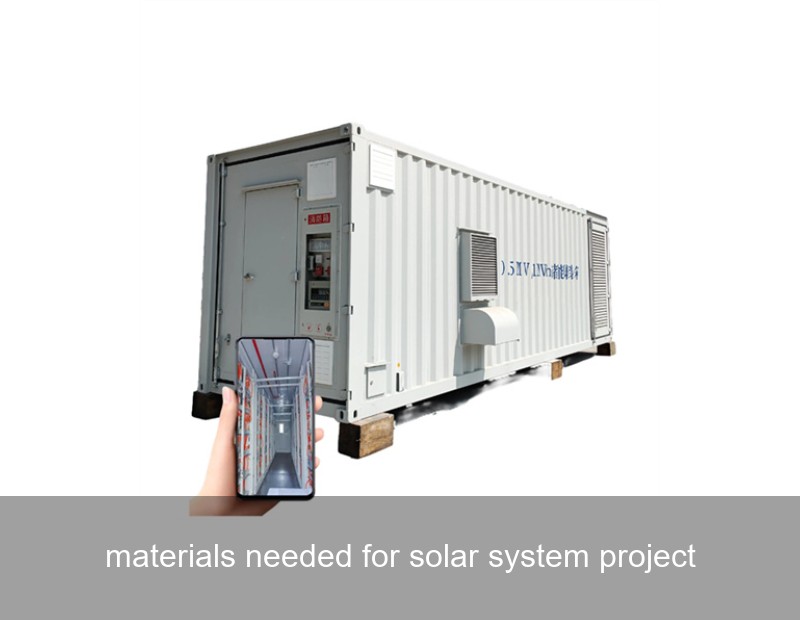
For commercial and industrial applications, our Highjoule Harmony scalable containerized storage solutions are the answer. We provide the complete, pre-engineered system—battery racks, thermal management, fire suppression, and grid interconnection equipment—fundamentally redefining the list of materials needed for a solar system project. You get a turnkey solution monitored and optimized by our AI-driven Highjoule OS platform, which forecasts energy use and weather to make real-time decisions for maximum savings and reliability.

Image Source: Unsplash - Representative image of a modern battery energy storage system.
Planning Essentials: Permits, Monitoring, and Maintenance
Your physical materials list is vital, but don't forget the "soft" essentials. Permitting requirements vary widely across the US and EU. Your project will need structural and electrical diagrams, interconnection agreements with your utility, and compliance with local codes (like the EU Construction Products Regulation). A reputable provider will manage much of this for you.
Furthermore, a monitoring system is a non-negotiable material for ongoing success. It's the window into your system's health and performance. Finally, factor in maintenance—primarily panel cleaning and periodic system checks—to ensure your investment delivers for its 25+ year lifespan.
So, what's the first step in finalizing your unique list of materials needed for a solar system project?
Start with an energy audit. Understand your consumption patterns, peak demands, and resilience needs. Then, engage with a partner who sees beyond the component checklist to your long-term energy goals. At Highjoule, we believe the right material isn't just a product on a shelf; it's the integrated intelligence that brings safety, savings, and sustainability to life. What energy challenge are you looking to solve with your solar project?
 Inquiry
 Online Chat