


Unlocking the Future: Norbornadiene for Solar Energy Storage
Imagine a sunny day where every single ray of sunlight hitting your rooftop is not just converted to electricity, but can be stored almost indefinitely without loss, ready for a rainy week—or even a sunless season. This isn't science fiction; it's the groundbreaking promise of molecular solar thermal batteries, with a molecule called norbornadiene at the forefront. As the world races to solve the intermittency puzzle of renewable energy, innovative solutions like norbornadiene-based solar energy storage offer a tantalizing glimpse into a future of truly resilient, 24/7 clean power. But how does this lab marvel translate to real-world energy security for homes and businesses? Let's explore the journey from molecular magic to mainstream power, and how today's leading-edge companies like Highjoule are bridging the gap with robust, intelligent battery storage systems.
Table of Contents
The Core Challenge: Sun Doesn't Always Shine
You've likely experienced it: a bright, sunny afternoon where your solar panels are producing more power than you can use, followed by a cloudy evening where you're back on the grid. This mismatch between solar energy production and energy demand is the single biggest hurdle for a renewable-powered future. Traditional lithium-ion batteries, like those in your phone or EV, are fantastic for short-cycle storage—shifting power from day to night. But for long-term, seasonal energy storage (think summer sun for winter heat), their self-discharge and degradation pose significant challenges. The search is on for a storage method with high energy density, ultra-low loss over time, and scalability. Enter the realm of molecular storage.
What is Norbornadiene? A Molecular Battery
Norbornadiene (let's call it NBD for short) isn't a new material; it's a hydrocarbon molecule known for decades. Its superpower is a process called photo-isomerization. In simple terms, when sunlight hits NBD, it absorbs the energy and changes its shape, transforming into a high-energy isomer called quadricyclane. This new molecule is metastable—it likes to hold onto that captured solar energy for a remarkably long time, acting as a closed, lossless battery.
When you need the energy back, perhaps on a dark January morning, you pass the quadricyclane over a catalyst. The molecule snaps back to its original NBD shape, releasing all the stored energy as heat. This heat can then be converted into electricity or used directly for heating. Think of it as "bottling sunshine" at the molecular level.
- Key Advantage - Longevity: Energy can be stored for months or even years with minimal loss, solving the seasonal storage problem.
- Key Advantage - Density: It boasts a theoretical energy density much higher than traditional batteries.
- Current Hurdle - Conversion: The current bottleneck is efficiently converting the released heat back into electricity with high efficiency. Most lab systems are still optimizing this step.

Image Source: Conceptual diagram of molecular solar thermal storage, based on research publications.
The Data: Potential and Current Limits
Research is promising. A 2022 study from Chalmers University of Technology, a leader in the field, demonstrated an energy storage density in their NBD-based system of over 200 Wh per kg of material over a cycle. For perspective, that's in the ballpark of some lithium-ion batteries, but with the crucial benefit of potentially near-zero long-term loss. The same team has worked on integrated systems that can both capture and discharge energy as electricity. However, cycle stability (the number of times the molecule can be used) and the overall system's levelized cost of storage remain active areas of intensive research. You can read more about the foundational science in this overview from the Nature Energy journal.
Case Study: Today's Solar + Storage in Action
While NBD matures in labs, the integration of solar with advanced electrochemical storage is already transforming communities today. Consider the case of a mid-sized dairy farm in Bavaria, Germany. Facing rising energy costs and a goal for carbon neutrality, the farm installed a 500 kWp solar array on its barn roofs.
The Problem: Overproduction at midday led to grid feed-in at low tariffs, while high-power milking and cooling equipment needed energy during expensive morning and evening peaks.
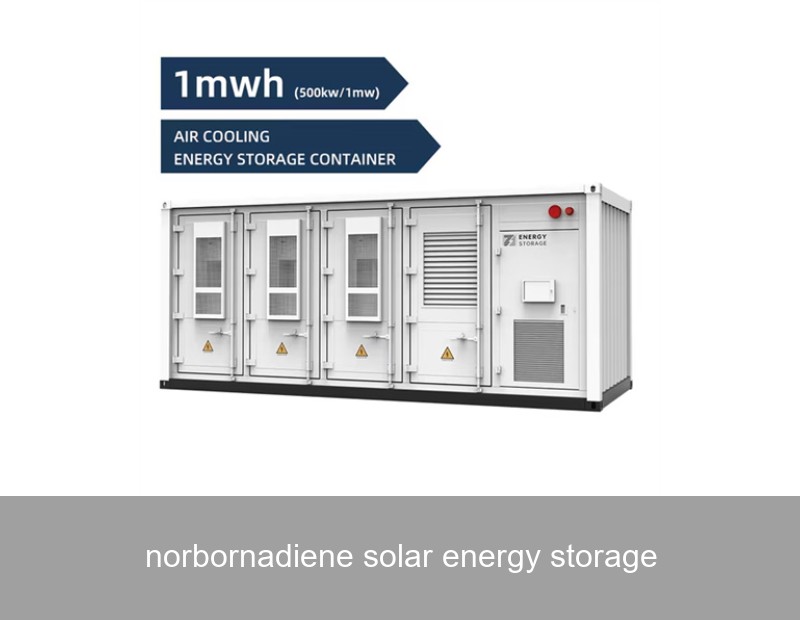
The Solution: They deployed a containerized, commercial battery energy storage system (BESS) with 600 kWh capacity and intelligent energy management software.
| Metric | Before Storage | After Storage |
|---|---|---|
| Grid Energy Purchased | ~180,000 kWh/year | ~45,000 kWh/year |
| Self-Consumption of Solar | 35% | 89% |
| Annual Energy Cost Savings | Base Cost | €42,000 |
| Grid Peak Demand Reduction | 0% | 70% |
This case shows the immediate, powerful impact of pairing solar with intelligent, industrial-grade storage—maximizing self-consumption, slashing costs, and providing grid stability. It's a proven blueprint for commercial and industrial applications across Europe and North America.
Highjoule's Role: Practical Stability Today, Ready for Tomorrow
This is where Highjoule's expertise becomes critical. As a global leader in advanced energy storage solutions since 2005, we specialize in making renewable energy reliable and economical right now. Our product philosophy aligns perfectly with the ultimate goal of technologies like norbornadiene: to provide seamless, sustainable power.
For the residential market, our HomePower Stack series integrates effortlessly with solar inverters, using AI-driven software to learn consumption patterns and optimize when to store, use, or sell energy. For businesses like the Bavarian farm, our Industrial PowerPack containerized BESS offers a turnkey solution for peak shaving, backup power, and massive increases in solar self-consumption. And for the most demanding microgrid and utility-scale applications, our modular GridMax systems provide grid-forming capabilities and long-duration storage potential.
We view emerging technologies like molecular storage not as competitors, but as future components. Highjoule's systems are designed with an open, adaptable architecture. The intelligent energy management system (EMS) that today optimizes lithium-ion battery cycles could, in the future, manage a hybrid system—directing short-term loads to batteries and triggering the release of seasonally stored energy from a norbornadiene-based thermal bank when needed. We are building the smart, controllable platform upon which the breakthroughs of tomorrow can be layered.

Image Source: Highjoule installation at a commercial facility.
The Future is Hybrid: Molecules Meet Lithium-Ion
So, what's the realistic path forward? The future of solar energy storage likely lies in hybrid systems. Imagine a setup where:
- Norbornadiene-based systems act as a "strategic reserve," capturing excess summer energy for long-term, seasonal use with minimal degradation.
- High-density lithium-ion or solid-state batteries (like Highjoule's offerings) handle daily and weekly load-shifting, peak shaving, and immediate backup with high round-trip efficiency.
- A unifying AI-powered energy management platform orchestrates it all, deciding the most cost-effective and efficient source for every kilowatt-hour demanded.
This approach leverages the strengths of each technology while mitigating their individual weaknesses. It creates a resilient, multi-layered defense against energy uncertainty. Research institutions like the U.S. Department of Energy's Office of Science are funding critical work to overcome the material science and engineering hurdles for molecules like NBD.
Your Next Step in Energy Resilience
The journey from a promising molecule in a Swedish lab to a component in your home's energy system is complex, but the direction is clear. The demand for intelligent storage that unlocks the full value of solar is here today. Whether you're a homeowner tired of peak tariffs, a factory manager facing capacity charges, or a community planning a microgrid, the technology to take massive strides in energy independence is already available.
What specific energy challenge—be it unpredictable bills, backup power concerns, or a sustainability target—could you start solving with an intelligent storage solution today, while preparing for the breakthroughs of tomorrow?
 Inquiry
 Online Chat