


Mejores Inversores Solares: Your Guide to Choosing the Top Solar Inverters for Maximum ROI
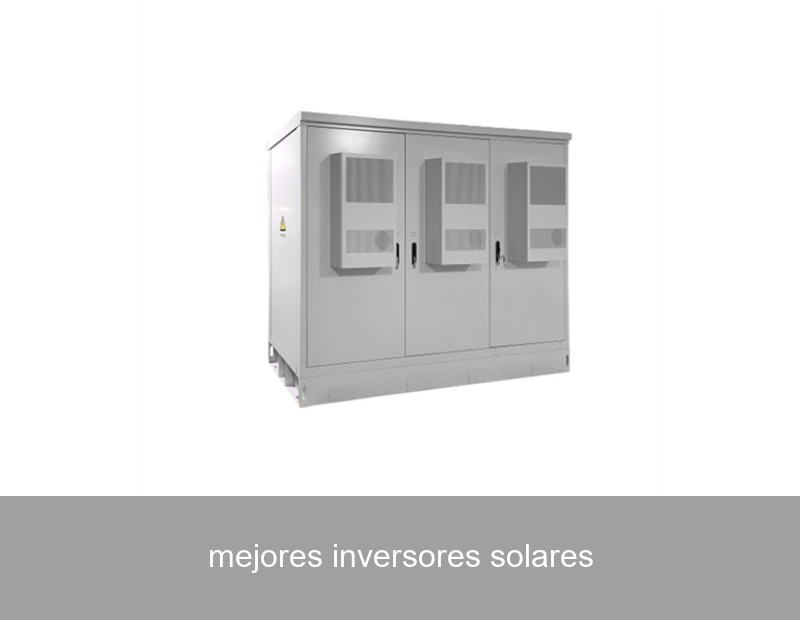
So, you've decided to harness the power of the sun. You've researched panels, calculated your energy needs, and are ready to make a significant investment in a cleaner, more independent energy future. But here's a crucial question: are you giving enough thought to the mejores inversores solares—the best solar inverters? Often called the "brains" of a solar power system, the inverter is arguably its most critical component. It's the device that silently and efficiently converts the direct current (DC) electricity from your panels into the alternating current (AC) that powers your home or business. Choosing the right one isn't just about compatibility; it's about unlocking maximum energy harvest, ensuring long-term reliability, and ultimately, securing the best return on your investment. In this guide, we'll demystify solar inverters, explore what makes the best ones stand out, and show you how the right technology can transform your solar array from a simple energy source into an intelligent, resilient power hub.
Table of Contents
The Inverter: The Heart and Brain of Your Solar System
Think of your solar panels as diligent workers producing raw materials (DC electricity). The inverter is the skilled manager that takes those materials, refines them (converts to AC), and ensures they are delivered exactly where and when they're needed, in the perfect format for your appliances. Its performance directly dictates how much of the sun's potential you actually get to use. A subpar inverter can be a bottleneck, losing precious energy through inefficiency or failing to adapt to changing conditions like partial shading. The mejores inversores solares, on the other hand, are engineered for precision and resilience. They maximize energy harvest through advanced Maximum Power Point Tracking (MPPT), communicate seamlessly for real-time monitoring, and are built to withstand decades of operation. This isn't just a component; it's the cornerstone of your system's value proposition.
What to Look For: Key Features of the Best Solar Inverters
Navigating the market requires knowing what specifications truly matter. Here’s a breakdown of the non-negotiables for a top-tier solar inverter:
- High Efficiency (>98%): Every percentage point matters. A 98%+ efficient inverter means less energy is lost as heat, and more is delivered to your home, directly boosting your savings.
- Advanced MPPT Technology: Superior MPPT algorithms continuously find the optimal voltage for your panels to operate at their maximum power output, especially crucial during cloudy days or when panels are partially shaded.
- Robust Durability & Warranty: Look for products designed for outdoor use (IP65/NEMA 4X ratings) and backed by a minimum 10-year standard warranty, with options to extend. This is a sign of manufacturer confidence.
- Comprehensive Monitoring & Smart Grid Features: User-friendly apps that provide real-time and historical data are essential. Features like grid-support functions (e.g., frequency-watt, volt-var) are increasingly important for grid stability and may be required by utilities.
- Scalability and Storage Readiness: The best inverters are "storage-ready" or hybrid-capable, allowing for seamless integration of battery systems in the future without needing a full inverter replacement.

Image: A modern, high-efficiency solar inverter is key to system performance. Source: Unsplash
Solar Inverter Types: Finding Your Perfect Match
Your choice depends heavily on your roof's characteristics, budget, and goals. Let's compare the main contenders.
| Type | Best For | Pros | Cons |
|---|---|---|---|
| String Inverters | Simple roofs with consistent, unshaded sun exposure. | Cost-effective, proven technology, easy maintenance. | Whole string performance can drop if one panel is shaded. |
| Microinverters | Complex roofs with shading issues; panel-level monitoring. | Maximizes each panel's output, safe low-voltage DC, easy expansion. | Higher upfront cost per watt, more components on the roof. |
| Power Optimizers + Inverter | A balance between string and micro benefits; shading mitigation. | Panel-level optimization with a central inverter, safe rapid shutdown. | Slightly more complex system than a standard string inverter. |
| Hybrid / Battery-Ready Inverters | Anyone planning to add storage now or in the near future. | All-in-one solution for solar + storage, enables backup power. | Higher initial investment, may have more specific compatibility requirements. |
Where Highjoule Fits In: Engineered Intelligence
At Highjoule, we understand that the inverter is the command center. Our integrated energy solutions are built around high-efficiency, smart hybrid inverters designed for the demands of today and tomorrow. We go beyond just conversion; our inverters are the core of a synergistic system. They are natively designed to communicate flawlessly with Highjoule battery storage, enabling advanced features like intelligent time-of-use load shifting, seamless backup power during outages, and participation in grid service programs. For commercial and industrial clients, this means unprecedented control over energy costs and resilience. For homeowners, it means true energy independence. By choosing a system where the inverter and storage are engineered together, like those from Highjoule, you eliminate compatibility guesswork and ensure optimal, long-term performance.
Beyond Specs: Real-World Impact of Choosing the Right Inverter
Let's move from theory to practice. Consider a common challenge in both European and U.S. markets: a commercial property with an uneven roof and intermittent shading from nearby structures.
Phenomenon: A mid-sized winery in California's Napa Valley installed a standard string inverter system for its 100kW rooftop array. They noticed their energy production was consistently 15-20% below projections, especially in the afternoon when a storage building cast a shadow across one section of panels.
Data & Analysis: A system audit revealed the "Christmas light effect" common to string systems: the performance of the entire shaded string was dragged down to the level of its weakest panel. This wasn't a panel defect, but an inverter limitation. The annual energy shortfall was calculated at approximately 18,000 kWh—enough to power two average U.S. homes for a year. Financially, at California's high commercial rates, this represented a loss of over $4,500 in annual savings and extended the payback period significantly.
Case Study & Insight: The winery partnered with Highjoule to retrofit their system. We replaced the central string inverter with a solution combining module-level power optimizers and a Highjoule hybrid inverter. The optimizers allowed each panel to operate independently, eliminating the shading loss. Furthermore, the new Highjoule inverter was paired with a 40kWh battery system. The result? First, they recovered the full 18,000 kWh of "lost" production. Second, the battery now stores excess midday solar energy and discharges it during the expensive 4-9 pm peak period (a practice known as peak shaving), saving an additional $2,000+ annually. The system also provides critical backup power for refrigeration units. The upgrade, incentivized by federal and state programs (ITC & SGIP), achieved a new payback period of under 6 years and transformed their solar array into a comprehensive energy asset.

Image: Commercial solar installations require robust, intelligent inverters to maximize ROI. Source: Unsplash
The Future is Hybrid: Why Your Next Inverter Should Be Storage-Ready
The energy landscape is shifting rapidly. With increasing grid volatility and the rise of dynamic electricity tariffs, the ability to store and manage your solar energy is becoming a necessity, not a luxury. This is why the concept of the mejores inversores solares is evolving. The best solar inverter for 2024 and beyond is one that doesn't just convert DC to AC, but also intelligently manages bi-directional power flow to and from a battery. A hybrid inverter from Highjoule is designed for this exact purpose. It allows you to:
- Increase Self-Consumption: Store excess daytime solar for use at night, sometimes boosting energy independence from 30-40% to 70-80% or more.
- Ensure Backup Power: Keep essential loads running during grid outages, a feature whose value is immeasurable during extreme weather events.
- Optimize for Financial Return: Automatically charge batteries when grid power is cheap (or from excess solar) and discharge when it's expensive, maximizing bill savings. In some markets, you can even earn revenue by providing grid services.
Investing in a storage-ready or hybrid system from the start, like the Highjoule HPS Series, future-proofs your investment and provides a clear pathway to full energy resilience.
Choosing Your Partner: More Than Just a Product
Selecting the mejores inversores solares is about choosing a technology partner for the next 20+ years. It requires evaluating not just the product sheet, but the company behind it. Look for a provider with a proven global track record in system design, deep expertise in grid interconnection standards (like UL 1741 SA in the U.S. or relevant IEC standards in Europe), and robust local support. Highjoule, with nearly two decades of experience since 2005, stands as a leader in this space. We offer end-to-end solutions—from initial consultancy and custom system design using our advanced hybrid inverters and battery systems, to installation support and long-term monitoring via our proprietary platform. Our focus on commercial, industrial, and residential applications means we understand the distinct needs of each sector, ensuring your system is not just a generic installation, but a tailored energy strategy.
As you weigh your options for a solar inverter, ask yourself this: Are you looking for a simple converter, or are you investing in the intelligent foundation for a smarter, more resilient, and financially optimized energy ecosystem? What would the ability to control and store your own power mean for your home or business in the face of tomorrow's energy challenges?
 Inquiry
 Online Chat