


Meridian Energy Limited New Zealand: A Blueprint for Grid Resilience with Advanced Energy Storage
When we talk about global leaders in renewable energy, a name from the South Pacific consistently rises to the top: Meridian Energy Limited New Zealand. As a 100% renewable generator, primarily from hydro and wind, Meridian doesn't just produce clean power; it tackles the most pressing challenge of the energy transition head-on: how to keep the lights stable and reliable when the sun doesn't shine and the wind doesn't blow. The answer, as their pioneering work shows, lies not just in generation, but in intelligent storage. This is where the story of Meridian Energy becomes a critical lesson for grids worldwide, and where companies like Highjoule translate vision into resilient, operational reality.
The Meridian Model: A Beacon for Renewable Integration
Meridian Energy's portfolio is a testament to nature's power. With iconic hydro schemes like the Waitaki chain and wind farms such as Te Uku and West Wind, they power New Zealand with renewable electricity. However, this clean dominance presents a unique operational puzzle. Hydro generation, while flexible, is subject to seasonal rainfall variations. Wind energy, though abundant, is inherently intermittent. This creates a double-edged sword: an abundance of clean energy at times, and potential shortfalls at others, all while maintaining the millisecond-by-millisecond balance the national grid requires.
The logical solution, and the path Meridian has aggressively pursued, is large-scale Battery Energy Storage Systems (BESS). These systems act as a shock absorber for the grid, storing excess renewable energy when production is high and demand is low, then releasing it almost instantaneously when needed. This isn't just about backup power; it's about providing essential grid services like frequency regulation—constantly fine-tuning the grid's heartbeat to 50 Hz—and fast reserve response to cover sudden generation drops.

Image Source: Unsplash (Representative image of wind energy generation)
The Invisible Challenge: Grid Stability in a Renewable World
Let's break down the phenomenon. As coal and gas plants (which have inherent inertia and stability) retire, they are replaced by renewables that connect via inverters. This changes the fundamental physics of the grid, making it more prone to frequency excursions and instability. The data is clear: grids with high renewable penetration require fast-frequency response (FFR) to maintain reliability. A study by the International Energy Agency (IEA) highlights that grid-scale storage is among the most critical technologies for secure clean energy transitions globally.
For Meridian, this isn't theoretical. Their grid-scale batteries, like the Ruakākā Battery Energy Storage System, are engineered to respond to a grid fault within 150 milliseconds. That's faster than the blink of an eye. This capability is no longer a "nice-to-have"; it's the bedrock of a modern, renewable-powered grid.
Case Study: Te Apā - Where Vision Meets Grid Resilience
Meridian's most ambitious step to date is the Te Apā battery storage project, announced in 2023. This isn't just another battery installation; it's a strategic infrastructure play. Slated to be one of the largest in New Zealand, the project underscores a direct, data-driven response to national need.
The case is compelling. Transpower, New Zealand's grid operator, identified an urgent need for increased grid stability in the Upper North Island, particularly as the Huntly power station (a thermal plant) phases down. The Te Apā BESS is designed to directly address this. While final specifications are under development, projects of this scale typically involve:
- Capacity: Targeting over 100 MWh of energy storage (enough to power thousands of homes for critical periods).
- Power Output: A discharge capability likely in the range of 50-100 MW, providing substantial grid support.
- Core Function: Delaying or avoiding the need for costly traditional grid upgrades by providing localised voltage support, frequency regulation, and congestion relief.
This project is a prime example of moving from reactive grid management to proactive, technology-enabled resilience. It's a tangible investment that de-risks the broader energy transition for the entire region.
The Engine Room: What Makes a Modern BESS Tick?
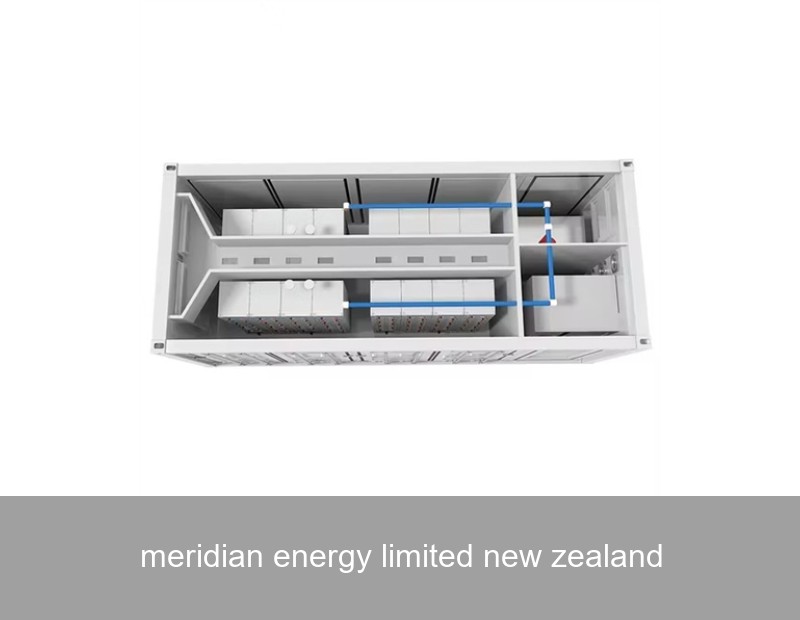
To appreciate projects like Te Apā, it helps to understand the components that go beyond the battery cells themselves. A grid-scale BESS is a sophisticated ecosystem:
| Component | Function | Why It Matters |
|---|---|---|
| Battery Racks & Modules (Li-ion NMC/LFP) | The core energy storage medium. | LFP chemistry, for instance, offers longer lifespan and enhanced safety for grid applications. |
| Power Conversion System (PCS) | Converts DC battery power to AC grid power and vice versa. | Its speed and accuracy determine how fast the BESS can respond to grid signals. |
| Energy Management System (EMS) | The "brain" that controls charge/discharge cycles based on market and grid signals. | Maximizes value and ensures the battery performs its contracted stability services. |
| Thermal Management System | Maintains optimal battery temperature. | Critical for safety, performance, and maximizing battery cycle life. |
Highjoule's Role: Delivering Intelligence Beyond the Battery
This is where Highjoule's expertise aligns perfectly with the vision exemplified by Meridian Energy. For nearly two decades, we've moved beyond simply supplying hardware to providing integrated, intelligent storage solutions. Our systems are engineered for the precise demands of grid-scale and C&I (Commercial & Industrial) applications.
For a utility or developer embarking on a project like Te Apā, Highjoule delivers the integrated platform: the containerized BESS units with industry-leading safety protocols, the high-efficiency PCS for minimal energy loss, and—most crucially—the advanced, AI-driven EMS. Our EMS can stack value streams, autonomously deciding whether to dispatch energy for peak shaving, provide frequency regulation to the grid operator, or store excess local wind or solar generation. This multi-revenue capability is key to making large-scale storage projects economically viable, turning a grid asset into a smart, profit-generating investment.
Imagine a future where every major wind farm or industrial solar park has a Highjoule system seamlessly integrated, not just storing power, but actively participating in grid stability and energy markets. That's the future we're building—a future Meridian is helping to define.

Image Source: Unsplash (Representative image of BESS maintenance and monitoring)
Beyond New Zealand: Global Implications of the Meridian Blueprint
The journey of Meridian Energy Limited New Zealand is a microcosm of a global shift. From California and Texas to Germany and the UK, grid operators are grappling with the same instability challenges. The solutions are parallel: deploy large-scale storage to provide inertia-like services, fast frequency response, and capacity deferral. The U.S. Energy Information Administration (EIA) reports a massive surge in U.S. utility-scale battery storage capacity, a trend directly mirroring the need Meridian identified.
For businesses and communities, the lesson is clear. Investing in on-site storage, like Highjoule's C&I and microgrid solutions, is no longer just about energy independence or backup. It's about becoming a proactive participant in a more resilient and sustainable energy network. By stabilizing your own facility, you contribute to stabilizing the local grid—a win-win enabled by smart technology.
Looking Ahead: Your Energy Future
Meridian Energy's strategy illuminates the path forward. The question for energy leaders, business owners, and community planners in Europe, the US, and beyond is no longer *if* storage is needed, but *how* to implement it most effectively. How will you assess the specific stability needs of your operations or region? What value streams—from arbitrage to grid services—will make your storage investment not just a cost, but a strategic asset?
The technology is here, proven by pioneers and refined by providers like Highjoule. The blueprint is being written. What will your chapter look like?
 Inquiry
 Online Chat