


Unlocking Energy Independence: Your Guide to the Micro Energy Storage Cabinet Battery Storage
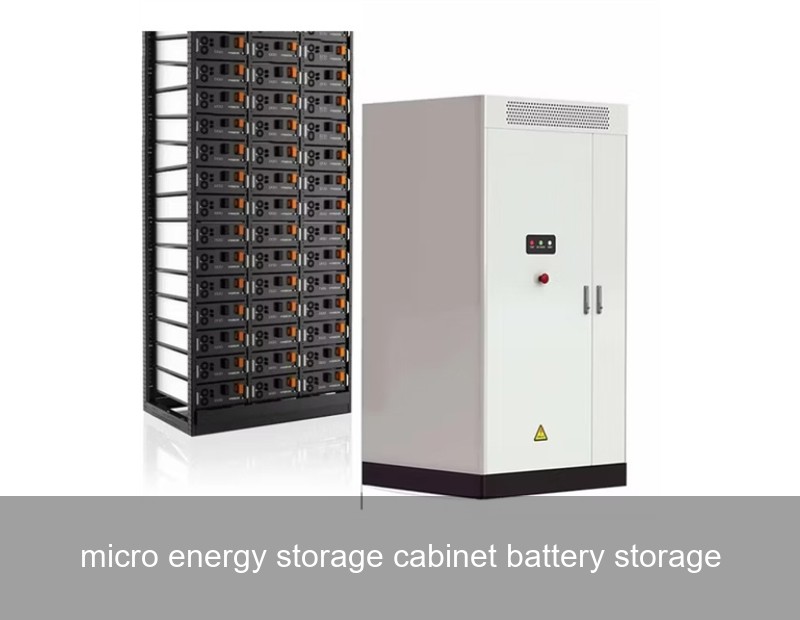
you're a small business owner, and the power flickers. For a moment, everything stops—the lights, the machines, the critical refrigeration. Now, imagine a sleek, compact cabinet quietly humming in the background that instantly takes over, keeping your operations running seamlessly. This isn't science fiction; it's the reality made possible by micro energy storage cabinet battery storage systems. As our energy landscape undergoes a radical transformation, driven by volatile prices and a push for renewables, these intelligent units are emerging as the unsung heroes for homes and businesses alike. They are the cornerstone of a modern, resilient, and self-sufficient energy strategy.
The Phenomenon: Our Grids Are Changing, and So Must We
For decades, electricity flowed one way: from large, centralized power plants through a vast network of transmission lines to our homes and businesses. This model is being challenged from two sides. First, the rapid adoption of rooftop solar means we're now producers as well as consumers, often feeding excess energy back to the grid. Second, our demand is becoming more unpredictable with the rise of electric vehicles and heat pumps. This two-way, variable flow creates instability.
The result? More frequent grid congestion, higher risks of localized blackouts, and energy prices that can spike dramatically during peak demand. For the individual, this translates to vulnerability and unpredictable costs. The solution isn't just generating your own power; it's about intelligently managing it. This is where the micro energy storage cabinet becomes essential. It acts as a personal energy buffer, smoothing out these fluctuations right at the point of use.

Image Source: Unsplash - A modern home energy system integrating solar and storage.
The Data: The Numbers Don't Lie
Let's look at the compelling data driving this shift. According to the U.S. Energy Information Administration (EIA), U.S. battery storage capacity is set to soar, with significant growth in behind-the-meter (i.e., commercial and residential) systems. In Europe, the story is similar. The European Association for Storage of Energy (EASE) notes that decentralized storage is critical for integrating over 40% renewable electricity into the grid by 2030.
But the most persuasive data is on the electricity bill. In regions like California (USA) or Germany (EU), the difference between peak and off-peak electricity rates can be more than 50%. A micro energy storage cabinet allows a business to avoid drawing power during these expensive peak windows, instead relying on stored, self-generated solar energy. The financial payback period, once a major hurdle, has shrunk from 10+ years to often less than 5-7 years, thanks to smarter technology and favorable policies.
Case Study: A Berlin Bakery's Recipe for Resilience
Let's make this concrete with a real-world example. Bäckerei Schmidt, a family-run artisan bakery in Berlin, faced a dual challenge: rising energy costs threatening their thin margins, and the need for unwavering power for their proofing chambers and ovens. A power outage would ruin a day's production.
Their solution was a tailored micro energy storage cabinet battery storage system. Here's what they implemented:
- Solar PV Array: 30 kWp on the bakery's roof.
- Micro Energy Storage Cabinet: A 40 kWh lithium-iron-phosphate (LFP) battery system, housed in a single, outdoor-rated cabinet.
- Smart Energy Manager: Software that learns the bakery's consumption patterns and bakery production schedule.
| Metric | Before System | After System | Change |
|---|---|---|---|
| Grid Energy Consumption | 62,000 kWh/yr | 18,000 kWh/yr | -71% |
| Energy Cost | €15,500/yr | €5,200/yr | -€10,300/yr |
| Self-Consumption of Solar | 35% | 92% | +57% |
| Backup Power | None | Full operations for 8+ hours | Total resilience |
"The system pays for itself while letting us focus on what we do best: baking," said owner Klaus Schmidt. "Knowing we're protected from outages and price spikes is priceless."
The Highjoule Advantage: Intelligent Energy Independence, Delivered
As a global leader in advanced energy storage since 2005, Highjoule has been at the forefront of this decentralized energy revolution. We understand that a micro energy storage cabinet is more than just batteries in a box; it's an integrated energy ecosystem. Our HI-Cube Commercial Series exemplifies this philosophy.
Designed specifically for the European and North American markets, the HI-Cube is a modular, all-in-one cabinet solution that combines high-density LFP battery modules, a hybrid inverter, a built-in energy management system, and advanced thermal controls in one robust, IP55-rated enclosure. What sets it apart is its Adaptive Learning Software, which doesn't just store and discharge energy but predicts your usage patterns, weather, and grid tariffs to optimize every single kilowatt-hour for maximum savings and resilience.
Whether for a residential homeowner looking to maximize their solar investment, a commercial operation like Bäckerei Schmidt, or forming the core of a microgrid for a remote industrial site, Highjoule provides a seamless, intelligent pathway to energy independence.

Image Source: Unsplash - Representative image of a modular energy storage cabinet.
Key Components of a Modern Micro-Cabinet System
To demystify the technology, let's break down what's inside a top-tier system like the Highjoule HI-Cube:
- Battery Cells (The Core): We use Lithium Iron Phosphate (LFP) chemistry for its superior safety, long lifespan (typically 6,000+ cycles), and stability. It's the workhorse of the system.
- Power Conversion System (The Brain & Brawn): This includes the inverter that converts DC from the batteries/solar to AC for your building, and a charger that does the reverse. Highjoule's bi-directional inverters are over 98% efficient.
- Battery Management System (BMS - The Guardian): This critical software constantly monitors each cell's voltage, temperature, and state of charge, ensuring safety, balance, and longevity.
- Thermal Management (The Climate Control): A quiet, efficient cooling/heating system keeps the batteries at their ideal operating temperature year-round, crucial for performance and lifespan in both Texan heat and Scandinavian winters.
- Energy Management System (EMS - The Strategist): This is the intelligent layer that connects to the internet, forecasts solar production and energy prices, and automatically decides when to charge, discharge, or hold.
Future Insights: Where Micro-Storage is Headed
The evolution of the micro energy storage cabinet is moving beyond simple backup and bill management. We are entering the era of the grid-interactive building. With vehicle-to-grid (V2G) technology maturing, your future EV could charge from your cabinet during the day and supply power back to your home at night. Furthermore, aggregated networks of these distributed storage units can form "virtual power plants" (VPPs), providing critical grid stability services and creating new revenue streams for system owners. Highjoule's platforms are already being designed with these VPP and peer-to-peer energy trading capabilities in mind, future-proofing your investment.
The question is no longer if decentralized storage will become standard, but when. As grid pressures mount and the true cost of energy insecurity becomes clearer, the logic becomes overwhelming. The technology is proven, the economics are solid, and the need for resilience is universal.
Ready to See What a Micro Energy Storage Cabinet Could Do for Your Bottom Line and Peace of Mind?
What would energy security and predictable costs allow you to achieve in your business or home? Contact Highjoule's energy specialists today for a free, personalized feasibility assessment. Let's map out your path to a smarter, more independent energy future.
 Inquiry
 Online Chat