


Micro ESS Off-Grid System: Your Blueprint for Complete Energy Independence
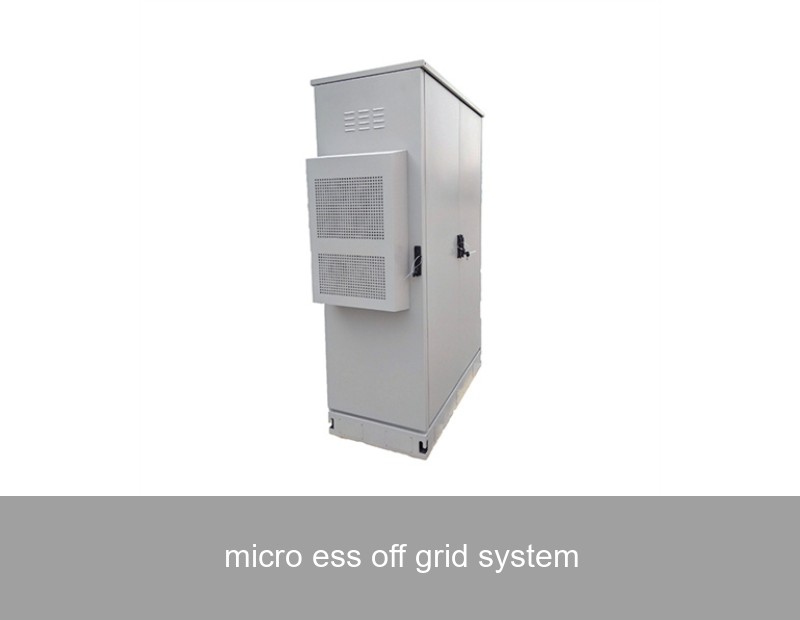
Imagine a storm knocks out the power grid for days. While your neighbors scramble, your home remains lit, your food stays cold, and your life carries on uninterrupted. This isn't just a dream of resilience; it's the practical reality enabled by a modern micro ESS off-grid system. As a product technology expert at Highjoule, I've seen a significant shift: homeowners and businesses are no longer just looking for backup power—they are seeking full, reliable, and intelligent energy autonomy. Let's explore how this technology works and why it's becoming a cornerstone of sustainable living and operational continuity.
Why Go Off-Grid? The Modern Energy Phenomenon
The desire to disconnect from the traditional utility grid is growing rapidly, and it's driven by more than just a survivalist mindset. We're seeing a convergence of several powerful trends.
First, grid instability is a tangible concern. In the US, the average duration of a power outage has increased in recent years, with major events like wildfires and severe storms causing prolonged disruptions. In Europe, energy security has taken center stage. The financial and operational cost of downtime for a business, or the sheer inconvenience for a household, makes a compelling case for self-sufficiency.
Second, the economics have flipped. The cost of solar panels and battery storage has plummeted over the last decade, while electricity tariffs continue to rise. In many regions, generating and storing your own power is now at or near grid parity, even before factoring in the invaluable benefit of reliability.
Finally, there's a strong environmental driver. For individuals and companies committed to reducing their carbon footprint, an off-grid system powered by renewables is the ultimate expression of that commitment—a closed-loop, clean energy ecosystem right on your property.

Image Source: Unsplash - A modern off-grid home powered by solar and battery storage.
Key Components of a Robust Off-Grid System
Building a truly reliable micro ESS off-grid system is like assembling a symphony orchestra. Each component must perform flawlessly and in harmony with the others. Here’s what you need:
- Energy Generation (The Producers): Typically solar photovoltaic (PV) panels. They are the primary workhorse, converting sunlight into DC electricity. The size of your array directly determines your daily "energy income."
- Energy Storage System (ESS) - The Heart (The Bank): This is the core of your independence. A lithium-ion battery bank, like those in Highjoule systems, stores excess solar energy for use at night or during cloudy days. Its capacity (kWh) is your "energy savings account."
- Inverter/Charger (The Brain & Interpreter): This critical device does two main jobs. It converts the DC electricity from your solar panels and batteries into the AC electricity that powers your appliances. It also manages the charging and discharging of the batteries intelligently.
- Charge Controller (The Regulator): It protects your batteries by regulating the voltage and current coming from the solar panels, ensuring safe and efficient charging.
- Backup Generator (Optional, The Safety Net): For extended periods of poor weather, a diesel, propane, or biofuel generator can provide backup charging for the batteries, ensuring 100% year-round reliability.
| Component | Primary Role | Key Consideration for Off-Grid |
|---|---|---|
| Solar PV Array | Primary Energy Generation | Size must exceed worst-case seasonal demand |
| Battery ESS | Energy Storage & Supply | Depth of Discharge (DoD), cycle life, and temperature tolerance are critical |
| Inverter/Charger | Power Conversion & System Management | Must be pure sine wave, have high surge capacity for motors, and integrate seamlessly with batteries |
A Real-World Case: Powering Resilience in California's Fire Country
Let's move from theory to practice. Consider a real scenario from California's Sierra Nevada foothills, an area increasingly prone to Public Safety Power Shutoffs (PSPS) due to wildfire risk. A 5-bedroom family home, previously reliant on a noisy, polluting diesel generator, decided to make a permanent change.
The Challenge: Achieve 100% off-grid power for all household needs, including a well pump, HVAC, and home office, with at least 3 days of autonomy under poor solar conditions.
The Solution: A tailored micro ESS off-grid system was installed:
- 24kW solar array on the south-facing roof and ground mount.
- A Highjoule H-Joule Cube 30 integrated energy storage system, featuring 30kWh of lithium iron phosphate (LFP) battery storage and a 12kW hybrid inverter/charger.
- A smart load management panel to prioritize critical loads if needed.
The Data-Driven Outcome: In the first year, the system provided complete energy independence. During a 5-day PSPS event in October, the home operated normally. Data logs showed the battery state of charge never dropped below 45%, thanks to a combination of sunny days and the system's intelligent management, which optimized consumption. The family eliminated their $450/month electric bill and, according to U.S. Department of Energy calculator tools, reduced their carbon footprint by an estimated 12 tons of CO2 annually.
The Highjoule Solution: Intelligence for True Energy Independence
At Highjoule, we've spent nearly two decades refining the art and science of storage. Our approach to the micro ESS off-grid system goes beyond just hardware. We provide an intelligent ecosystem. Our H-Joule Cube series is engineered specifically for demanding off-grid and backup applications. What sets it apart?
- LFP Battery Chemistry: We use Lithium Iron Phosphate for its superior safety, longevity (over 6000 cycles), and stable performance across a wide temperature range—a non-negotiable for an off-grid asset.
- All-in-One Design: The unit integrates the battery, inverter, charger, and control system into one compact, UL-certified cabinet. This simplifies installation, reduces failure points, and provides a clean, professional look.
- Adaptive Energy Management Software: This is the true genius. Our system doesn't just store and release power. It learns your consumption patterns, forecasts weather based on local data, and proactively manages energy flow to ensure your batteries are optimally charged for upcoming needs. It can automatically start a backup generator if necessary, all without user intervention.

Image Source: Unsplash - A technician installing a modern wall-mounted battery storage unit.
For larger commercial or microgrid applications, our Highjoule H-Joule Matrix systems offer scalable, containerized solutions that can form the backbone of a community or industrial off-grid network. Our services include comprehensive site assessment, system design, and remote monitoring to ensure your journey to energy independence is smooth and supported.
Future Trends in Off-Grid Energy
The future of the micro ESS off-grid system is even more integrated and intelligent. We are moving towards systems that can:
- Seamlessly integrate vehicle-to-home (V2H) technology, using your electric car's battery as an additional grid resource during an outage.
- Employ more sophisticated AI for predictive energy budgeting, potentially integrating with NREL's public weather data models for hyper-local accuracy.
- Create peer-to-peer "microgrids" where neighboring off-grid homes can share small amounts of excess power for enhanced community resilience.
The technology is here, and it's proven. The question is no longer "Can I go off-grid?" but rather, "What level of energy independence is right for my goals of resilience, sustainability, and economic control?" What's the first load you would want to secure if the grid went down tomorrow—and how would that shape your vision for your own energy future?
 Inquiry
 Online Chat