


Microgrid BESS: How Much Does a Battery Energy Storage System Really Cost?
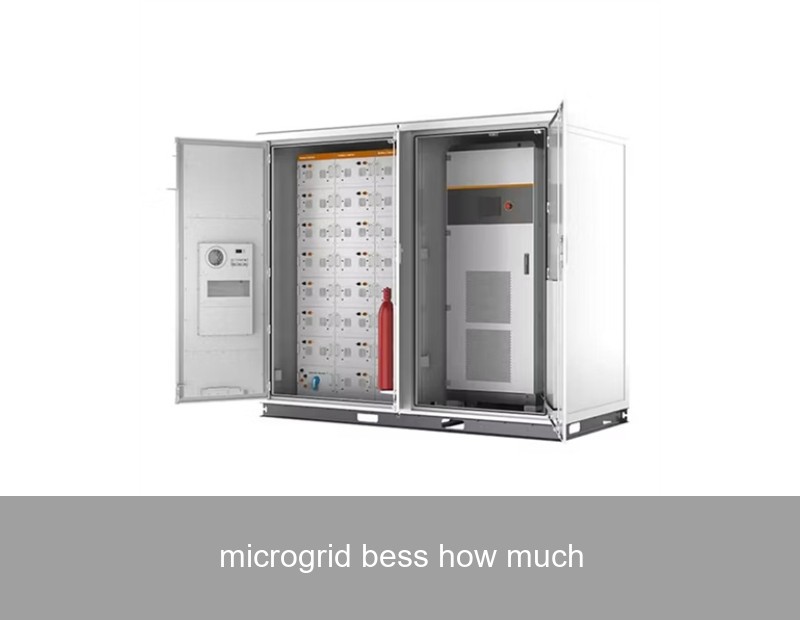
If you're exploring energy independence for your community, business, or industrial facility, you've likely arrived at a crucial juncture: considering a microgrid with a Battery Energy Storage System (BESS). And the immediate, pressing question is almost always, "Microgrid BESS, how much?" It's a fair question, but one akin to asking "How much does a house cost?" The answer isn't a single number. It depends on size, quality, location, and desired features. In this guide, we'll demystify the costs, explore the value beyond the price tag, and look at what it takes to build a resilient, sustainable power system.
Key Cost Factors for a Microgrid BESS
The total installed cost of a microgrid BESS is a sum of several interconnected components. Understanding these helps move from a vague budget to a targeted investment plan.
| Cost Component | Description | Influence on Price |
|---|---|---|
| Battery Cells & Chemistry | The core energy storage medium. Lithium-ion (LFP preferred for safety), flow batteries, etc. | Major driver. LFP costs are declining but scale (kWh) directly impacts price. |
| Power Conversion System (PCS) | The inverter/charger that manages AC/DC conversion and grid interaction. | Scales with power (kW) rating. Advanced units for grid-forming cost more. |
| Energy Management System (EMS) | The "brain" that optimizes charging, discharging, and integrates generation sources. | Software and controls complexity adds cost but is critical for ROI. |
| Balance of Plant (BOP) | Racking, climate control, fire suppression, switchgear, and safety systems. | Fixed infrastructure cost, crucial for safety and longevity. |
| Installation & Integration | Civil works, electrical connections, and software integration with solar/wind. | Highly variable based on site conditions and existing infrastructure. |
| Permitting & Grid Interconnection | Engineering studies, utility fees, and regulatory compliance. | Can be significant and time-consuming, depending on local regulations. |
As of 2024, for commercial and industrial-scale microgrid BESS projects, you can expect a broad range. A streamlined, containerized solution might start around $400 to $600 per kWh for the system. However, a complex, highly integrated microgrid requiring advanced grid-forming capabilities and extensive civil works can easily reach $800 to $1,200+ per kWh of installed capacity. The key is that the cost per kWh typically decreases as system size increases, thanks to economies of scale.

Image Source: Unsplash - Representative image of a BESS installation.
Beyond the Price Tag: The Value Proposition
Focusing solely on upfront cost misses the true financial picture. A microgrid BESS is an investment that generates returns and mitigates risks. Let's break down its value streams:
- Resilience & Reliability: What is the cost of a single hour of downtime for your hospital, data center, or factory? A BESS provides seamless backup power, insulating you from grid outages and extreme weather events.
- Energy Arbitrage: Store cheap energy (from your solar panels or off-peak grid rates) and use it during expensive peak hours. This directly slashes your energy bills.
- Grid Services Revenue: In many markets, you can earn income by providing services like frequency regulation or capacity reserves to the utility grid. A report by the U.S. National Renewable Energy Laboratory (NREL) details the evolving value of BESS in grid markets.
- Deferring Infrastructure Upgrades: For utilities or campuses, a strategically placed BESS can delay the need for costly transformer or line upgrades.
- Sustainability Goals: Maximizing the use of on-site renewables reduces your carbon footprint—a value increasingly important for regulatory compliance and corporate image.
A Real-World Case Study: The Orkney Islands, Scotland
The Orkney Islands in Scotland face grid constraints due to abundant wind generation. To avoid curtailment (wasting renewable energy) and enhance local resilience, the "Battery 2" project was deployed. This 2 MW / 2.8 MWh lithium-ion BESS, integrated into a community microgrid, performs multiple revenue-generating roles.
Data & Results: The system participates in the UK's Dynamic Containment frequency market, providing critical grid stability services. In its first year of operation, it helped manage local constraints and generated significant revenue streams for the community. Projects like this demonstrate that the question isn't just "how much does it cost?" but "what is its earning and savings potential?" The UK's energy regulator, Ofgem, has outlined strategies that support such flexibility assets.

Image Source: Unsplash - Wind turbines, similar to renewable-rich environments like Orkney.
Highjoule's Tailored Approach to Microgrid BESS
At Highjoule, with nearly two decades of experience since 2005, we understand that a microgrid BESS is not an off-the-shelf commodity. Our process focuses on delivering a system whose value far exceeds its cost.
We begin with a deep Energy Analysis. Our experts model your load profiles, generation assets, local utility rates, and incentive programs. We don't just sell a battery; we design a solution optimized for your specific financial and operational goals—whether it's maximizing ROI, achieving 100% renewables, or ensuring mission-critical uptime.
Our flagship product line, the H-Series Modular BESS, is engineered for microgrids. Its grid-forming inverters allow it to "black start" the microgrid independently, a crucial feature for true islanding capability. The system's intelligent EMS seamlessly orchestrates between solar PV, wind, generators, and the battery, prioritizing your set objectives.
For larger commercial and industrial applications, our Containerized MegaJoule Systems offer a pre-integrated, rapidly deployable solution. They come factory-assembled with integrated cooling, safety, and controls, significantly reducing on-site installation complexity and cost. From initial consultation through long-term performance monitoring via our Highjoule Pulse platform, we provide a partnership that ensures your investment delivers.
Making the Investment Decision
So, how do you move from a cost question to a project blueprint?
- Define Your Primary Objective: Is it backup power, bill savings, sustainability, or revenue generation? Your goal dictates the system's design.
- Gather 12 Months of Utility Bills: This data is gold for an accurate financial analysis.
- Explore Incentives: In the U.S., the Investment Tax Credit (ITC) now stands alone for storage. In Europe, various EU and national funds support energy independence projects. These can reduce net cost by 30-50%.
- Request a Comprehensive Feasibility Study: A detailed proposal should provide a clear breakdown of CapEx, projected OpEx savings, revenue potential, and a calculated payback period/ROI.
The journey to energy resilience is a strategic one. The most insightful question to ask now might not be "Microgrid BESS, how much?" but rather, "What is the specific value a microgrid BESS can unlock for my operation, and how do I partner with the right expert to capture it?" What is the single biggest energy challenge you'd like a BESS to solve for you?
 Inquiry
 Online Chat