


Microgrid Energy Storage System: The Cornerstone of a Resilient and Sustainable Energy Future
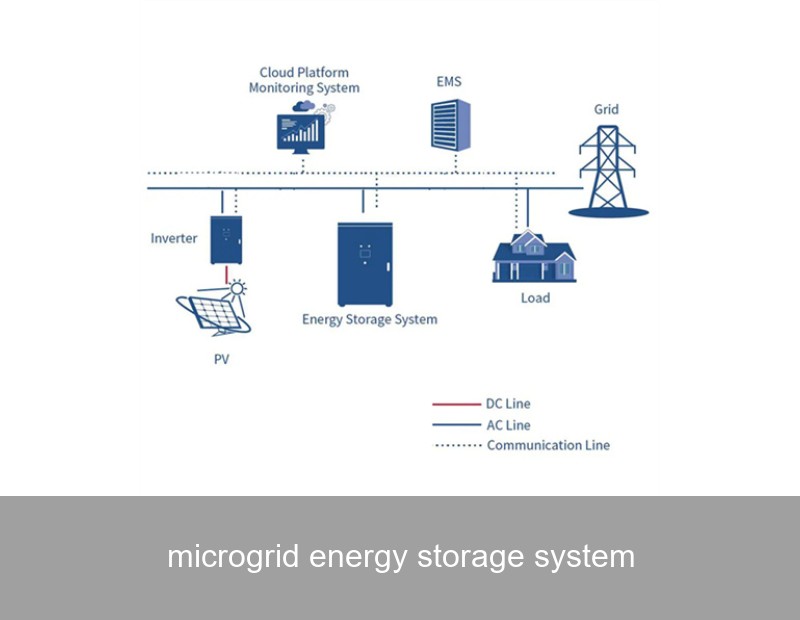
Imagine a community that keeps its lights on, its hospitals running, and its businesses operating even when the main power grid fails. This isn't a scene from a futuristic movie; it's the reality made possible today by advanced microgrid energy storage systems. As extreme weather events and grid instability become more frequent, the question for businesses and communities is no longer *if* they need a backup plan, but *what* that plan should be. A modern microgrid, with intelligent energy storage at its heart, is the definitive answer, transforming passive energy consumers into active, resilient power hubs.
Table of Contents
- The Phenomenon: From Grid Dependency to Energy Independence
- The Data: Why Storage is Non-Negotiable for Modern Microgrids
- Case in Point: The Orkney Islands' Renewable Triumph
- The Core: What Makes a Microgrid Energy Storage System Intelligent?
- Highjoule's Role: Engineering Smarter, More Adaptable Systems
- The Future Is Modular and Software-Defined
- What's Your Energy Resilience Threshold?
The Phenomenon: From Grid Dependency to Energy Independence
For decades, our energy model has been linear: large, centralized power plants generate electricity, which travels hundreds of miles over transmission lines to reach end-users. This model is increasingly vulnerable. A single point of failure—a storm, a wildfire, or simple equipment overload—can plunge entire regions into darkness. The microgrid emerges as the solution, a localized energy network that can disconnect from the main grid and operate autonomously. But here's the catch: a microgrid's true capability is unlocked not just by generation (like solar panels or wind turbines), but by its microgrid energy storage system. Think of storage as the "brain" and "battery" of the operation. It doesn't just store excess energy; it manages the complex dance of supply and demand in real-time, ensuring stability when the sun isn't shining or the wind isn't blowing.

Image Source: Unsplash - A containerized battery storage unit, a common form factor for commercial microgrid systems.
The Data: Why Storage is Non-Negotiable for Modern Microgrids
The business case is compelling. According to a report by the U.S. Department of Energy, power outages cost the American economy an estimated $70 billion annually. For a data center, a manufacturing plant, or a research hospital, even minutes of downtime can mean millions in losses. Furthermore, markets like California (CAISO) and parts of Europe are experiencing frequent negative electricity prices during peak renewable production hours. This presents a unique arbitrage opportunity: store cheap, clean energy when it's abundant and use or sell it when grid prices are high. The right microgrid battery storage system turns cost centers into potential revenue streams.
| Microgrid Driver | Impact | Storage's Role |
|---|---|---|
| Grid Outage Resilience | Prevents operational/financial loss | Provides instant backup power & black-start capability |
| Renewable Integration | Reduces carbon footprint & fuel costs | Smooths intermittency, stores excess generation |
| Energy Cost Management | Lowers utility bills by 20-40% | Enables peak shaving & time-of-use optimization |
| Grid Services Revenue | Creates new income streams | Allows participation in frequency regulation markets |
Case in Point: The Orkney Islands' Renewable Triumph
Let's look at a real-world example that perfectly illustrates the synergy between renewables and storage. The Orkney Islands, off the coast of Scotland, produce over 120% of their electricity needs from wind and tidal power. The challenge? Their weak connection to the UK's main grid meant they often had to curtail (waste) excess renewable generation. The solution was a sophisticated microgrid energy storage system integrating large-scale batteries.
The project, supported by Ofgem's Network Innovation Allowance, deployed a 2MW/3.7MWh battery storage system. The results were transformative:
- Renewable Utilization: Curtailment was drastically reduced, allowing more locally generated green power to be used locally.
- Grid Stability: The batteries provided essential frequency response services, stabilizing the local grid without relying on fossil-fuel-based generation.
- Economic Model: It proved a viable business case for storage in constrained networks, paving the way for similar island and remote communities worldwide.
This case shows that a microgrid energy storage system isn't just about backup; it's about maximizing the value and impact of every kilowatt-hour of renewable energy generated.
The Core: What Makes a Microgrid Energy Storage System Intelligent?
Not all storage is created equal. A basic battery bank is a component; an intelligent microgrid energy storage system is a fully integrated solution. Here are the key layers that define a high-performance system:
- Advanced Battery Technology: While lithium-ion is dominant, the choice between LFP (Lithium Iron Phosphate) for safety and cycle life and NMC for energy density is critical. The battery management system (BMS) must ensure safety, longevity, and performance.
- Power Conversion System (PCS): This is the "translator" between DC battery power and AC grid power. A bi-directional PCS that can rapidly switch between charging and discharging is essential for grid services and stability.
- The Brain: Energy Management System (EMS): This is where the magic happens. A smart EMS uses weather forecasts, load predictions, and electricity price signals to autonomously decide when to charge, discharge, or hold. It's the strategic commander of the entire microgrid.
Highjoule's Role: Engineering Smarter, More Adaptable Systems
At Highjoule, with nearly two decades of experience since 2005, we've moved beyond simply supplying hardware. We engineer integrated resilience. Our HiveStack Modular Energy Storage Platform is designed specifically for the demands of commercial, industrial, and community microgrids.
What sets HiveStack apart is its containerized, modular architecture. Each pre-integrated unit contains our proprietary battery packs, thermal management, fire suppression, and a PCS. You can start with a single 500kWh unit and scale up seamlessly to multi-megawatt-hour installations as your needs grow. This "plug-and-play" approach drastically reduces installation complexity and time.
More importantly, it's governed by our Sentinel EMS platform. Sentinel doesn't just react; it learns and optimizes. It can be configured to prioritize different objectives—maximize self-consumption of solar, minimize demand charges, or generate revenue through grid arbitrage—all from a single, intuitive dashboard. For a hospital, Sentinel might prioritize uptime above all else. For a manufacturing plant, it might be programmed to minimize the levelized cost of energy (LCOE).

Image Source: Unsplash - Visualization of an energy management system dashboard monitoring power flows.
The Future Is Modular and Software-Defined
The evolution of microgrid energy storage is clear. The future lies in modular, standardized hardware that is easy to deploy and scale, coupled with increasingly sophisticated, AI-driven software that can navigate complex multi-market value streams. We are already seeing the rise of "storage-as-a-service" models, where a company like Highjoule can own, operate, and maintain the system on a customer's site, removing the upfront capital barrier.
Furthermore, the integration of different storage durations—from fast-response batteries for frequency regulation to longer-duration storage technologies for seasonal shifting—will create truly holistic and resilient microgrids. The goal is a self-optimizing energy ecosystem that is both a fortress against outages and a savvy participant in the energy economy.
What's Your Energy Resilience Threshold?
The journey toward energy independence starts with a single question: What is the cost of *not* having power for your operation, your community, or your critical infrastructure for one hour, one day, or one week? Understanding that threshold is the first step in designing a microgrid energy storage system that isn't just a cost, but a strategic investment in continuity, sustainability, and financial predictability.
Is your organization ready to map out how a tailored microgrid solution could not only protect your operations but also redefine your energy costs and carbon profile? The technology is here, proven, and waiting.
 Inquiry
 Online Chat