


Mobile Energy Storage System: The Power to Go Where You Need It Most
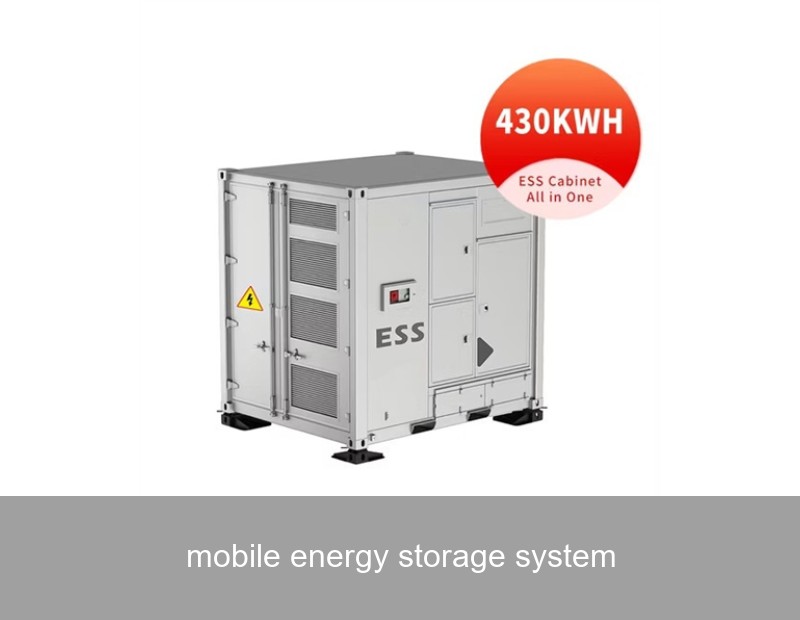
Table of Contents
- From Static to Dynamic: Why Mobility is the Next Frontier
- How Mobile Energy Storage Systems Work: More Than Just a Big Battery
- Key Applications Transforming Industries
- A Real-World Case: Disaster Response in California, USA
- Choosing the Right Mobile ESS: Key Considerations
- The Future is Mobile and Decentralized
Imagine a power outage hits a neighborhood, a remote film set needs clean, quiet electricity, or a construction site requires temporary power without the diesel fumes. In the past, the solutions were limited, noisy, and polluting. Today, the answer is increasingly rolling in on wheels: the Mobile Energy Storage System (MESS). This isn't just a battery on a trailer; it's a sophisticated, intelligent power hub that brings energy resilience, flexibility, and sustainability to any location. For businesses, communities, and emergency services, mobile ESS is rapidly becoming an indispensable tool for managing modern energy needs.
From Static to Dynamic: Why Mobility is the Next Frontier
The global push for renewable energy and grid modernization has a hidden challenge: energy generation and demand aren't always in the same place, or at the same time. While stationary battery storage is fantastic for homes and fixed facilities, a significant portion of energy needs are temporary, emergency-based, or geographically shifting. Think about it. How do you power a weekend festival? Support grid repairs after a storm? Or provide electricity for a temporary medical clinic? This is the gap that mobile energy storage systems fill perfectly. They combine the proven technology of lithium-ion battery storage with the agility of transportation, creating a "plug-and-play" power plant.
Data underscores this trend. According to the U.S. Department of Energy, the frequency of power outages in the U.S. has increased significantly over the past two decades, often driven by extreme weather events. Meanwhile, the European Union's "Fit for 55" package aggressively promotes decentralized energy solutions to enhance security and integrate renewables. Mobile ESS directly addresses both issues by providing a rapidly deployable asset for grid support and enabling the use of solar power in off-grid settings.

Image Source: Unsplash (Representational image of a mobile storage unit)
How Mobile Energy Storage Systems Work: More Than Just a Big Battery
A high-quality mobile ESS is an integrated ecosystem. At its core is a high-density, liquid-cooled battery pack—often using Lithium Iron Phosphate (LFP) chemistry for its superior safety and long cycle life. But the magic lies in what surrounds it:
- Power Conversion System (PCS): The brain that manages AC/DC conversion, allowing the system to interact with the grid, diesel generators, or direct loads.
- Energy Management System (EMS): The intelligent software that controls charging/discharging, monitors health, and can be operated remotely for optimal performance.
- Climate Control: Robust thermal management to ensure the batteries operate efficiently in both desert heat and Nordic cold.
- Trailer & Safety Enclosure: A rugged, road-worthy chassis with integrated safety systems like fire suppression, spill containment, and remote emergency shutdown.
Companies like Highjoule have pioneered the integration of these components. Our Highjoule M-Power Series of mobile energy storage is engineered for maximum reliability and ease of use. With capacities ranging from 250 kWh to over 1 MWh per unit, they feature grid-forming inverters that can "black start" a site without any external grid connection. Furthermore, their modular design allows for quick service and future capacity upgrades, protecting your investment as technology evolves.
Key Applications Transforming Industries
The versatility of mobile storage is its greatest asset. Here’s how different sectors are leveraging this technology:
| Industry | Application | Key Benefit |
|---|---|---|
| Utilities & Grid Operators | Peak shaving, grid deferral, emergency backup, renewable firming | Cost reduction, enhanced grid stability, faster outage response |
| Construction & Events | Temporary site power, hybrid systems with generators | Eliminate diesel fuel costs, reduce noise and emissions, improve site sustainability |
| Disaster Response & Public Safety | Emergency power for shelters, hospitals, and command centers | Rapid deployment, critical life-saving support, operates in fuel-scarce environments |
| Commercial & Industrial | Managing demand charges, providing backup during planned outages | Significant operational savings, uninterrupted production |
A Real-World Case: Disaster Response in California, USA
Let's look at a concrete example. In 2023, a major utility in Northern California faced a critical situation. Planned Public Safety Power Shutoffs (PSPS) to prevent wildfires, combined with a fault on a distribution line, threatened to leave a community of several thousand people without power for over 48 hours. Transporting and installing diesel generators for the entire area was logistically slow and environmentally questionable.
The Solution: The utility deployed three of Highjoule's 500 kWh M-Power units. These systems were pre-charged at a central depot using solar energy and dispatched overnight.
- Deployment Time: Units were on-site and operational within 8 hours of the decision.
- Performance: The systems formed a microgrid, powering critical loads including a local health clinic, a communications tower, and a community charging hub for medical devices and phones.
- Result: The community retained essential services, the utility avoided an estimated $150,000 in potential emergency generator fuel and logistics costs, and the operation produced zero local emissions. This case, documented in part by the National Renewable Energy Laboratory (NREL) in their review of mobile storage for resilience, highlights the tangible value of this technology.

Image Source: Unsplash (Representational image of engineers setting up emergency power)
Choosing the Right Mobile ESS: Key Considerations
Not all mobile storage systems are created equal. When evaluating a solution, ask these critical questions:
- Intelligence & Control: Does it have a smart EMS with remote monitoring and control? Can it seamlessly integrate with solar or wind?
- Safety & Compliance: Is the battery chemistry inherently safe (like LFP)? Does the entire system meet stringent road transportation and electrical safety standards for your region (e.g., UL, CE, IEC)?
- Durability & Serviceability: Is it built for rough terrain and harsh weather? Is it designed for easy maintenance and component replacement?
- Vendor Expertise: Does the provider offer comprehensive support, from system design and commissioning to ongoing service and software updates?
At Highjoule, our nearly two decades of experience in stationary BESS directly inform our mobile product line. We don't just sell a product; we provide a full Power-as-a-Service solution. This can include financing, remote fleet management via our Highjoule Horizon cloud platform, and guaranteed performance, making advanced mobile energy storage accessible without large upfront capital expenditure.
The Future is Mobile and Decentralized
The convergence of vehicle-to-grid (V2G) technology, more frequent extreme weather events, and the demand for cleaner temporary power is creating a perfect storm of opportunity for mobile energy storage. We are moving towards a future where fleets of mobile ESS units act as dynamic "energy routers" on our highways, constantly being repositioned to where they provide the most economic and social value.
As an industry leader, Highjoule is actively developing next-generation systems with even faster deployment features, higher energy density, and advanced swarm logic for coordinating multiple units. The goal is to make resilient, sustainable power not a fixed luxury, but a flexible commodity that can be delivered anywhere, anytime.
So, here's a question to ponder: If you could eliminate your biggest energy vulnerability or unlock a new operational opportunity by literally moving power to a new location, where would you send it first?
 Inquiry
 Online Chat