


Mobile Inverter How Much? A Clear Cost and Value Guide for 2024
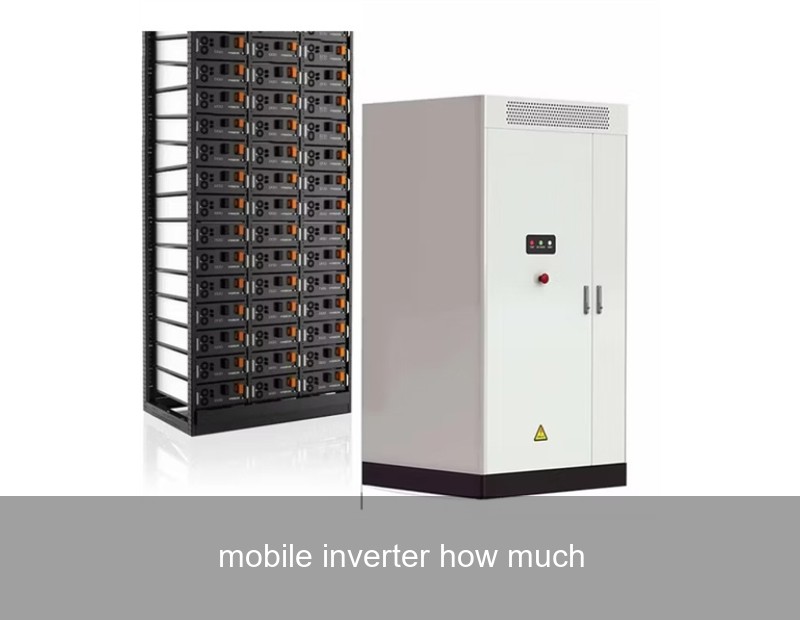
You're likely here because you've seen the term "mobile inverter" pop up everywhere—from camping forums to home backup plans—and the big question on your mind is, mobile inverter how much does it really cost? But here's the thing: the sticker price is just the beginning. The true value lies in understanding what you're paying for: not just a box that converts DC to AC, but a gateway to energy independence, resilience, and smarter power management. In this guide, we'll break down the cost factors, explore real-world applications, and show you how advanced solutions from leaders like Highjoule are redefining the value proposition of mobile power.
Table of Contents
The Real Cost Breakdown: More Than Just a Price Tag
Asking "mobile inverter how much?" is like asking "how much does a vehicle cost?" The range is vast. A basic 300W modified sine wave inverter for a car might cost under $50. But a high-power, pure sine wave, all-in-one mobile power station with a built-in lithium battery and solar charging capability can easily exceed $2,000. The total cost hinges on three core components:
- The Inverter Itself: Power rating (watts), waveform quality (pure sine wave vs. modified), and efficiency rating.
- The Battery System: This is often the most significant cost driver. Capacity (watt-hours), chemistry (LiFePO4 vs. NMC), and cycle life directly impact price.
- Integration & Features: Does it have MPPT solar charge controllers? Smart app connectivity? Seamless grid/generator switching? These add value and cost.
For commercial or critical backup use, the calculus shifts from upfront cost to Total Cost of Ownership (TCO), which includes durability, efficiency losses, and maintenance over a 10-year period.
The Data: Understanding Price Tiers
| Application Tier | Typical Power Range | Key Features | Estimated Price Range |
|---|---|---|---|
| Recreational / Light Use | 300W - 1,000W | Modified sine wave, basic ports, small lead-acid or Li-ion battery | $50 - $800 |
| Prosumer / Home Backup | 1,500W - 3,000W | Pure sine wave, LiFePO4 battery, solar input, basic display | $1,000 - $3,000 |
| Professional / Commercial | 3kW+ (Expandable) | Grid-forming capability, parallel stacking, smart energy management, rugged design | $3,000+ |
Key Factors That Determine "How Much"
Let's dive deeper into what you're actually paying for when you invest in a quality mobile inverter system.
1. Inverter Core Technology
Pure sine wave output is non-negotiable for sensitive electronics (laptops, medical devices, tool motors). High-efficiency inverters (> 90%) waste less energy as heat, meaning more usable power from your precious battery bank. This engineering excellence has a cost but saves money in the long run.
2. Battery Chemistry: The Heart of the System
Lithium Iron Phosphate (LiFePO4) is now the gold standard for mobile and semi-stationary storage. While initially more expensive than old lead-acid, it offers 3-5 times longer cycle life (often 3,000 to 6,000 cycles), is lighter, safer, and maintains performance better. When you calculate cost per cycle, LiFePO4 is almost always cheaper over time. The U.S. Department of Energy notes the safety and longevity advantages of LiFePO4 chemistry.

Image: Modern LiFePO4 battery modules, like those used in Highjoule systems, offer superior safety and lifespan. Source: Unsplash
3. System Intelligence and Scalability
Can your system grow with your needs? A modular design that allows you to add extra battery packs or even parallel additional inverters provides immense long-term value. Smart management systems that can prioritize loads, schedule charging from solar when it's cheapest, and integrate with grid signals are where the frontier lies.
Case Study: From Theory to Practice
Let's look at a real-world scenario in the target market of Southern California, USA.
Situation: A small, owner-operated organic farm faced frequent brief grid outages that disrupted refrigeration for produce and irrigation controls. They needed a resilient, mobile power solution that could be deployed to different outbuildings.
Solution: They deployed a Highjoule Nomad Pro Series mobile power system. This unit features a 5kW pure sine wave inverter/charger, a modular 10kWh LiFePO4 battery bank, and a built-in 150V MPPT solar charge controller. It was mounted on a ruggedized cart.
Data & Outcome:
- Upfront Investment: ~$9,500 (including the system, cart, and professional connection interfaces).
- Operational Savings: By programming the system to charge via its existing solar array during peak sunlight (offsetting grid use at $0.35/kWh), it saves approximately $40-60 per month on electricity bills.
- Resilience Value: It has provided seamless backup power during 4 outages totaling 14 hours in the last year, preventing an estimated $2,000 in potential spoilage and operational downtime.
The farmer's question shifted from "mobile inverter how much?" to "What is the value of uninterrupted operation?" The payback period, considering savings and loss prevention, is projected to be under 7 years, on a system with a 10+ year design life.
The Highjoule Approach: Integrated Intelligence
At Highjoule, we view mobile inverters not as standalone products but as the core of an adaptive energy ecosystem. Our solutions, like the Nomad Pro Series for commercial mobility and the HomeFlow Stack for modular residential backup, are designed with TCO in mind.
What sets our systems apart is the Highjoule Energy Operating System (EOS). This embedded intelligence allows for:
- Predictive Grid Interaction: In regions with time-of-use rates, the system can intelligently use stored power during expensive peak periods.
- Seamless Hybrid Charging: Automatically blend and prioritize power from grid, solar, and generator sources for optimal efficiency and fuel savings.
- Remote Fleet Management: For businesses with multiple units, operators can monitor state-of-charge, performance, and location from a single dashboard.
This software-defined approach means your system gets smarter over time, extracting more value from every hardware component you paid for.

Image: Centralized monitoring and management, a key feature of Highjoule's EOS, maximizes system value. Source: Unsplash
Future Trends: Where Mobile Power is Heading
The market is rapidly evolving. We're moving towards bidirectional mobile power stations. Imagine an electric vehicle (EV) or a mobile battery unit that not only powers your job site but can also feed energy back into your home during an outage (Vehicle-to-Home) or even support the local grid during stress (Vehicle-to-Grid). Standards like ISO 15118 are paving the way for this. The future "cost" question will encompass revenue potential.
Furthermore, AI-driven energy forecasting will allow these systems to pre-charge based on weather (solar output) and grid congestion forecasts, making them even more economical. The integration of mobile storage into community microgrids, as researched by institutions like NREL, is another exciting frontier.
Your Next Step Towards Mobile Power
So, when you ask "mobile inverter how much?", we encourage you to reframe the question. Ask instead: What is the cost of not having reliable, clean power where and when I need it? What is the value of energy resilience for my home, business, or community project?
We invite you to consider: If you could design a mobile power system that not only meets your immediate backup needs but also actively lowers your energy bills and prepares you for the interactive grid of tomorrow, what would its most important feature be?
 Inquiry
 Online Chat