


How Much Does a Sodium-Ion (Na-Ion) Battery Cost? A 2024 Market and Technology Deep Dive
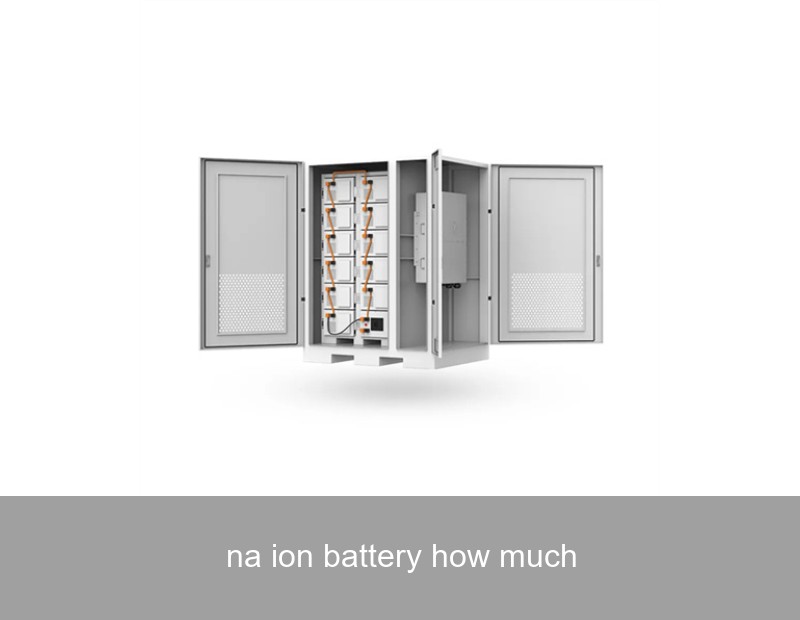
If you're exploring energy storage options for your home, business, or community project, you've likely heard the buzz: lithium-ion batteries are getting a formidable challenger. Enter sodium-ion (Na-ion) battery technology. As electricity prices remain volatile and the push for energy independence grows, a critical question emerges for savvy consumers and project developers alike: "Na-ion battery, how much does it really cost?" The answer isn't a single number, but a compelling story of rapid innovation, shifting supply chains, and a new promise for sustainable storage. In this article, we'll cut through the hype, analyze the true cost components, and show you what this means for your energy future.
Table of Contents
- The Rise of Sodium-Ion: More Than Just a Lithium Alternative
- Na-Ion Battery Cost Breakdown: Beyond the Cell Price
- Sodium-Ion vs. Lithium-Ion: A Total Cost of Ownership Perspective
- A Real-World Case Study: Grid Support in Central Europe
- Where Does Highjoule Fit in the Na-Ion Landscape?
- The Future Cost Trajectory and Your Next Steps
The Rise of Sodium-Ion: More Than Just a Lithium Alternative
Let's start with the "why." The energy storage market has been dominated by lithium-ion chemistry for over a decade, powering everything from phones to EVs to grid-scale systems. However, this reliance has exposed vulnerabilities: volatile prices for critical materials like lithium, cobalt, and nickel, concentrated geopolitics of supply chains, and concerns over long-term sustainability.
Sodium-ion technology steps in as a fundamentally different approach. Instead of lithium, it uses sodium—an element that's abundant, cheap, and geographically widespread (it's literally in table salt and seawater). This simple material shift has profound implications. Imagine a battery chemistry free from the risk of sudden price spikes due to mining shortages. That's the core promise of Na-ion. But it's not just about raw materials; the manufacturing process for sodium-ion cells is remarkably similar to that of lithium-ion, meaning existing gigafactories can be retrofitted, accelerating production scale-up.

Image Source: Unsplash - Representing scalable battery manufacturing
Na-Ion Battery Cost Breakdown: Beyond the Cell Price
So, back to our central question: how much? In 2024, a sodium-ion battery system (not just the cells) can range from **$80 to $120 per kilowatt-hour (kWh)** at the pack level for large-scale orders. For comparison, commercial lithium-ion iron phosphate (LFP) systems are currently in the $100-$150/kWh range. But quoting a simple "$/kWh" figure is misleading. The true cost is a sum of parts:
- Cell Cost: This is where Na-ion shines. The active materials (cathode, anode, electrolyte) are significantly cheaper. Some analyses suggest cell-level costs could be 20-30% lower than LFP at mass production.
- Battery Management System (BMS): Na-ion batteries have different voltage characteristics and safety profiles. A tailored, intelligent BMS—like the ones Highjoule engineers for resilience—is crucial but adds to the upfront cost.
- System Integration & Power Electronics: This includes inverters, thermal management, and enclosure. These "balance of system" costs are similar across chemistries but are a larger portion of the total for cheaper cells.
- Installation & Lifespan: Here's a key insight. While the upfront price might be competitive, Na-ion's potential for a longer cycle life (especially in stationary, full-cycle applications) and superior safety (reducing need for expensive containment) can drastically lower the Levelized Cost of Storage (LCOS) over 15-20 years.
According to a 2023 IEA report on energy storage, innovation in chemistries like sodium-ion is critical to achieving global net-zero targets, precisely because of their potential to drive down long-term costs and diversify supply.
Sodium-Ion vs. Lithium-Ion: A Total Cost of Ownership Perspective
Let's put on a project manager's hat. You're evaluating a 500 kWh storage system for a factory. The lithium-ion quote comes in at $115/kWh. The sodium-ion quote is $105/kWh. The sodium option seems slightly cheaper upfront, but is it the better buy?
| Cost Factor | Typical Lithium-Ion (LFP) System | Typical Sodium-Ion System | Notes |
|---|---|---|---|
| Upfront System Cost ($/kWh) | $100 - $150 | $80 - $120 | Na-ion advantage grows with scale and material price fluctuations. |
| Cycle Life (to 80% capacity) | 6,000 - 8,000 cycles | 5,000 - 7,000 cycles (and improving rapidly) | Modern Na-ion is closing the longevity gap. For daily cycling, both can last >15 years. |
| Operational Safety & Thermal Runaway Risk | Moderate. Requires robust thermal management. | Inherently lower risk. More stable chemistry. | Na-ion's safety can reduce insurance costs and system containment expenses. |
| Performance in Cold Temperatures | Degrades significantly below 0°C. | Better low-temperature performance reported. | A key advantage for projects in colder climates like Northern Europe or the US Midwest. |
| Supply Chain & Material Ethics | Concentrated, subject to geopolitical tension. | Abundant, globally distributed sodium supply. | Na-ion offers greater supply security and aligns with ethical sourcing goals. |
The verdict? For applications where maximum energy density is non-negotiable (like EVs), lithium still leads. But for stationary storage—where space is less critical, safety is paramount, and lifetime cost rules—sodium-ion presents a formidable, often superior, economic case.
A Real-World Case Study: Grid Support in Central Europe
Let's move from theory to practice. In 2023, a municipal utility in Germany partnered with a leading battery manufacturer to deploy a 1 MWh sodium-ion battery storage system for grid frequency regulation and peak shaving. The project had clear goals: reduce grid dependency, integrate local wind power, and do so with a future-proof, sustainable technology.
The Data:
- System Size: 1 MWh / 500 kW
- Chemistry: Prussian White-based Sodium-ion.
- Deployed Cost: Approximately €95,000 ($103,000) per MWh, inclusive of containerization and grid connection.
- Performance: The system successfully provides primary frequency response, reacting to grid fluctuations in milliseconds. Its round-trip efficiency is reported at ~92%, comparable to lithium.
- Endurance: It operates effectively in ambient temperatures from -5°C to 40°C without significant performance degradation or auxiliary heating, a notable operational cost saving.
The Insight: The project manager noted that while the capital expenditure was slightly above a budget LFP system at the time, the total cost of ownership over 20 years was projected to be 15% lower. This was due to negligible degradation, minimal maintenance, and the avoidance of costly climate control for the battery container. This case, documented in part by the Energy Storage News platform, illustrates the shifting economic calculus.
Where Does Highjoule Fit in the Na-Ion Landscape?
As a global leader in advanced energy storage systems since 2005, Highjoule's role isn't to manufacture battery cells. Our expertise lies in integrating the best available cell technology into intelligent, reliable, and high-performance systems for our commercial, industrial, and microgrid clients.
Think of us as the master architects of your energy resilience. We actively monitor and evaluate emerging technologies like sodium-ion. Our HPS (Highjoule PowerStack) modular architecture is chemistry-agnostic. This means we can integrate sodium-ion cells as soon as they meet our rigorous standards for performance, safety, and lifecycle. Our value is in the sophisticated AI-driven energy management software, the robust power conversion, and the seamless system integration that ensures any battery—whether lithium, sodium, or what's next—delivers maximum financial and operational value.

Image Source: Unsplash - Representing intelligent energy system management
For a business considering sodium-ion, partnering with Highjoule means you get the benefit of this new, cost-effective chemistry, plus the guarantee of a system optimized for your specific load profile, energy tariffs, and sustainability goals. We handle the complexity, you reap the savings and reliability.
The Future Cost Trajectory and Your Next Steps
Industry forecasts are bullish. With massive investments from China, the EU, and the US into sodium-ion production capacity, economies of scale will kick in aggressively. BloombergNEF and other analysts predict sodium-ion system costs could fall below $70/kWh by 2030, making it the most affordable stationary storage technology for many applications.
So, what does this mean for you today? The question is no longer just "na ion battery how much?" but rather, "Is my project or property ready to leverage the next wave of storage technology?"
We invite you to start a conversation with our technical team. Bring us your energy bills, your site plans, and your resilience goals. Let's analyze together whether a sodium-ion-based system from Highjoule is the optimal financial and technical solution for you. What specific energy challenge can we help you solve with the power of intelligent storage?
 Inquiry
 Online Chat