


Understanding Net Metered Solar PV Systems: A Guide to Energy Independence
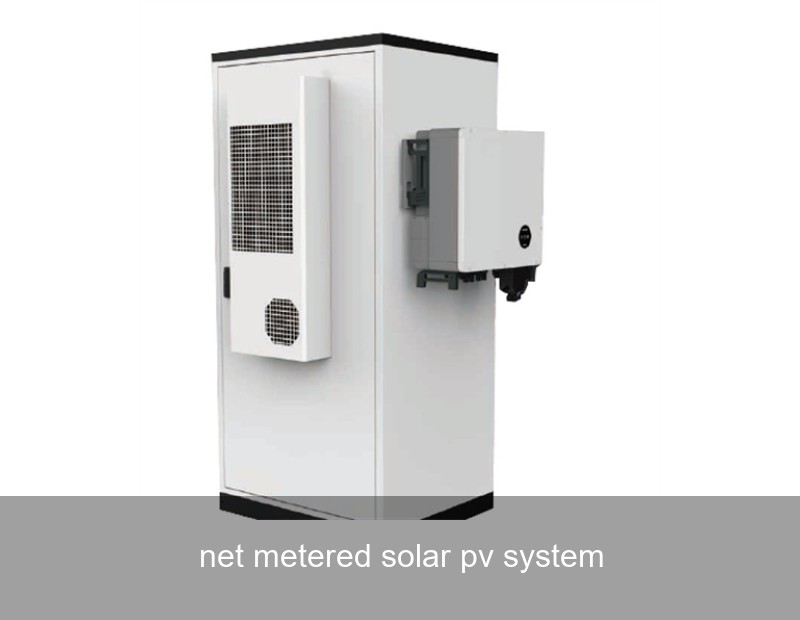
Have you ever looked at your electricity bill and wondered if there's a smarter way to power your home or business? For many in Europe and the US, the answer is shining right above us. A net metered solar PV system is more than just panels on a roof; it's a dynamic partnership between you, your solar energy, and the grid. This clever billing mechanism allows you to offset your energy costs by sending excess solar electricity back to the utility, effectively making your meter spin backwards. But how does it truly work in practice, and how can you maximize its benefits? Let's demystify the process and explore how pairing it with modern storage solutions unlocks the full potential of solar independence.
Table of Contents
- What is Net Metering? The Simple Analogy
- The Phenomenon: Rising Bills and Abundant Sunshine
- The Data: Why Net Metering is a Game-Changer
- A Real-World Case Study: The German Bakery
- The Key Insight: Beyond the Meter with Smart Storage
- How Highjoule Elevates Your Net Metered System
- Future Considerations for Your Solar Journey
What is Net Metering? The Simple Analogy
Think of the electrical grid as a giant, communal battery. With a standard net metered solar PV system, here's what happens:
- Daytime Production: Your solar panels generate electricity. This power is used first to run your home or business.
- Excess Export: Any surplus energy you don't use immediately is fed back into the grid.
- The "Net" Meter: Your special bi-directional meter tracks both the electricity you import from the grid (at night or on cloudy days) and the excess you export.
- The Credit: At the end of the billing period, you are billed only for the "net" energy used – your imports minus your exports. You receive a credit for your exported power, typically at a predetermined rate.
It's a beautifully simple incentive that rewards you for contributing clean energy to your community's power supply.
Image: A bi-directional meter is the heart of a net metering setup, tracking energy flow in two directions.
The Phenomenon: Rising Bills and Abundant Sunshine
Across Europe and North America, two powerful trends are converging: volatile and often rising retail electricity prices, and the rapidly falling cost of solar photovoltaic (PV) technology. Homeowners and business operators are increasingly feeling the pinch on their operational costs and seeking predictable, long-term solutions. Simultaneously, the drive for sustainability is no longer just ethical—it's becoming economically imperative. A net metered solar PV system sits squarely at the intersection of these trends, offering a tangible way to take control.
The Data: Why Net Metering is a Game-Changer
The financial logic is compelling. According to the Solar Energy Industries Association (SEIA), net metering is available in some form in most U.S. states and is a primary driver behind the residential solar boom. Let's break down the impact with a simplified table:
| Scenario | Without Solar & Net Metering | With a 6kW Net Metered Solar PV System |
|---|---|---|
| Monthly Grid Import | 900 kWh | 300 kWh (at night) |
| Monthly Solar Export to Grid | 0 kWh | 500 kWh (excess daytime production) |
| "Net" Usage Billed | 900 kWh | 0 kWh (300 kWh imported - 500 kWh exported = -200 kWh credit) |
This "credit bank" model allows you to use the grid as a seasonal buffer, building credits in sunny summer months to offset cloudier winter consumption.
A Real-World Case Study: The German Bakery
Consider "Brot & Mehr," a medium-sized artisan bakery in Bavaria, Germany. Facing energy costs of over €2,500 monthly for refrigeration, ovens, and lighting, they installed a 50 kW net metered solar PV system in 2021.
- Challenge: High daytime energy consumption with significant production spikes during baking hours.
- Solution: A net-metered solar array designed to cover a substantial portion of daytime load, with excess energy fed into the grid.
- Data & Outcome: In its first year, the system generated 48,000 kWh. The bakery directly consumed about 60% of this (28,800 kWh) on-site. The remaining 40% (19,200 kWh) was exported to the grid under Germany's EEG (Renewable Energy Act) feed-in scheme, a form of net metering. This resulted in an annual saving and revenue of approximately €7,200, projecting a payback period of under 7 years. The owner, Frau Schmidt, noted: "The system doesn't just cut costs; it stabilizes our budget against price hikes and strengthens our brand as a sustainable local business."
The Key Insight: Beyond the Meter with Smart Storage
While traditional net metering is powerful, the energy landscape is evolving. Some utilities are moving towards less favorable export rates or time-of-use billing. This is where the true next-level strategy comes in: integrating battery storage with your net metered solar PV system.
Think of it this way: net metering uses the grid as your "battery." But what if you had your own? Instead of sending all your excess solar energy to the grid for a credit, you store it in a home battery system. You then use that stored energy in the evening when the sun is down, grid demand is high, and electricity prices might be peak. This maximizes self-consumption of your solar energy, further insulating you from grid price volatility and providing critical backup power during outages—a feature pure net metering cannot offer.

Image: A residential battery storage system, the perfect complement to a net-metered solar PV setup.
How Highjoule Elevates Your Net Metered System
This is precisely where Highjoule, with nearly two decades of expertise, transforms a good solar investment into a resilient and intelligent energy asset. We don't just provide components; we provide integrated, smart power solutions.
For homeowners, our HeliosHome battery storage systems are designed to seamlessly integrate with new or existing net metered solar PV systems. Our AI-driven energy management system learns your consumption patterns, deciding in real-time whether to store solar energy, use it directly, or export it for the best financial return. You maintain the benefits of net metering while drastically increasing your energy independence and security.
For commercial and industrial clients, Highjoule's GridMax Pro series offers scalable, containerized or modular battery energy storage systems (BESS). These systems can be configured to:
- Maximize Self-Consumption: Store excess solar for use during peak tariff periods, slashing demand charges.
- Provide Backup Power: Ensure critical operations continue during grid interruptions.
- Enable Advanced Grid Services: In some markets, aggregated storage can participate in grid stability programs, creating an additional revenue stream.
By combining a Highjoule storage solution with your net-metered solar, you future-proof your investment against regulatory changes and build a truly robust, decentralized energy ecosystem for your property.
Future Considerations for Your Solar Journey
As you contemplate a net metered solar PV system, ask yourself these forward-looking questions:
- Is my local net metering policy likely to change, and how would that affect my system's economics?
- How valuable is backup power to my home or business continuity?
- Could my energy system be part of a larger community or virtual power plant in the future?
The journey to energy independence is not one-size-fits-all. It requires a partner who understands the intricate dance between generation, storage, consumption, and grid policy.
 Inquiry
 Online Chat