


Understanding Solar Panel Business Cost: A Smart Investment Guide
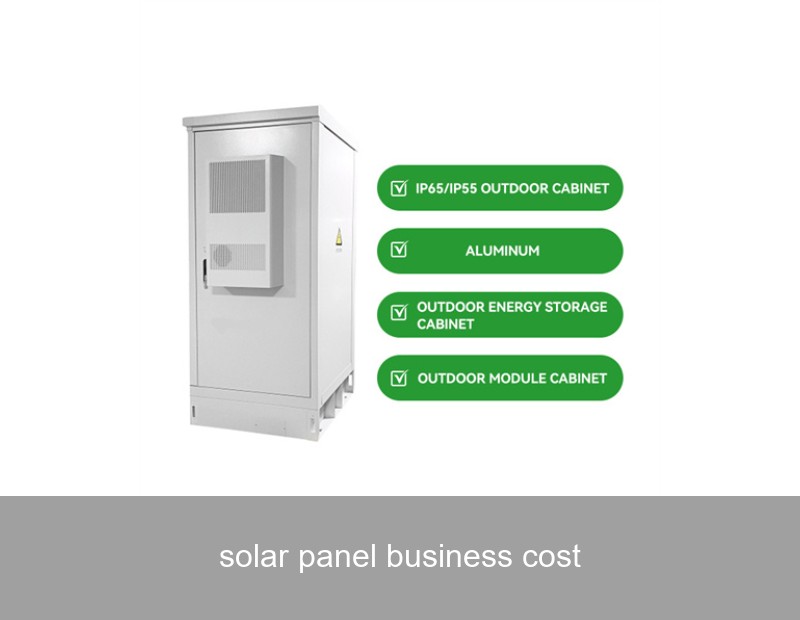
Thinking about solar panels for your business? You're likely focused on one crucial question: what's the real solar panel business cost? While the upfront price tag might cause initial hesitation, the modern energy landscape reveals a more compelling story. This cost is not just an expense; it's a strategic investment with a measurable return. For commercial and industrial operations across Europe and the U.S., the true calculation involves long-term energy savings, resilience against volatile utility rates, and a strengthened sustainability profile. Let's demystify the costs and explore how advanced solutions from providers like Highjoule are transforming this investment.
Table of Contents
- The Real Breakdown of Solar Panel Business Costs
- The Hidden Game-Changer: Energy Storage
- Case Study: A U.S. Manufacturing Plant's Success
- How to Maximize Your Solar Investment ROI
- Future-Proofing Your Business Energy Strategy
The Real Breakdown of Solar Panel Business Costs
Let's move beyond the simple "per-watt" quote. The total installed solar panel business cost is a composite of several key components:
- Equipment (Hardware): This includes solar panels, inverters, mounting structures, and wiring. Panel efficiency and inverter technology significantly impact both price and long-term output.
- Installation & Labor: Costs for engineering, permitting, and skilled labor to securely install the system. Complexity of your roof or site affects this.
- Soft Costs: Often overlooked, these include permitting fees, interconnection applications, and design. These vary greatly by region.
- Operations & Maintenance (O&M): A minimal but essential ongoing cost to ensure peak performance over the system's 25+ year lifespan.
According to data from the National Renewable Energy Laboratory (NREL), soft costs now represent a substantial portion of total system prices. However, the narrative is overwhelmingly positive: the levelized cost of solar energy has plummeted by over 90% in the last decade, making it highly competitive with, and often cheaper than, grid electricity in many markets.

Image Source: Unsplash - Commercial solar installation planning.
The Hidden Game-Changer: Energy Storage
Here's where the modern energy conversation gets exciting. Evaluating the solar panel business cost in isolation misses a massive opportunity. Pairing solar with a battery energy storage system (BESS) is what truly unlocks financial and operational potential. Why? Solar alone generates power only when the sun shines. Without storage, excess energy is often sold back to the grid at low rates, and you remain vulnerable to evening price spikes and outages.
Integrating a smart storage system transforms the equation. It allows you to:
- Store Excess Solar: Capture midday surplus for use during expensive peak evening hours.
- Demand Charge Management: Drastically reduce peak demand charges, a major cost for commercial users, by discharging the battery when your total power draw is highest.
- Enhance Resilience: Provide backup power during grid outages, ensuring business continuity.
This is precisely where Highjoule's expertise becomes critical. As a global leader in advanced energy storage since 2005, Highjoule designs integrated solutions that make your solar investment work harder. Their IntelliBESS platform isn't just a battery; it's an intelligent energy management system. It automatically optimizes when to charge from solar or the grid, when to discharge, and how to sequence loads during backup—all to deliver the fastest possible return on investment and the greatest energy independence.
Why Storage is No Longer Optional
Consider this: In regions like California or parts of the EU with time-of-use (TOU) rates, the price difference between off-peak and peak electricity can be 300% or more. A solar+storage system acts as your own private energy arbitrage tool, shielding your business from these market fluctuations. The added solar panel business cost for storage is rapidly paid back through these avoided costs.
Case Study: A U.S. Manufacturing Plant's Success
Let's look at real numbers. A medium-sized automotive parts manufacturer in Ohio was facing annual electricity costs of over $280,000, with nearly 40% attributed to demand charges. They installed a 500 kW rooftop solar array coupled with a 750 kWh Highjoule IntelliBESS.
| Metric | Before Installation | After Installation (First Year) |
|---|---|---|
| Annual Energy Bill | $280,000 | $62,000 |
| Peak Demand from Grid | 850 kW | 310 kW |
| Grid Energy Consumption | 1.2 GWh | 0.4 GWh |
| ROI Timeline (Estimated) | N/A | 5.2 years |
The system reduced their grid consumption by 67% and slashed demand charges. The total project cost was significant, but the ROI of under 5.5 years and the 25+ year asset life make it a stellar financial decision. The Highjoule system's intelligent controls were key, predicting production and consumption patterns to optimally dispatch the stored energy against the utility's complex rate structure.

Image Source: Unsplash - Manufacturing plant with solar integration.
How to Maximize Your Solar Investment ROI
To ensure your solar panel business cost translates into maximum value, follow this strategic approach:
- Conduct a Detailed Energy Audit: Understand your load profile, peak demand windows, and current rate structure. This is the blueprint for sizing both solar and storage correctly.
- Think "System," Not Just "Panels": Insist on an integrated design from the start. A solar+storage+management system, like Highjoule's end-to-end solutions, delivers far more value than components sourced separately.
- Explore Financial Incentives: In the U.S., the Investment Tax Credit (ITC) now applies to standalone storage and solar-storage pairs. Similar grants and tax benefits exist in many European countries, like EU financing mechanisms. These can reduce net cost by 30-50%.
- Prioritize Intelligence: The software managing your system is as important as the hardware. Highjoule's cloud-based analytics platform continuously learns and adapts, ensuring your system performs optimally as energy markets and your business evolve.
Future-Proofing Your Business Energy Strategy
The energy world is moving towards decentralization and digitalization. The initial solar panel business cost is your entry ticket into this resilient future. With a smart, storage-enabled microgrid, your business can participate in grid services (like frequency regulation), create new revenue streams, and lock in long-term energy costs.
Highjoule specializes in this very future. Their solutions for commercial, industrial, and microgrid applications are designed to be scalable and software-upgradable. This means your investment today can adapt to tomorrow's technologies and market opportunities, protecting you from obsolescence.
The Highjoule Difference: Partnership Beyond the Product
Choosing a provider like Highjoule means more than buying equipment. It's a partnership. From initial consultancy and custom system design to installation support and long-term performance monitoring, they ensure your journey to energy independence is seamless. Their global experience across U.S. and European markets means they understand local regulations, incentives, and grid challenges intimately.
So, as you evaluate proposals and ponder the solar panel business cost, ask yourself and your potential providers: Is this system designed to simply lower my bill today, or is it an intelligent platform that will maximize my financial and operational resilience for the next quarter-century? What would achieving 80% energy independence do for your company's bottom line and competitive edge?
 Inquiry
 Online Chat