


Unlocking the Future: How New Energy Storage Devices Are Powering a Sustainable Grid
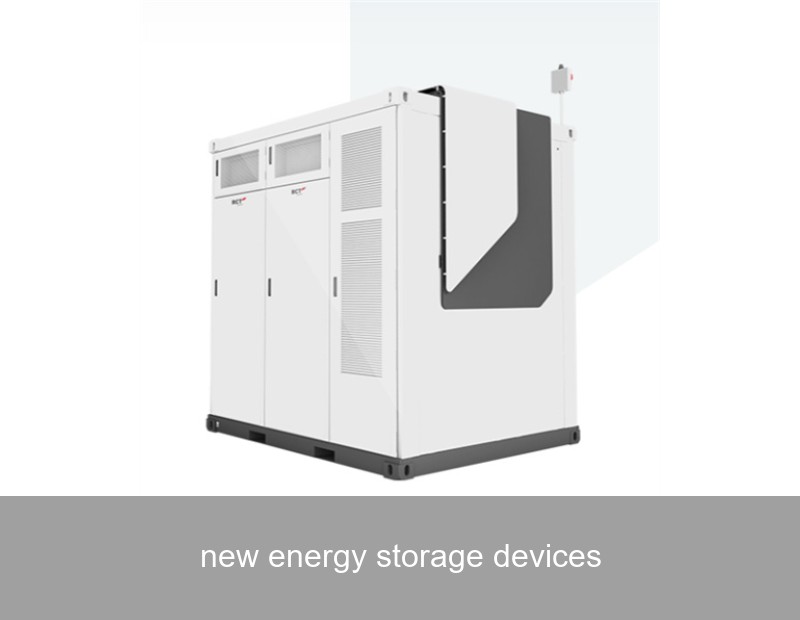
Imagine a world where the sun doesn't set on solar power, and the wind's intermittent gusts are no longer a challenge. This isn't a distant dream; it's the reality being built today with new energy storage devices. For businesses, communities, and homeowners, these systems are the missing link in the renewable energy puzzle, turning variable sources into reliable, 24/7 power. As we push towards ambitious decarbonization goals in Europe and the US, the question is no longer *if* we need storage, but *how* we can deploy it most intelligently and efficiently. This is where innovation meets infrastructure, transforming how we generate, manage, and consume electricity.
Table of Contents
The Challenge: An Intermittent Grid in Need of a Buffer
Let's face it: our energy landscape is changing faster than the grid was designed for. Solar panels go quiet at night, wind farms can be still for days, yet our factories, data centers, and homes demand constant, high-quality power. This mismatch creates a phenomenon known as the "duck curve"—where net power demand plummets during sunny afternoons and then surges steeply at dusk. Without a buffer, this strains traditional power plants, leads to curtailment (wasting perfectly good renewable energy), and jeopardizes grid stability.
The data underscores the urgency. The U.S. Energy Information Administration (EIA) projects that U.S. battery storage capacity will grow significantly in the coming years, a direct response to these integration challenges. Similarly, Europe's REPowerEU plan explicitly calls for accelerated storage deployment to enhance energy security and renewable integration. The phenomenon is clear; the need for a solution is critical.

Image Source: Unsplash - A modern battery energy storage system (BESS) installation.
The Rise of Advanced Energy Storage
Enter the new generation of energy storage devices. Gone are the days when storage meant just a single chemistry in a box. Today's systems are sophisticated, software-driven assets. They are not merely batteries; they are integrated systems that include advanced power conversion, thermal management, and, most importantly, intelligent control software. This evolution is driven by three core needs: longer duration (shifting power over hours, not minutes), enhanced safety, and grid-forming capabilities (the ability to restart a grid after a blackout).
Beyond the Battery: Key Technologies in Focus
While lithium-ion dominates headlines, the ecosystem of new energy storage devices is diverse:
- Lithium-Ion (Li-ion) Advancements: Continual improvements in cathode chemistry (like Lithium Iron Phosphate or LFP) are enhancing safety, cycle life, and reducing reliance on scarce cobalt.
- Flow Batteries: Ideal for long-duration storage (4+ hours), these systems store energy in liquid electrolytes. They offer exceptional longevity and decouple power from energy capacity. The U.S. Department of Energy highlights their potential for grid-scale applications.
- Thermal & Mechanical Storage: This includes solutions like pumped hydro (the incumbent leader), compressed air energy storage (CAES), and even novel gravity-based systems. They provide massive scale and duration.
Choosing the right technology isn't a one-size-fits-all decision. It requires a deep understanding of the application's specific power (kW) and energy (kWh) requirements, discharge duration, and site constraints.
| Technology | Typical Duration | Key Advantages | Best For |
|---|---|---|---|
| Advanced Li-ion (LFP) | 1-4 hours | High energy density, fast response, modular | Commercial peak shaving, frequency regulation, residential solar storage |
| Flow Batteries | 4-12+ hours | Long cycle life, safe, scalable energy capacity | Industrial load shifting, renewable firming, microgrids |
| Thermal Storage | 6-24+ hours | Very large scale, long lifespan, low cost per kWh at scale | Utility-scale renewable integration, seasonal storage |
Case Study: Stabilizing a European Industrial Park
Let's look at a real-world application. A major manufacturing park in Germany faced two problems: volatile energy costs and a grid connection limit that constrained expansion. Their on-site solar PV system often produced more power than could be used during midday, while evening production peaks incurred high grid demand charges.
The solution was a tailored 2.5 MWh battery energy storage system. Here's what it achieved in the first year of operation:
- Peak Load Shaving: Reduced grid demand during expensive peak periods by over 40%.
- Solar Self-Consumption: Increased the consumption of self-generated solar power from 55% to over 85%.
- Revenue Generation: By participating in the grid's primary control reserve market, the system generated additional income, improving its ROI.
- Carbon Reduction: Avoided an estimated 180 tons of CO2 emissions annually by optimizing renewable use and reducing reliance on peak grid power.
This case exemplifies how new energy storage devices are not just cost centers but revenue-generating, future-proofing assets for industry.

Image Source: Unsplash - An engineer monitoring a large-scale BESS control system.
The Highjoule Approach: Intelligent Storage Solutions
At Highjoule, we've been at the forefront of this transition since 2005. We understand that deploying a new energy storage device is a strategic decision. That's why our focus extends beyond hardware to deliver a complete, intelligent power solution.
Our flagship product, the H-Series Modular Energy Storage System, is designed for commercial and industrial applications. Built with market-leading LFP battery cells, it prioritizes safety and longevity. Its true intelligence, however, lies in the Highjoule Energy Operating System (EOS). This AI-driven software platform doesn't just monitor—it actively optimizes. It makes real-time decisions to perform peak shaving, enable energy arbitrage, provide grid services, and ensure backup power, all while maximizing the system's financial return and lifespan.
For residential and small commercial users, our Home & Business PowerWall integrates seamlessly with solar PV, giving users energy independence and control over their bills. And for the most complex challenges, our Microgrid Solutions team designs and integrates storage with multiple generation sources (solar, wind, gensets) to create resilient, self-sufficient energy islands for communities, campuses, or remote industrial sites.
Our services encompass everything from initial feasibility studies and financial modeling to system design, installation, and 24/7 remote monitoring. We partner with our clients for the long term, ensuring their storage asset performs optimally for its entire lifecycle.
The Future Landscape of Energy Storage
The trajectory is clear: storage will become as fundamental to the energy system as generation is today. We're moving towards hybrid systems that combine multiple storage technologies, "virtual power plants" (VPPs) that aggregate thousands of distributed storage units, and even second-life applications for electric vehicle batteries. Policy frameworks, like the EU's supportive stance on storage and the U.S. Inflation Reduction Act (IRA), are accelerating investment and adoption.
The conversation is shifting from simple payback periods to value stacking and holistic energy management. The most forward-thinking organizations are already asking not just about the cost of the storage system, but about the cost of *not* having one—in terms of missed savings, operational risk, and carbon liabilities.
Is your business or community ready to assess how the latest new energy storage devices could transform your energy resilience, sustainability, and bottom line? What's the first step you need to take to turn your renewable energy ambitions into a 24/7 reality?
 Inquiry
 Online Chat