


Unlocking Energy Independence: The Rise of the 100 kWh Batteriespeicher
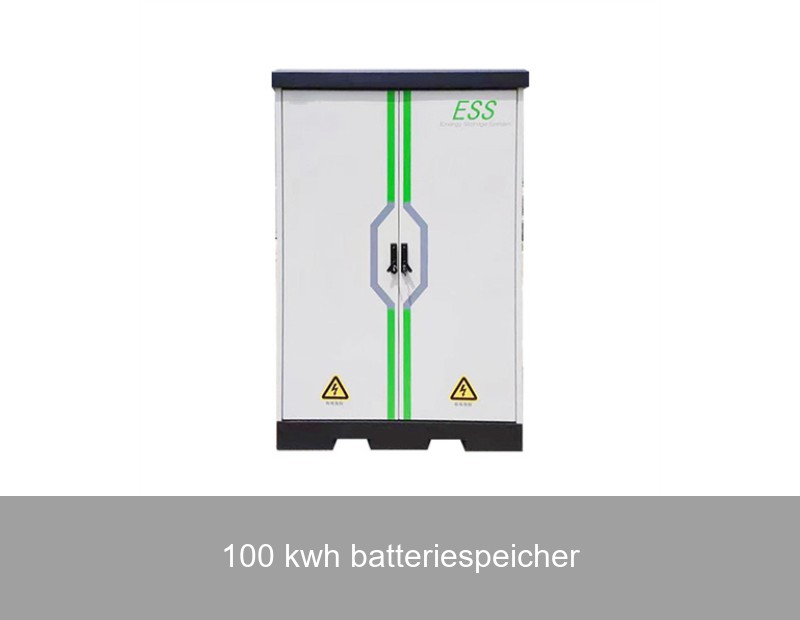
Imagine a world where your business isn't at the mercy of the next grid outage or volatile energy prices. For forward-thinking homeowners, businesses, and communities across Europe and the U.S., this is no longer a distant dream. It's being powered today by a specific class of energy storage: the 100 kWh Batteriespeicher (battery storage system). This isn't just a bigger battery; it's a strategic energy asset, a cornerstone for true energy resilience and a smarter, more sustainable power ecosystem. As a senior product expert at Highjoule, I see this capacity as the sweet spot for meaningful, scalable impact. Let's explore why.
Table of Contents
The 100 kWh Sweet Spot: Why Size Matters
You might wonder, why 100 kWh specifically? In energy storage, capacity is destiny. Smaller residential systems (10-20 kWh) are excellent for shifting solar self-consumption. Large utility-scale systems span megawatt-hours. The 100 kWh unit sits perfectly at the intersection of commercial viability and transformational impact. It's the ideal scale for:
- Small to Medium Enterprises (SMEs): Covers extended operational loads through evenings or grid outages.
- Agricultural Operations: Powers refrigeration, irrigation, and processing facilities reliably.
- Multi-Family Residential Buildings & Microgrids: Provides shared storage for communities or critical local infrastructure.
- Peak Shaving for Larger Facilities: Acts as a targeted solution to avoid costly demand charges from utilities.
At Highjoule, our H-Series Commercial Energy Storage platform is engineered around this critical capacity range. We design our 100 kWh systems not as monolithic blocks, but as modular, scalable units. This means you can start with a configuration that meets today's needs—say, 100 kWh—and seamlessly expand as your energy demands grow, future-proofing your investment.

Image: Modular battery systems allow for scalable capacity. Source: Unsplash
Data Deep Dive: The Economics of Scale
The phenomenon is clear: energy volatility is a persistent challenge. The data, however, reveals the compelling financial logic behind mid-scale storage. According to the International Renewable Energy Agency (IRENA), the global weighted average cost for battery storage projects fell by over 60% between 2015 and 2022. This trend makes a 100 kWh system more accessible than ever.
Let's break down the economics with a common scenario: Demand Charge Management. Many commercial utility tariffs include a "demand charge" based on your highest 15-minute power draw each month. It can constitute up to 50% of a business's electricity bill. A strategically deployed 100 kWh battery can "shave" these peaks by discharging during high-load periods, leading to immediate, recurring savings.
| Benefit | How a 100 kWh Battery Delivers | Typical Impact |
|---|---|---|
| Peak Shaving | Discharges to cap grid power draw during operational peaks. | Can reduce demand charges by 20-40%. |
| Solar Self-Consumption Optimization | Stores excess midday solar generation for use in the evening. | Can increase solar usage from ~30% to 70%+. |
| Backup Power | Provides seamless transition to battery power during an outage. | Hours to a full day of runtime for critical loads. |
Case Study: A German Mittelstand Success Story
Let's move from data to a real-world case. Consider a precision manufacturing Mittelstand company in Bavaria, Germany. This facility operates energy-intensive CNC machinery and requires a stable climate control environment 18 hours a day. Their challenges were peak demand charges and concerns over grid reliability affecting production quality.
They partnered with Highjoule to implement a tailored 120 kWh storage solution (using our modular H-Series platform) integrated with their existing rooftop solar. The system was configured for peak shaving and solar optimization.
- Result (12-month period): A 28% reduction in overall electricity costs, primarily through slashing demand charges.
- Solar Self-Consumption: Increased from 35% to 82%, maximizing their renewable investment.
- ROI Timeline: Projected payback period of under 7 years, with a system lifespan exceeding 15 years.
- Added Value: The system now also participates in a local grid flexibility program, generating a small additional revenue stream, a service enabled by Highjoule's intelligent GridSync™ software.
This case exemplifies how a 100 kWh-class system isn't an expense but a revenue-protecting asset. It provides tangible, quantifiable returns while building operational resilience.
Beyond Backup: Intelligent Energy Management
The true power of a modern 100 kWh Batteriespeicher lies not in the lithium cells alone, but in its brain. A basic battery stores energy; an intelligent system manages it. This is where Highjoule's core philosophy comes into play.
Our systems are governed by the Highjoule Energy Operating System (EOS), an AI-driven platform that makes real-time decisions to optimize your energy flow. It considers:
- Real-time electricity prices (for markets with dynamic tariffs)
- Weather forecasts and solar production predictions
- Your historical and forecasted load patterns
- Grid service opportunities (where applicable)
Think of it as an autopilot for your energy use. The EOS ensures every kilowatt-hour in your 100 kWh bank is used in the most economically advantageous way possible—whether that's avoiding a peak charge, storing cheap night-rate power, or ensuring backup capacity is always reserved.

Image: Intelligent software is key to maximizing storage value. Source: Unsplash
Choosing Your 100 kWh Power Partner
Investing in a system of this scale is significant. The right technology and partner are crucial. Here are key considerations, informed by Highjoule's nearly two decades of experience:
- Modularity & Scalability: Can you start at 100 kWh and expand later without major re-engineering? Our H-Series is built for this.
- DC-Coupled vs. AC-Coupled Design: DC-coupled systems (like Highjoule's integrated solar+storage solutions) are typically more efficient for new solar installations, capturing and storing energy with fewer conversion losses. The choice depends on your existing assets.
- Thermal Management & Safety: A 100 kWh pack contains substantial energy. Robust, active liquid cooling (a standard in Highjoule's commercial systems) ensures optimal performance, longevity, and safety in all climates, unlike simpler passive air-cooled units.
- Software Intelligence: As discussed, the software defines the ROI. Ensure it's not an afterthought but a core platform with a clear roadmap, like our EOS.
- Warranty & Longevity: Look for a performance warranty that guarantees a high percentage of original capacity (e.g., 70%) after 10 years. Highjoule's warranties are backed by bankable performance data.
Ultimately, a 100 kWh Batteriespeicher is more than hardware. It's a partnership for your energy future. It's about choosing a provider like Highjoule that offers end-to-end service—from initial consultancy and custom design to installation, commissioning, and long-term performance monitoring—ensuring your system delivers on its promise for decades.
Looking Ahead: Your Energy Ecosystem
The transition to decentralized, resilient energy is accelerating. With policies like the EU's REPowerEU Plan and the U.S. Inflation Reduction Act (IRA) creating favorable incentives, the economic case for storage like a 100 kWh system is stronger than ever.
So, the question isn't just about purchasing a battery. It's about designing your own intelligent, resilient energy ecosystem. What would a 28% reduction in your energy costs do for your business's competitiveness? How would guaranteed backup power change your risk profile? The capacity to answer these questions is now, quite literally, within storage.
What is the first energy challenge you would task your own 100 kWh Batteriespeicher to solve?
 Inquiry
 Online Chat