


Why Energy Storage Importance is the Keystone of Our Clean Energy Future
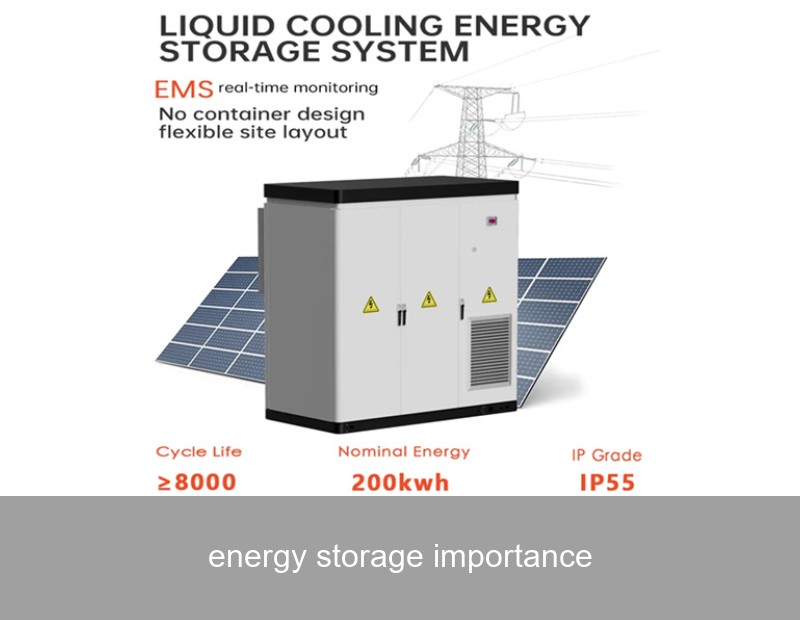
Let's be honest for a moment. The transition to renewable energy is one of the most critical challenges of our time. We see solar panels on rooftops and wind turbines on the horizon, painting a picture of a sustainable future. But there's a fundamental puzzle piece we often overlook in this green energy picture: the critical importance of energy storage. Without it, the promise of a reliable, clean grid remains just that—a promise. This isn't just a technical nuance; it's the very foundation that will allow us to power our homes, businesses, and industries with the sun and wind, even when the sun sets and the winds calm.
Table of Contents
- The Challenge: Intermittency in a World That Demands 24/7 Power
- The Data: Grid Strain and the Economic Case for Storage
- The Solution: How Modern Energy Storage Systems Work
- Case Study: California's Duck Curve and a Real-World Fix
- Highjoule's Role: Delivering Intelligent Storage for Every Need
- The Future is Stored: Your Next Step
The Challenge: Intermittency in a World That Demands 24/7 Power
Renewable sources like solar and wind are "variable." They don't produce a constant, predictable stream of electricity like a traditional gas or coal plant. This creates a mismatch. Our demand for electricity peaks in the morning and evening, but solar generation, for instance, peaks in the middle of the day. This leads to a phenomenon grid operators dread: potential waste during overproduction and risk of blackouts during underproduction. Energy storage acts as a "buffer," seamlessly bridging this gap. It captures excess energy when generation is high and dispatches it when demand is high, ensuring stability and preventing waste. Think of it as a giant, sophisticated battery for the entire grid—or for your own home or business.
The Data: Grid Strain and the Economic Case for Storage
The numbers speak volumes. According to the International Energy Agency (IEA), to stay on track for net-zero emissions by 2050, the world needs to add approximately 680 GW of energy storage capacity by 2030. That's a massive leap from today's levels. In the U.S. alone, the Department of Energy's "Grid Deployment Office" highlights that storage can defer or avoid costly investments in new transmission and distribution infrastructure. The financial impact is clear: by shaving peak demand, storage reduces the need to fire up expensive, polluting "peaker plants," saving money for utilities and, ultimately, consumers. It's not just an environmental tool; it's a powerful economic one.

Image: Grid-scale battery storage systems are becoming a common sight, crucial for balancing modern electricity networks. (Source: Unsplash)
The Solution: How Modern Energy Storage Systems Work
Today's energy storage, particularly Battery Energy Storage Systems (BESS), are technological marvels. They go far beyond just storing electricity. A modern BESS integrates several key components:
- Battery Cells: Typically lithium-ion for their high density and efficiency, arranged into modules and racks.
- Power Conversion System (PCS): The "brain" of the operation, converting DC battery power to AC grid power and vice versa.
- Energy Management System (EMS): The intelligent software that decides when to charge and discharge based on price signals, grid needs, or user preferences.
- Thermal Management & Safety Systems: Ensures the batteries operate within a safe temperature range and include advanced fire suppression.
This integrated system can respond in milliseconds to grid fluctuations, provide backup power during outages, and enable homeowners and businesses to maximize their solar self-consumption.
Case Study: California's Duck Curve and a Real-World Fix
Perhaps no example illustrates the importance of energy storage better than California's famous "Duck Curve." This graph, published by the California Independent System Operator (CAISO), shows the deep dip in net grid demand during sunny afternoons (when solar floods the grid) followed by a steep, rapid ramp-up in demand as the sun sets and people return home. This steep ramp is challenging and expensive for conventional power plants to meet.
To flatten this duck, California has aggressively deployed storage. In one notable project, the Monterey County 100MW/400MWh Moss Landing Energy Storage Facility (one of the world's largest) plays a pivotal role. By storing excess midday solar and discharging it during the evening peak, it stabilizes the grid, prevents renewable curtailment, and reduces reliance on natural gas. In 2023, CAISO reported that battery storage resources discharged a record 5,000+ MWh to the grid during an evening peak, directly mitigating reliability concerns. This is storage in action, solving a real, data-driven grid problem.
Highjoule's Role: Delivering Intelligent Storage for Every Need
At Highjoule, we've been at the forefront of this storage revolution since 2005. We understand that the importance of energy storage manifests differently for a family home, a large factory, or a community microgrid. That's why our solutions are tailored and intelligent.
For residential customers, our HomePower Stack series is more than a backup battery. Its AI-driven EMS learns your consumption patterns and solar production, automatically optimizing when to store solar energy and when to draw from the grid to maximize savings and self-sufficiency. You're not just buying a battery; you're buying a smart energy manager for your home.
For commercial & industrial (C&I) applications, the stakes are higher. Downtime is costly, and energy bills are a major operational expense. Our GridMax Pro C&I systems are engineered for high-cycling and peak shaving. They can significantly reduce demand charges—a major portion of a business's electricity bill—by discharging stored energy during short periods of highest grid demand. For a manufacturing plant or a cold storage facility, this translates directly to improved bottom lines and enhanced power quality.

Image: Technicians monitoring a commercial-scale energy storage system, ensuring reliability for business operations. (Source: Unsplash)
Our most advanced work is in utility-scale and microgrid solutions. Highjoule's GridStability Matrix provides grid operators with a flexible tool for frequency regulation, renewable integration, and deferred grid upgrades. For remote communities or critical infrastructure like hospitals, our containerized, turn-key microgrid solutions with integrated solar, storage, and control systems ensure resilience and independence from the main grid.
| Application | Product Line | Key Benefits |
|---|---|---|
| Residential | HomePower Stack | Solar self-consumption, backup power, bill savings, AI optimization |
| Commercial & Industrial | GridMax Pro | Peak shaving (demand charge reduction), backup power, power quality |
| Utility & Microgrid | GridStability Matrix | Grid services (frequency regulation), renewable firming, full microgrid control |
The Future is Stored: Your Next Step
The journey to a decarbonized grid is undeniably complex. But one truth is becoming universally clear: unlocking the full potential of wind and solar is impossible without recognizing and acting upon the fundamental importance of energy storage. It is the enabler, the stabilizer, and the economic catalyst. From flattening California's duck curve to powering a single home through a storm, storage is the silent hero of the energy transition.
The technology is here, proven, and scalable. The question is no longer "if" we need storage, but "how" and "where" we deploy it most effectively. Whether you're a homeowner looking to take control of your energy, a business leader aiming to cut costs and carbon, or a community planner building resilience, the next step begins with understanding your specific energy profile. What does your daily "curve" look like, and how could a buffer of intelligent, stored power transform it?
 Inquiry
 Online Chat