


Reserve Power Battery Solutions: The Unsung Hero of Modern Energy Security
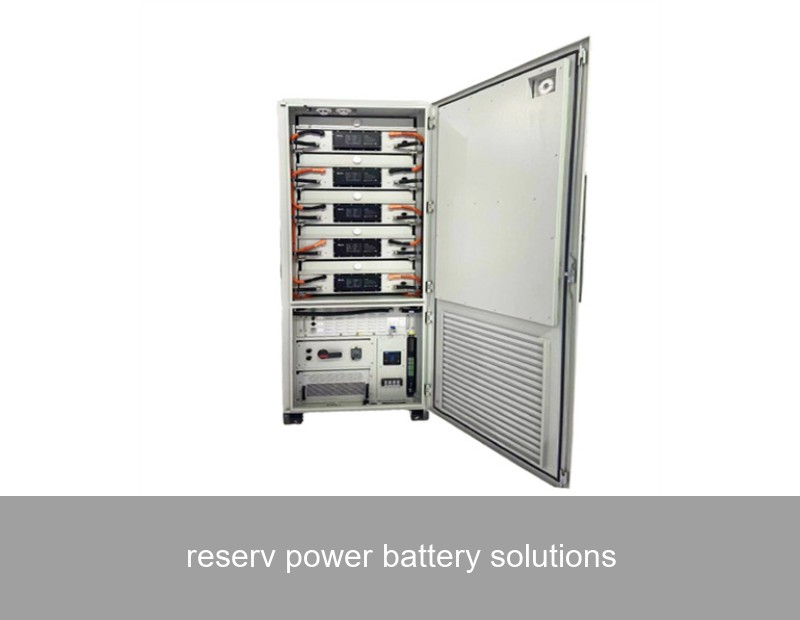
Imagine this: a critical surgical procedure in a hospital, the final quality check on a high-value manufacturing line, or a bustling data center processing millions of transactions. Suddenly, the grid power flickers and dies. In that instant, it's not just an inconvenience—it's a potential catastrophe. This is where reserve power battery solutions step in, acting as a silent, instantaneous guardian. They are no longer just simple backup systems; they are sophisticated, intelligent energy assets that ensure continuity, stability, and resilience. For businesses and communities in Europe and the US facing increasing grid volatility and ambitious decarbonization goals, understanding and deploying the right reserve power system is a strategic imperative.
Table of Contents
- The Phenomenon: Grid Instability is the New Normal
- The Data: Quantifying the Cost of Downtime
- The Evolution: From Lead-Acid to Intelligent Lithium-Ion ESS
- Case Study: A German Automotive Supplier's Resilience Story
- The Highjoule Approach: Smart, Scalable Reserve Power
- Key Considerations for Your Reserve Power System
- The Future Horizon: Beyond Backup to Grid Services
The Phenomenon: Grid Instability is the New Normal
Across Europe and North America, the energy landscape is undergoing a profound transformation. The rapid integration of intermittent renewable sources like wind and solar, while essential for a green future, introduces new challenges to grid frequency and voltage stability. Coupled with aging infrastructure and increasing frequency of extreme weather events—from heatwaves in California to winter storms in Scandinavia—power quality issues and short-duration outages are becoming more common. This phenomenon moves reserve power battery solutions from a "nice-to-have" for critical facilities to a "must-have" for a wide range of commercial and industrial operations. The question is no longer if you need backup power, but what kind of backup power is most reliable, efficient, and future-proof.

Modern industrial facilities are increasingly integrating large-scale battery storage for resilience and cost savings.
The Data: Quantifying the Cost of Downtime
Let's talk numbers. The financial impact of a power interruption is staggering. According to a report by the U.S. Department of Energy, power outages cost the U.S. economy an estimated $150 billion annually. For a single data center, downtime can cost over $9,000 per minute. In manufacturing, even a brief voltage dip can trip sensitive machinery, causing hours of lost production, spoiled materials, and equipment damage.
This data reveals a crucial insight: the value of reserve power battery solutions is measured not just in the cost of the system itself, but in the millions in potential losses they prevent. They provide what's known as "ride-through" capability, bridging the gap between grid failure and the start of a generator, or handling the entire outage if it's short. The speed of response is critical—while traditional generators can take 10-30 seconds to start and stabilize, modern battery systems react in milliseconds, providing seamless power.
The Evolution: From Lead-Acid to Intelligent Lithium-Ion ESS
The technology behind reserve power has evolved dramatically. The old paradigm involved rows of lead-acid batteries in a dedicated room, requiring constant cooling, maintenance, and replacement every 5-7 years. Today, the standard is Lithium-Ion based Battery Energy Storage Systems (BESS). But not all BESS are created equal. The true advancement lies in intelligence.
A modern reserve power battery solution is a sophisticated ecosystem:
- Advanced Battery Management System (BMS): Monitors every cell for health, temperature, and state of charge, ensuring safety and longevity.
- Intelligent Power Conversion System (PCS): The "brain" that manages the DC-AC conversion and grid interaction, enabling seamless transition.
- Energy Management Software (EMS): This is where the magic happens. The EMS can be programmed for multiple use cases: providing standby power, peak shaving to reduce demand charges, and even participating in grid frequency response programs for additional revenue.
Case Study: A German Automotive Supplier's Resilience Story
Let's look at a real-world application. A tier-1 automotive supplier in Bavaria, Germany, faced a dual challenge: protecting its precision robotic welding lines from costly micro-outages and managing soaring energy costs driven by high peak demand charges.
They partnered with Highjoule to implement a tailored 500 kWh / 750 kVA reserve power battery solution. The system was integrated behind-the-meter with their main distribution panel. Here’s what happened:
| Metric | Before Highjoule System | After Highjoule System |
|---|---|---|
| Power Interruption Response | 15-second generator start, leading to production halt | Seamless transition in <20ms, zero interruptions |
| Peak Demand Reduction | Monthly peak of 1.2 MW | Peak shaved to 950 kW |
| Annual Demand Charge Savings | Baseline | €18,500 saved annually |
| System Payback Period | N/A | Estimated 4.2 years (from combined savings & resilience value) |
This case exemplifies the dual benefit: the system acts as an insurance policy against downtime while actively generating cost savings every single day. The Highjoule EMS intelligently dispatches the battery, prioritizing reserve capacity for emergencies while aggressively shaving peak loads during normal operation.

Centralized control systems allow for intelligent management of reserve power assets.
The Highjoule Approach: Smart, Scalable Reserve Power
At Highjoule, with nearly two decades of experience since 2005, we view reserve power battery solutions as the cornerstone of energy resilience and intelligence. Our systems are engineered for mission-critical reliability, but designed with simplicity in mind.
Our flagship product line for commercial and industrial applications, the H-Series Modular BESS, is built on a containerized, scalable architecture. What does this mean for you?
- Modular Design: Start with a 100 kW unit and scale up to multi-megawatt installations by adding pre-configured modules. This future-proofs your investment.
- Unparalleled Grid Support: Our proprietary GridSync™ inverter technology provides not just backup, but also voltage and frequency regulation, improving power quality for your entire facility.
- AI-Driven Predictive Analytics: Our cloud-based platform, Highjoule Horizon, monitors system performance and grid conditions, predicting potential issues and optimizing dispatch strategies for maximum savings and reliability. It can even provide insights into when to schedule maintenance, preventing surprises.
For us, the service doesn't end at installation. We offer comprehensive Energy-as-a-Service (EaaS) models, including long-term performance guarantees and remote monitoring, ensuring your reserve power battery solution delivers value for its entire 15+ year lifespan.
Key Considerations for Your Reserve Power System
Choosing the right system requires a clear assessment of your needs. Ask yourself and your provider these key questions:
- Critical Load Profile: What are the essential loads (in kW) I need to support, and for how long (hours)?
- Power Quality Needs: Are my processes sensitive to voltage sags or frequency variations, requiring ultra-fast response?
- Financial Drivers: Is my primary goal pure backup, or do I want to reduce demand charges and participate in utility programs? The FERC markets in the US and various European balancing markets offer revenue streams for fast-responding batteries.
- Site and Sustainability Goals: Do I have space and interconnection constraints? How does this investment align with our corporate carbon reduction targets?
The Future Horizon: Beyond Backup to Grid Services
The role of reserve power battery solutions is expanding. They are becoming active participants in the energy ecosystem, a concept known as "non-wires alternatives." Imagine a community microgrid, where a Highjoule system at an industrial park not only protects local businesses but also provides stability to the surrounding neighborhood grid, deferring the need for costly substation upgrades. Or a fleet of distributed residential batteries, aggregated by a utility, forming a virtual power plant to balance regional supply and demand.
This future is not distant; it's being built today. The technology is proven, the economics are increasingly compelling, and the need for resilience is undeniable. The strategic shift is from viewing batteries as a cost center for emergencies to seeing them as a dynamic asset for financial and operational advantage.
Is your organization merely reacting to power events, or are you proactively building an intelligent, resilient, and profitable energy infrastructure? What would the ability to guarantee power continuity for your most critical operations—regardless of grid conditions—do for your competitive edge and peace of mind?
 Inquiry
 Online Chat