


Are Ni-Cd Batteries for Solar Systems Still a Viable Choice in the Modern Energy Landscape?
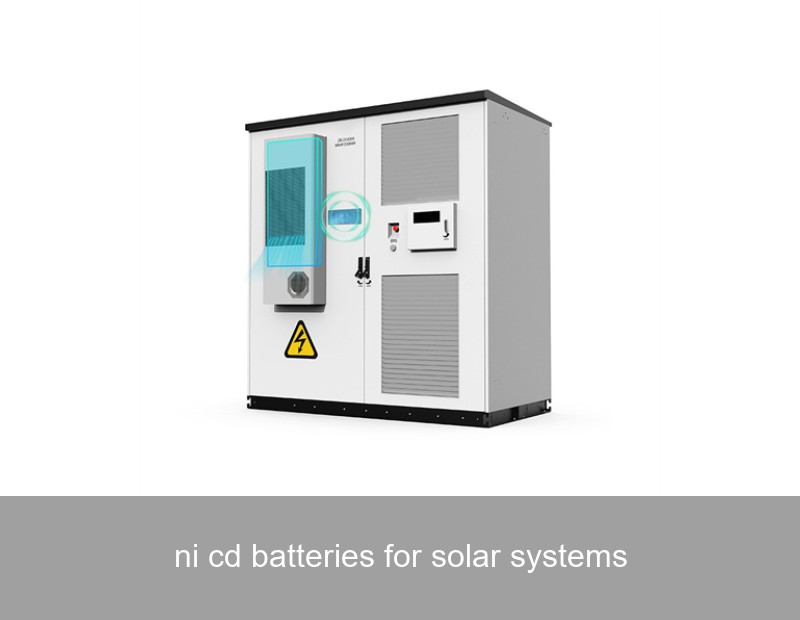
You're designing a solar-plus-storage system, and amidst the buzz around lithium-ion, a veteran technology quietly persists on the spec sheet: nickel-cadmium (Ni-Cd) batteries. Once the dominant force in rechargeable energy storage, their mention today often raises eyebrows. Are they a relic, or do they hold unique advantages for specific solar applications? This deep dive cuts through the noise, examining the enduring role of Ni-Cd batteries for solar systems, backed by data, real-world cases, and insights into where they truly shine.
Table of Contents
- The Ni-Cd Phenomenon: Durability in a Harsh World
- Data & Performance: Where Ni-Cd Numbers Stand Out
- Case Study: Powering Arctic Research with Reliable Ni-Cd Storage
- Ni-Cd in a Modern Context: Niche Expertise vs. Mainstream Solutions
- The Highjoule Approach: Matching Technology to Application
- Making the Choice: Key Questions for Your Solar Storage Project
The Ni-Cd Phenomenon: Durability in a Harsh World
Let's address the elephant in the room first. Yes, lithium-ion batteries dominate headlines with higher energy density and sleek designs. But imagine a battery that laughs in the face of temperature extremes, requires minimal babysitting, and can be deeply discharged for years without batting an eye. That's the Ni-Cd proposition. Their fundamental chemistry makes them incredibly robust. Unlike many lithium-based cousins, they are highly tolerant of overcharging and can sit idle for long periods without significant self-discharge or damage. This inherent toughness is why, when you look at the most demanding, remote, or safety-critical off-grid and backup solar installations, Ni-Cd batteries often remain the technology of choice.
Data & Performance: Where Ni-Cd Numbers Stand Out
Beyond anecdotal strength, the specifications tell a compelling story for specific use cases. Compare key metrics relevant to solar system design:
| Parameter | Ni-Cd (Sintered/PBE) | Standard Lithium-Ion (LFP) | Implication for Solar Systems |
|---|---|---|---|
| Operating Temperature Range | -40°C to +50°C (-40°F to 122°F) | 0°C to 45°C (32°F to 113°F) optimal* | Ni-Cd operates in arctic cold or desert heat without costly climate control. |
| Cycle Life (to 80% DoD) | 2,000 - 3,500+ cycles | 3,000 - 6,000+ cycles | Both offer long life, but Ni-Cd longevity is less affected by partial state-of-charge operation. |
| Maintenance Needs | Requires periodic equalization charges. | Virtually maintenance-free. | Ni-Cd adds operational overhead for sustained peak performance. |
| Capital Cost (per kWh) | Higher upfront cost | Lower and decreasing upfront cost | Ni-Cd's value is in lower lifetime cost for extreme-duty cycles. |
*Lithium-ion performance degrades rapidly at low temperatures and requires heating systems, adding complexity and energy drain. Source: U.S. Department of Energy
The data reveals a clear trade-off. For a standard residential or commercial solar system in a temperate climate, lithium-ion's energy density and plug-and-play nature win. But when the environment becomes the primary adversary, Ni-Cd's specifications turn from drawbacks into critical assets.
Case Study: Powering Arctic Research with Reliable Ni-Cd Storage
Consider the Ny-Ålesund Research Station in Svalbard, Norway, one of the world's northernmost permanent settlements. Here, polar night plunges the region into months of darkness, and temperatures routinely drop below -30°C (-22°F). A hybrid solar-diesel-wind microgrid must provide uninterrupted power for sensitive scientific equipment year-round.
In one of their critical power backup systems, engineers opted for a large-scale Ni-Cd battery bank. Why? Reliability was non-negotiable. The batteries needed to:
- Start instantly after months of cold idle during the dark season.
- Require no active heating, preserving precious generated energy.
- Withstand unpredictable charge/discharge patterns from variable renewable sources.
The installed Ni-Cd system has provided over 15 years of fault-free service, with zero capacity loss due to cold. It acts as a "shock absorber" for the microgrid, ensuring power quality during generator switch-overs and renewable intermittency. This case isn't about efficiency percentages; it's about guaranteed performance where failure is not an option. The total cost of ownership, considering the avoided costs of system failures and replacements, validates the initial investment.

Image: Solar installations in extreme environments like Ny-Ålesund demand ultra-reliable storage. Credit: Bjoertvedt, via Wikimedia Commons (CC BY-SA 3.0).
Ni-Cd in a Modern Context: Niche Expertise vs. Mainstream Solutions
So, should you consider Ni-Cd batteries for your solar system? The answer is a definitive "it depends."
Consider Ni-Cd if your project involves:
- Extreme Temperatures: Remote telecom sites, arctic/desert microgrids.
- Critical Backup & Safety Systems: Where float life and instant response are paramount (e.g., offshore platforms, emergency lighting).
- High-Rate Discharge Applications: Such as starting large diesel generators or grid stabilization.
- Long-Term, Simple Maintenance Cycles: Where scheduled maintenance is preferred over complex BMS-driven systems.
However, for the vast majority of residential, commercial, and industrial solar storage applications seeking daily cycling for self-consumption or time-of-use arbitrage, modern lithium iron phosphate (LFP) batteries are the superior choice. They are safer, more energy-dense, efficient, and have a lower upfront cost. The environmental handling of cadmium also requires strict end-of-life recycling protocols, a factor less prominent with non-toxic LFP chemistry.
The Highjoule Approach: Matching Technology to Application
At Highjoule, with nearly two decades of experience as a global advanced energy storage provider, we believe there is no single "best" battery. There is only the best battery for the specific application. Our expertise lies in designing intelligent, optimized systems that leverage the right technology for the job.
For clients with projects in the most punishing environments—where resilience trumps all—we offer engineered solutions incorporating premium, industrial-grade Ni-Cd batteries. We handle the complex system integration, ensuring proper charging regimes and thermal management (or lack thereof needed) to maximize their legendary lifespan.
Conversely, for our broad portfolio of commercial, industrial, residential, and community microgrid solutions, our flagship Highjoule HPS Series lithium iron phosphate (LFP) battery systems deliver the ideal balance of safety, performance, and value. With intelligent monitoring via our EnergyOS™ platform, these systems automate energy savings and provide grid services, all while ensuring a sustainable lifecycle. Our role is to provide the clarity and technical depth to make this critical choice with confidence.

Image: Modern LFP-based BESS installations, like Highjoule's HPS Series, are the standard for most commercial and industrial solar applications. Credit: Unsplash.
Making the Choice: Key Questions for Your Solar Storage Project
Navigating this technology crossroad requires asking the right questions:
- What are the minimum and maximum ambient temperatures at the installation site?
- Is this a daily cycling application or a standby/backup one?
- What is the consequence of a power interruption in this application?
- What level of operational maintenance is feasible over a 15-20 year lifespan?
- How do total lifetime costs compare, not just upfront capital expenditure?
Answering these will steer you toward the appropriate technology. The continued existence of Ni-Cd batteries in the solar conversation is a testament to the diverse challenges energy systems face globally. It reminds us that innovation isn't just about chasing the highest density; it's about engineering the right tool for the job.
 Inquiry
 Online Chat