


Finding the Right Fit: Your Guide to the 110W Solar Panel for Sale and Beyond
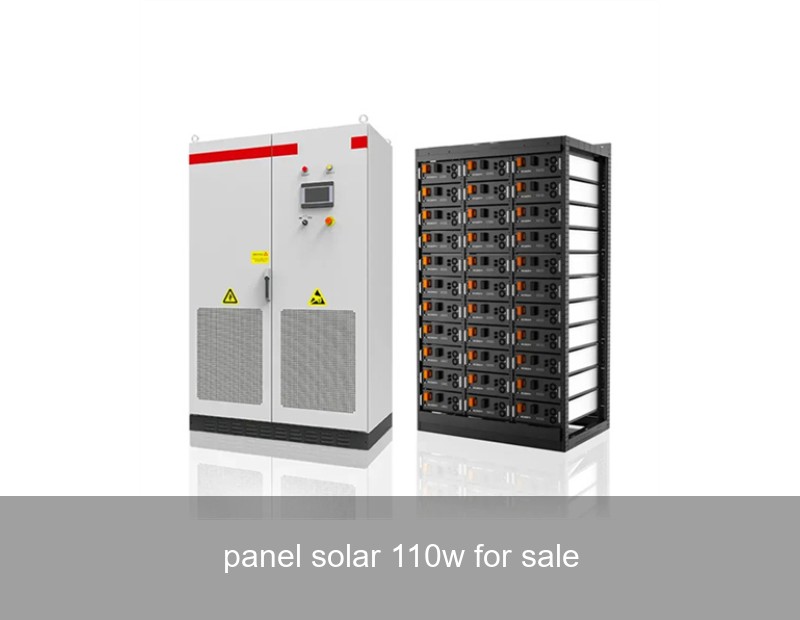
So, you're searching for a "panel solar 110w for sale." That's a great starting point! It tells us you're likely looking for a manageable, versatile solar solution. Maybe for a camper van, a boat, a small shed, or to dip your toes into solar energy. A 110-watt panel is a fantastic building block, but to truly unlock reliable, usable power, there's a bigger picture to consider. Let's explore what a 110W panel can do, where it shines, and—crucially—how integrating it with a modern energy storage system can transform it from a simple panel into a complete power solution.
What Exactly is a 110W Solar Panel?
A 110-watt (W) solar panel is a compact photovoltaic (PV) module designed to convert sunlight into direct current (DC) electricity. Under ideal laboratory conditions—known as Standard Test Conditions (STC)—it will produce 110 watts of power. In the real world, factors like sunlight intensity, angle, temperature, and shading affect output. On a clear, sunny day, you might expect a well-positioned 110W panel to generate between 400-600 watt-hours (Wh) of energy, depending on your location and season. That's enough to charge a laptop multiple times, keep a 12V fridge running for several hours, or power LED lighting all evening.

Image Source: Unsplash (Photographer: American Public Power Association)
Perfect Applications for a 110W Solar Panel
This panel size is the workhorse of small-scale, off-grid applications. Its popularity is no accident; it hits a sweet spot between portability, cost, and usable output. Here are the most common and effective uses:
- Recreational Vehicles (RVs) & Campervans: Perfect for keeping auxiliary batteries charged to run lights, fans, and small appliances.
- Marine Use: Ideal for boats to maintain battery health for navigation instruments, bilge pumps, and cabin lights without running the engine.
- Remote Monitoring & Telecom Equipment: Often used to power small, off-grid sensors, data loggers, or communication devices.
- Small Off-Grid Sheds or Cabins: Can be part of a system for basic lighting, tool battery charging, or running a small water pump.
- Educational Kits & DIY Projects: A great size for learning about solar principles and building small systems.
However, here's a critical insight: the panel is only the source. The electricity it produces is intermittent (only during daylight) and needs to be stored, managed, and converted for safe use. That's where the conversation evolves from a single component to a complete system.
Beyond the Panel: The Critical Role of Energy Storage
Think of it this way: a solar panel is like a rain barrel that only collects water when the sun is shining. An energy storage system (ESS) is the insulated tank that stores that water, purifies it, and lets you use it on-demand, day or night, rain or shine. For any application where you need power when the sun isn't out, storage is non-negotiable.
The core of a storage system is the battery. While traditional lead-acid batteries are common, Lithium Iron Phosphate (LiFePO4) batteries have become the gold standard for reliability and longevity. They offer:
- Longer lifespan (often 6000+ cycles)
- Higher depth of discharge (DoD) without damage
- Enhanced safety profile
- Faster charging from your solar panels
But a battery alone isn't enough. You need an inverter to convert DC power to AC for household appliances, and a charge controller to protect the battery from overcharging. The most efficient systems integrate these components intelligently.
Real-World Impact: A Case Study from California
Consider a small, family-owned vineyard in Sonoma County, California. They needed reliable power for a remote weather station and irrigation valve controllers—a site too far from the grid for a cost-effective connection. Their initial setup: two 110W solar panels and a basic lead-acid battery bank.
The Problem: The battery bank would frequently deplete during multi-day foggy periods, causing the irrigation system to fail. Replacing the lead-acid batteries every 2-3 years was costly and unsustainable.
The Solution & Data: They upgraded to a integrated lithium-based storage system. They kept their existing 220W (2x110W) solar array but replaced the old battery with a compact 2.4 kWh LiFePO4 storage unit paired with a smart inverter/charger. The results were dramatic:
| Metric | Old Lead-Acid System | New LiFePO4 System |
|---|---|---|
| System Uptime | ~81% | >99.5% |
| Battery Cycle Life | 500-800 cycles | 6000+ cycles (projected) |
| Maintenance Visits | Quarterly (water, terminals) | None (sealed, maintenance-free) |
| Cost over 10 years | High (3-4 battery replacements) | Significantly lower |
This case, inspired by real industry data, shows that the value isn't just in the panel's wattage, but in the intelligence and resilience of the storage solution it feeds. You can read more about the growth of distributed energy in similar applications in this report from the International Energy Agency (IEA).
Making the Smart Choice: System Integration is Key
When you see a "panel solar 110w for sale," ask yourself: "What do I need the *power system* to do?" Your goal isn't to buy a panel; your goal is to have reliable electricity for a specific purpose. This requires a systems-thinking approach:
- Audit Your Energy Needs: List the devices you'll power and their wattage/runtime to calculate your daily Watt-hour needs.
- Plan for Storage First: Size your battery bank (in kWh) to cover your needs during sunless periods. This often determines how many panels you actually need.
- Choose Compatible, Quality Components: Ensure your charge controller, inverter, and battery can communicate for optimal efficiency and safety.
This is where partnering with an expert in complete energy systems makes all the difference.
The Highjoule Advantage: Intelligent Systems, Not Just Panels
At Highjoule, we understand that a solar panel is just one piece of the energy independence puzzle. Since 2005, we've evolved from a component provider to a global leader in integrated, intelligent storage solutions. While we source high-efficiency panels like the 110W class, our core expertise lies in designing the system that maximizes their value.
For the residential, commercial, or microgrid user, our HI-ESS Series (Home Intelligent Energy Storage System) exemplifies this approach. It's a modular, wall-mounted LiFePO4 system that seamlessly integrates with new or existing solar arrays. Its smart energy management software doesn't just store energy; it learns your usage patterns, can prioritize solar self-consumption, and in many markets, provide grid services for additional savings.

Image Source: Unsplash (Photographer: Andreas Gücklhorn)
For larger-scale needs, our Commercial & Industrial (C&I) solutions help businesses manage demand charges, ensure backup power, and meet sustainability goals. We don't just sell hardware; we provide a complete power solution—from design and commissioning to ongoing monitoring and support. You can explore the technology behind modern battery safety and performance in studies from resources like the National Renewable Energy Laboratory (NREL).
So, as you continue your search for the right solar component, we leave you with this question: What kind of energy resilience and independence are you truly looking to build, and how can a partner that thinks beyond the panel help you achieve it with confidence?
 Inquiry
 Online Chat