


Powering Progress: The Rise of Off-Grid Solar in Sri Lanka
Imagine a community where the hum of a diesel generator is being replaced by the quiet, clean power of the sun. This is not a futuristic vision; it's the reality unfolding across off-grid solar Sri Lanka today. For decades, remote villages, agricultural estates, and burgeoning businesses in Sri Lanka's harder-to-reach areas have grappled with unreliable or non-existent grid connections. The solution? A powerful, self-sufficient energy system: off-grid solar power. This article delves into why Sri Lanka is a prime example of the global off-grid solar revolution, the technology making it possible, and how advanced energy storage is the key to its true potential.
Table of Contents
- The Phenomenon: Why Sri Lanka is Ideal for Off-Grid Solar
- The Data: Energy Access and Economic Impact
- The Case Study: A Tea Estate's Transformation
- The Key Component: Beyond Panels - The Role of Advanced Battery Storage
- Highjoule's Role: Intelligent Solutions for Resilient Power
- The Future of Energy Independence in Sri Lanka
The Phenomenon: Why Sri Lanka is Ideal for Off-Grid Solar
Sri Lanka, the "Pearl of the Indian Ocean," is blessed with abundant sunshine, averaging over 5-6 hours of peak sun daily. This natural resource is a perfect match for solar photovoltaic (PV) technology. However, the island's diverse and sometimes challenging terrain means extending the national grid to every rural household, plantation, or eco-lodge is economically and logistically difficult. This gap between energy need and grid access is precisely where off-grid solar systems shine. They operate independently from the national utility, providing reliable electricity generated, stored, and managed on-site.

Image: Solar installations can bring power to remote areas. (Source: Unsplash, representative image)
The Data: Energy Access and Economic Impact
The numbers tell a compelling story. While Sri Lanka has achieved near-universal electricity access in recent years, the reliability and quality of power, especially in rural and estate sectors, can be inconsistent. According to the World Bank, ensuring reliable and sustainable energy is critical for development. For off-grid businesses, power interruptions mean spoiled goods, halted production, and lost revenue. A robust off-grid solar system with adequate storage can provide a Levelized Cost of Electricity (LCOE) that is increasingly competitive with, and often lower than, running diesel generators over the system's lifetime, not to mention the elimination of fuel costs and noise pollution.
| Energy Source for Off-Grid | Key Advantage | Key Challenge |
|---|---|---|
| Diesel Generator | High power on demand | Volatile fuel costs, high emissions, maintenance heavy |
| Basic Solar PV (No/Weak Storage) | Free fuel (sun), low emissions | No power at night or on cloudy days |
| Solar PV + Advanced Battery Storage | 24/7 reliable, clean power, low operating cost | Higher upfront capital investment |
The Case Study: A Tea Estate's Transformation
Let's look at a real-world example. A medium-sized tea estate in the Uva province was dependent on a 100kVA diesel generator for running its withering troughs, drying machines, and factory lighting. Fuel costs were consuming over 30% of its operational budget, and power was unreliable.
In 2022, the estate invested in a hybrid off-grid system:
- Solar PV Array: A 150 kWp ground-mounted system.
- Energy Storage System: A 300 kWh battery storage unit.
- Intelligent Controller: To manage power flow between solar, battery, and the legacy generator.
The results after one year were dramatic:
- Diesel Use Reduction: 85% decrease in generator runtime.
- Cost Savings: Annual energy costs reduced by approximately $28,000.
- ROI: Projected payback period of under 5 years.
- Emission Reduction: Cut an estimated 45 tons of CO2 annually.
- Productivity: Uninterrupted processing during seasonal monsoon clouds and at night.
The Key Component: Beyond Panels - The Role of Advanced Battery Storage
Here's the crucial insight: solar panels alone do not make a true off-grid system. They are the source, but the battery energy storage system (BESS) is the heart. It's what turns intermittent sunlight into dependable, 24/7 power. The choice of battery technology is paramount. While traditional lead-acid batteries are cheaper upfront, they have shorter lifespans, require maintenance, and offer limited depth of discharge. The modern solution lies in Lithium Iron Phosphate (LiFePO4) batteries.
Why LiFePO4 for Sri Lanka's off-grid applications?
- Safety & Stability: Excellent thermal and chemical stability, crucial for diverse climates.
- Long Life: Can withstand thousands of charge/discharge cycles, often guaranteeing 10+ years of service.
- Depth of Discharge (DoD): Can be regularly discharged to 80-90% without significant degradation, unlike lead-acid's 50% limit.
- Low Maintenance: Essentially "fit and forget" compared to lead-acid.

Image: A modern battery storage system is key for off-grid reliability. (Source: Unsplash, representative image)
Highjoule's Role: Intelligent Solutions for Resilient Power
This is where a global provider like Highjoule makes a significant difference. Since 2005, Highjoule has been at the forefront of designing and deploying intelligent battery storage solutions. For the off-grid solar market in Sri Lanka, Highjoule offers more than just hardware; it provides an integrated power resilience platform.
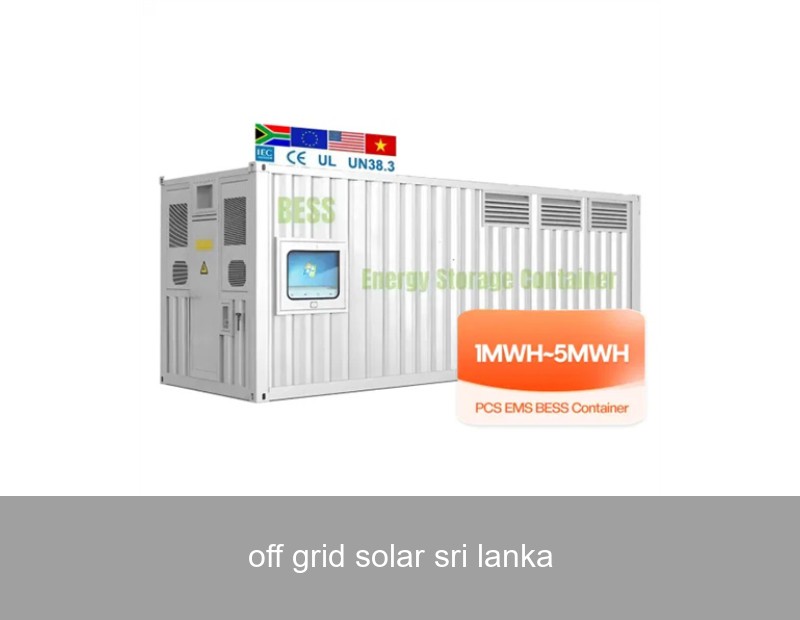
Our HPS (Highjoule PowerStack) Series of containerized and modular BESS are ideally suited for commercial and industrial off-grid applications, like the tea estate mentioned earlier. These systems integrate Highjoule's proprietary Energy Management System (EMS), which acts as the brain of the operation. It intelligently prioritizes solar power, manages battery charging/discharging to optimize lifespan, and automatically starts a backup generator only when absolutely necessary. This maximizes fuel savings and system efficiency.
For smaller-scale needs, such as remote guest houses, clinics, or large residential villas, Highjoule's HRS (Home & Business Resiliency System) offers a scalable, all-in-one solution. It combines a LiFePO4 battery, hybrid inverter, and smart management in one unit, ensuring critical loads remain powered day and night. Our systems are designed for remote monitoring, allowing for proactive maintenance and support—a vital feature for installations in distant locations.
Why Choose Highjoule for Your Off-Grid Project in Sri Lanka?
- Proven Technology: Over 15 years of expertise in demanding global markets.
- LiFePO4 Focus: We specialize in safe, long-life lithium iron phosphate chemistry.
- Intelligent Control: Our EMS software ensures you get the most out of every solar kilowatt-hour and battery cycle.
- Global Support, Local Partnership: We work with certified local partners in regions like South Asia to provide installation and service, ensuring cultural and logistical understanding.
The Future of Energy Independence in Sri Lanka
The trajectory for off-grid solar in Sri Lanka is incredibly promising. As technology costs continue to fall and the demand for clean, self-sufficient power grows, we will see these systems powering not just estates and hotels, but also mini-grids for entire villages, telecom towers, and sustainable agricultural processing hubs. The integration of smart load management—like scheduling water pumping or crop processing for sunny hours—will further enhance efficiency. According to the International Renewable Energy Agency (IRENA), solar and storage are the cornerstone of the decentralized energy future.
The question is no longer if off-grid solar is viable, but how to implement the most robust, cost-effective, and intelligent system for your specific needs. It's about building energy resilience that fuels growth, protects the environment, and provides unwavering power security.
Is your business or community in Sri Lanka ready to calculate its own path to energy independence and discover what a tailored solar-plus-storage system could save you?
 Inquiry
 Online Chat