


Finding the Right American Battery for Sale: A Guide to Modern Energy Storage
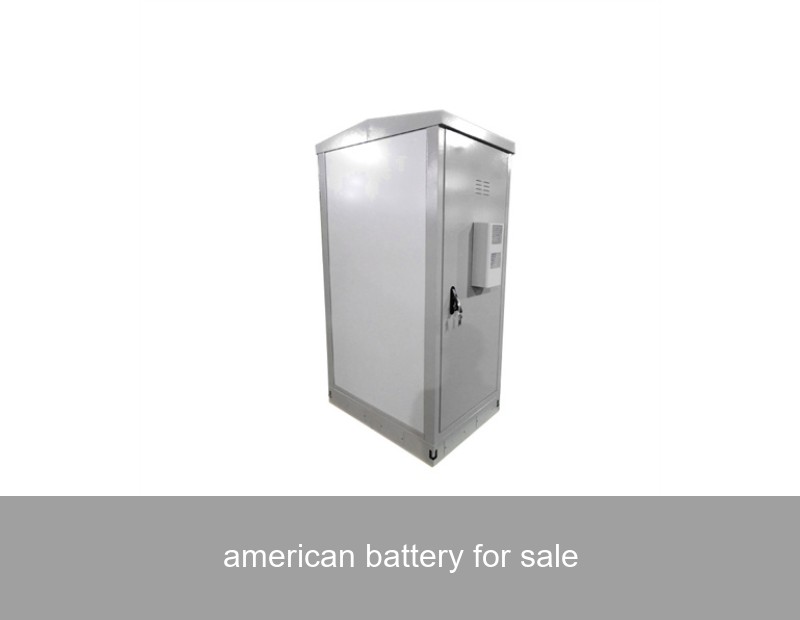
As a homeowner or business operator in the U.S., you've likely noticed the conversation shifting. It's no longer just about solar panels on the roof; the critical question is becoming, "How do I store that energy for when I need it most?" The search for a reliable, high-performance American battery for sale is at the heart of this energy independence movement. Driven by a desire for resilience against grid outages, rising electricity costs, and a genuine push for sustainability, Americans are turning to battery storage as a cornerstone of their energy strategy. But navigating this market requires understanding not just the "what," but the "why" and "how" behind modern battery storage systems.
Table of Contents
The Rise of Homegrown Energy Storage
Let's look at the phenomenon. Grid instability, whether from extreme weather in California and Texas or aging infrastructure in the Northeast, has moved from a rare concern to a regular headline. The U.S. Energy Information Administration (EIA) notes a significant increase in major power outage events over the past decade. Concurrently, the Investment Tax Credit (ITC) for solar has been extended to standalone storage, making a battery system a more financially attractive proposition. This perfect storm of need and incentive has catalyzed the market for American-made and deployed battery storage solutions.

Image: A modern American home equipped for energy independence. Credit: Possessed Photography/Unsplash.
Beyond the kWh: What Truly Defines a Quality American Battery for Sale?
When evaluating an American battery for sale, capacity (kWh) is just the starting point. Think of it like buying a pickup truck: the hauling capacity is important, but you also care about the engine's power (kW), the durability of the frame, the smart features in the cab, and the manufacturer's warranty.
- Power Rating (kW): This determines how many appliances you can run simultaneously. A high-capacity battery with low power is like a deep but narrow well; it holds a lot but can't draw it quickly.
- Depth of Discharge (DoD): A battery rated at 10 kWh with a 90% DoD means you can safely use 9 kWh without damaging it. Higher DoD means more usable energy.
- Round-Trip Efficiency: How much energy you get out versus what you put in. A 90% efficiency means for every 10 kWh from your solar panels, you store 9 kWh for later use.
- Battery Chemistry: Lithium Iron Phosphate (LFP) is becoming the dominant chemistry for home storage due to its superior safety, longer lifespan, and excellent thermal stability compared to older NMC blends.
- Integration & Intelligence: The best systems aren't just dumb boxes; they are intelligent energy managers that integrate seamlessly with solar inverters, can prioritize critical loads, and respond to grid signals for potential savings.
| Feature | Why It Matters | What to Look For |
|---|---|---|
| Chemistry | Safety, lifespan, performance | Lithium Iron Phosphate (LFP) |
| Usable Capacity | Actual energy you can use | High kWh with >90% Depth of Discharge |
| Continuous Power | Runs major appliances during outage | 5 kW or higher for whole-home backup |
| Warranty | Long-term value and peace of mind | 10+ years, guaranteed throughput or cycles |
Case Study: Weathering the Storm in Texas
Let's ground this in a real-world example. During the Winter Storm Elliott in December 2022, a manufacturing facility in Houston, Texas, faced crippling grid alerts. They had installed a 500 kWh American battery for sale system from Highjoule, integrated with their existing solar array. Here's what the data showed:
- Outage Avoidance: The system provided critical backup power for 14 hours during the most severe grid instability, keeping safety systems, refrigeration, and core production lines operational.
- Cost Savings: By discharging the battery during peak price periods (when grid electricity spiked to over $4/kWh), the facility saved an estimated $8,200 in demand charges and energy costs over a 72-hour period.
- Seamless Operation: Highjoule's intelligent energy management system automatically switched between grid, solar, and battery power without human intervention, ensuring continuity.
This case underscores that a modern battery system is a dual-purpose asset: a fortress against outages and a sophisticated financial tool for energy cost management.
The Highjoule Approach: Intelligent Storage for American Homes & Businesses
At Highjoule, with nearly two decades of experience since 2005, we've engineered our storage solutions specifically for the demands and opportunities of the American energy landscape. We don't just sell an American battery for sale; we provide a comprehensive, intelligent power solution.
Our flagship residential product, the Highjoule H-Series Home Battery, is built on LFP chemistry and features a modular design. You can start with a 10 kWh base unit and expand as your needs grow. Its integrated inverter and Highjoule EnergyOS software allow it to:
- Automatically create a "Critical Loads Panel" during an outage, ensuring your lights, Wi-Fi, and refrigerator stay on.
- Optimize for time-of-use rates, charging from solar or the grid when rates are low and powering your home when they are high.
- Interface with utility programs that reward you for supporting grid stability.
For commercial and industrial clients, our Highjoule C.I. Microgrid Solutions are scalable from 100 kWh to multi-megawatt installations. These systems are engineered for the highest duty cycles and can be configured for peak shaving, demand charge reduction, and full black-start capability, turning energy from a cost center into a strategic asset.

Image: Scalable storage solutions for commercial applications. Credit: American Public Power Association/Unsplash.
Making Your Choice: Key Considerations
So, how do you select the right system? Start by asking these questions:
- What are my primary goals? Is it backup power for essential loads, whole-home resilience, or maximizing solar self-consumption and ROI?
- What is my electrical profile? Review your utility bill. Understand your consumption patterns, peak demand, and if you're on a time-of-use rate.
- Who will install and service it? Partner with a certified, experienced installer. The quality of the installation is as critical as the hardware. Highjoule works with a nationwide network of certified partners to ensure this.
- How does it connect to my home and grid? Ensure the system is UL certified and compliant with local utility interconnection requirements (like IEEE 1547 in the U.S.).
The landscape of energy is shifting from a one-way street to a dynamic network. Your home or business can become an active, intelligent node in that network. The right American battery for sale is the key that enables this transformation.
 Inquiry
 Online Chat