


Multijunction Solar Cells: The High-Efficiency Powerhouse for the Future of Energy
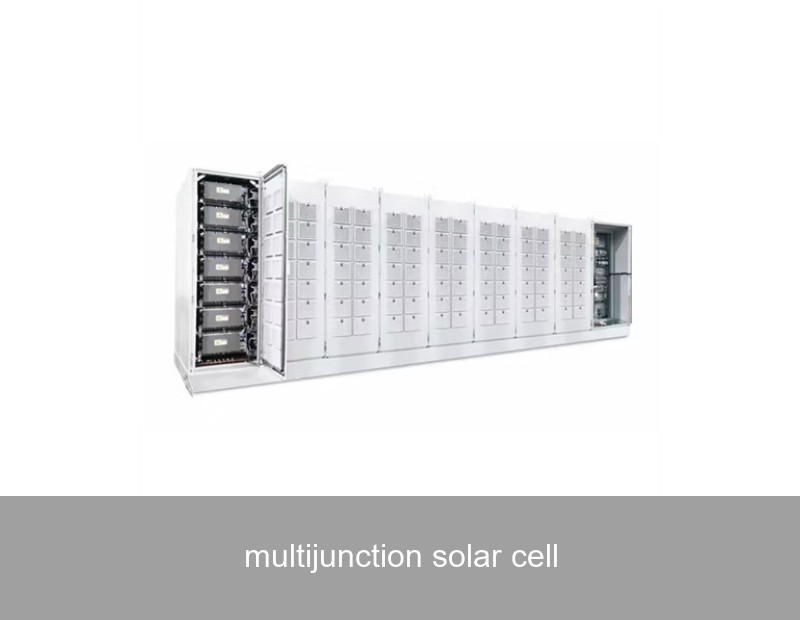
Imagine a solar panel so efficient it can convert nearly half of the sun's light into usable electricity. This isn't science fiction; it's the reality of multijunction solar cell technology. While traditional silicon panels have revolutionized energy, they face a fundamental limit. As the demand for clean, dense power grows—especially for space-constrained commercial, industrial, and even advanced residential applications—the quest for higher efficiency intensifies. This is where multijunction solar cells enter the scene, not as a replacement for conventional PV, but as a specialized, high-performance solution for our most demanding energy challenges. And at Highjoule, we see this advanced technology as a key piece in building more resilient and intelligent energy ecosystems.
Table of Contents
What Are Multijunction Solar Cells?
Think of sunlight as a rainbow, or more scientifically, a spectrum of light particles (photons) with different energy levels. A standard single-junction solar cell, like the common silicon one, is tuned to capture only a specific slice of that rainbow. It misses out on lower-energy (infrared) and higher-energy (ultraviolet) photons, which pass through as heat or get wasted as excess energy.
A multijunction solar cell solves this by stacking multiple semiconductor layers on top of each other. Each layer is engineered to capture a different portion of the solar spectrum. The top layer might capture high-energy blue light, the middle layer captures green and red, and the bottom layer captures infrared. This "teamwork" approach dramatically reduces energy loss, allowing these cells to achieve conversion efficiencies that leave traditional PV in the dust.

Image Source: Wikimedia Commons (Creative Commons)
The Core Technology: A Layered Approach
The most common types are triple-junction cells, often using materials like Gallium Indium Phosphide (GaInP), Gallium Arsenide (GaAs), and Germanium (Ge). This sophisticated construction is why they are also known as III-V multijunction cells, referring to their place on the periodic table.
The Unmatched Efficiency Advantage
The data speaks for itself. While premium commercial silicon panels hover around 22-24% efficiency, multijunction cells are in a different league.
- Laboratory Records: The current world record for solar cell efficiency is held by a multijunction design, achieving a staggering 47.6% under concentrated light (Source: NREL, 2022).
- Commercial Space-Grade: Panels used on satellites routinely offer efficiencies above 30%.
- Emerging Terrestrial Modules: Companies are now bringing concentrated photovoltaic (CPV) systems using multijunction cells to sun-rich regions, with module efficiencies exceeding 35%.
This efficiency translates directly into power density. You can generate the same amount of electricity in a much smaller area. This is the critical phenomenon driving their adoption: maximizing energy harvest where space is at a premium or where logistical costs are extreme.
| Cell Type | Typical Commercial Efficiency | Best Lab Efficiency | Key Application |
|---|---|---|---|
| Single-Junction Silicon (Mono PERC) | 22-24% | 26.8% | Residential, Utility-scale PV |
| Cadmium Telluride (CdTe) Thin Film | 18-21% | 22.1% | Utility-scale PV |
| III-V Multijunction (Concentrator) | 35-40% (module) | 47.6% (cell) | Space, Specialized Terrestrial |
Real-World Case Study: Powering Remote Telecom in the Swiss Alps
Let's move from data to a tangible case. Consider a telecommunications company needing to power a critical relay station on a remote mountain peak in the European Alps. The site has no grid connection, limited space for panels due to rocky terrain and snow load, but requires 100% reliable, year-round power for essential communications.
The Challenge: Using conventional silicon panels would require a large, structurally complex array, higher installation costs in difficult terrain, and more frequent maintenance due to snow. Fuel-based generators are noisy, polluting, and require costly, hazardous fuel deliveries.
The Solution: The company deployed a compact concentrated photovoltaic (CPV) system using multijunction solar cells. The system's high efficiency meant a much smaller physical footprint could meet the energy demand. Its design also proved less susceptible to snow accumulation and performed better in the cold, high-altitude environment where direct sunlight is strong.
The Results:
- Space Reduction: Achieved the required 5kW output with 60% less surface area compared to a silicon-based solution.
- Reliability: The system, coupled with a robust battery storage system, maintained 99.99% uptime, even through harsh winter months.
- Total Cost: While the CPV cells had a higher upfront cost, the reduced installation complexity, space needs, and zero fuel costs led to a lower total cost of ownership over a 10-year period.
This case perfectly illustrates the niche where multijunction technology shines: high-value, space-constrained, off-grid or critical power applications.
The Integration Challenge: From Cell to Reliable System
Here's the crucial insight often overlooked: a super-efficient solar cell is only one component of a reliable power system. The electricity generated—especially from CPV systems that require direct sunlight—is intermittent. To provide continuous, usable power, especially for mission-critical industrial or microgrid applications, this high-tech generation must be seamlessly integrated with advanced energy storage and intelligent management.
This is the core systems integration challenge. The most efficient solar cell in the world is of little practical use if the energy it produces can't be stored, managed, and dispatched according to demand.
The Need for a Holistic Energy Hub
An effective system must:
- Store Surplus Energy: Capture midday peaks for use at night or during cloudy periods.
- Ensure Grid Stability: For hybrid or grid-connected systems, manage the variable input without disrupting the local network.
- Provide Uninterruptible Power: For critical facilities, the transition between solar generation, battery power, and any backup source must be instantaneous.
Highjoule's Role: Bridging Advanced Generation with Smart Storage
This is precisely where Highjoule's expertise becomes vital. Since 2005, we have specialized in designing and deploying intelligent battery energy storage systems (BESS) that act as the perfect partner for high-performance, variable generation sources like multijunction solar arrays.
We don't manufacture solar cells, but we enable their most effective and reliable application. For a project involving advanced solar technology like CPV with multijunction cells, Highjoule would provide the indispensable backbone:

Image Source: Unsplash (Representative of BESS technology)
Highjoule Products and Services for Advanced Solar Integration
- Intelligent BESS Platforms: Our H-Series commercial and industrial storage systems feature high-cycle life lithium-ion batteries paired with our proprietary energy management system (EMS). This EMS is key—it doesn't just store energy; it intelligently decides when to charge, hold, or discharge based on solar production, consumption patterns, and tariff structures, maximizing ROI for the entire system.
- Microgrid Controllers: For off-grid or grid-parallel applications like the Alpine telecom case, our microgrid controller seamlessly orchestrates power flow between the multijunction solar array, the Highjoule BESS, and any backup generators. It ensures flawless power quality and reliability.
- Custom System Design & Integration: Our team of engineers works with project developers to model energy flows, right-size the storage component, and design a fully integrated solution that unlocks the full potential of high-efficiency generation.
- Global Support: With a presence in Europe and North America, Highjoule provides local service and monitoring, ensuring long-term performance and peace of mind for our clients investing in cutting-edge technology.
In essence, we make high-efficiency solar work harder and smarter in the real world. By pairing a multijunction solar array with a Highjoule BESS, you create a high-density, resilient power plant capable of powering anything from a remote research station to a manufacturing facility with stringent clean energy goals.
The Future Outlook and Your Next Step
The future of multijunction cells is vibrant, with research into perovskites as a potential top layer promising even higher efficiencies at potentially lower costs (Source: Joule, 2020). As the technology evolves and finds new terrestrial applications, the synergy with sophisticated storage and management will only deepen.
The conversation is shifting from simply generating clean energy to generating it intelligently and reliably. So, whether you are a project developer scoping a unique off-grid site, an industrial operator looking to maximize on-site generation within a limited footprint, or a municipality planning a future-proof microgrid, the combination of ultra-efficient generation and smart storage deserves consideration.
What unique energy challenge are you facing where space, reliability, or energy density is the primary constraint? Could a high-efficiency generation plus smart storage model be the key to your solution?
 Inquiry
 Online Chat