


Paneles Solares en Casas: Your Guide to a Smarter, More Independent Home Energy System
Have you ever looked at your electricity bill and wished for more control? You're not alone. Across Europe and the U.S., homeowners are turning their roofs into personal power plants with paneles solares en casas. This isn't just about saving money (though that's a huge perk); it's about energy independence, increasing property value, and making a tangible contribution to a cleaner planet. But the true potential of home solar is unlocked not just by the panels themselves, but by what happens to the energy they create. That's where intelligent storage and management come in, transforming a simple solar setup into a resilient home energy ecosystem.
Table of Contents
The Home Solar Surge: More Than Just Panels
The image of solar panels on a rooftop has become a common sight. But the phenomenon is backed by compelling data. In the United States, residential solar installations have seen exponential growth, with the Solar Energy Industries Association (SEIA) reporting that the U.S. residential sector added a staggering 6.8 gigawatts (GW) in 2023 alone (SEIA, 2023). Similarly, in Europe, countries like Germany, Spain, and Poland are experiencing a rooftop revolution, driven by high energy prices and supportive policies.
The initial motivation is often economic: locking in a lower, predictable cost for electricity. However, homeowners quickly discover a more pressing concern: self-consumption. Solar panels produce the most energy in the middle of the day, which is often when homes are empty. Without a way to store that excess energy, it's sent back to the grid, often for minimal compensation, leaving homeowners to buy expensive power from the utility in the evening. This mismatch is the fundamental challenge of paneles solares en casas.

This is the pivotal moment where a basic solar installation evolves. The solution lies not in adding more panels, but in adding intelligence and storage to capture and use every kilowatt-hour you produce.
Key Components of a Modern Home Solar System
Understanding the parts of a system helps you make informed decisions. A cutting-edge home solar setup consists of three core elements working in harmony:
- Solar Panels (PV Modules): The visible element on your roof. They convert sunlight into direct current (DC) electricity. Modern panels are highly efficient, even on cloudy days.
- Inverter(s): The brain of the power conversion. Since homes use alternating current (AC), the inverter converts the DC electricity from the panels into usable AC power. Today, systems often use more advanced hybrid inverters or microinverters.
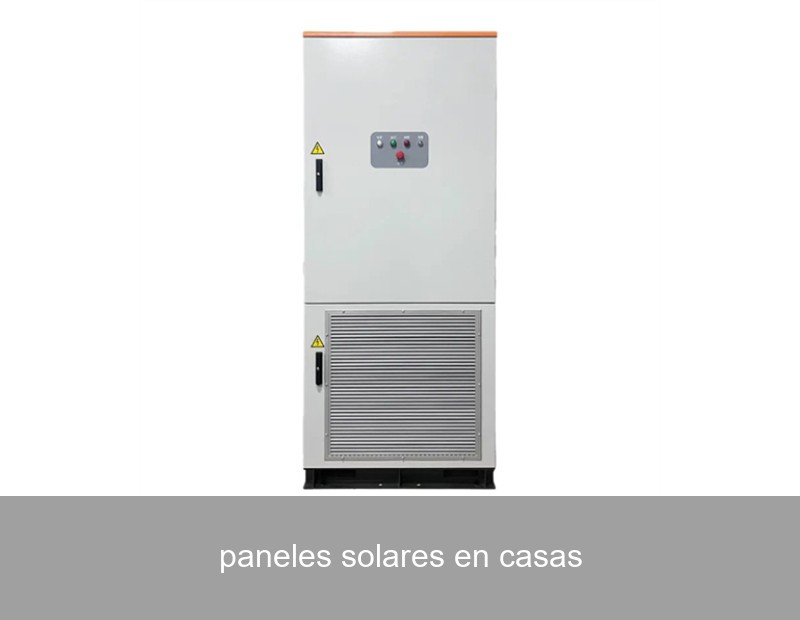
- Battery Energy Storage System (BESS): The heart of energy independence. This is the game-changer. A home battery stores the excess solar energy you produce during the day for use at night, during peak rate periods, or during a grid outage.
| System Type | Key Components | Main Benefit | Limitation |
|---|---|---|---|
| Grid-Tied Only | Panels, Standard Inverter | Reduces electricity bills, lower upfront cost | No power during grid outages, lower self-consumption |
| Grid-Tied + Battery | Panels, Hybrid Inverter, Battery | Backup power, maximizes self-use of solar, time-of-use management | Higher initial investment |
| Intelligent Energy System | Panels, AI-Optimized Inverter, Scalable Battery, Energy Management Software | Fully optimized savings, grid services participation, future-proofing | Premium system requiring expert design |
As the table shows, adding storage fundamentally changes the capability of your paneles solares en casas. But not all storage solutions are created equal.
The Financial Case: Data Behind the Savings
Let's talk numbers. The financial return hinges on your local electricity rates, solar incentives, and the system's ability to maximize self-consumption. In Germany, where electricity prices for households averaged over €0.40/kWh in 2023, a typical 8 kW solar system with a 10 kWh battery can increase a household's self-consumption rate from around 30% to 70% or more (Fraunhofer ISE, 2024). This directly translates to slashing your purchased energy from the grid by more than half.
In the U.S., under the revised Inflation Reduction Act (IRA), homeowners can claim a 30% federal tax credit on the total cost of a solar-plus-storage system, including installation. This makes the investment payback period significantly shorter. The key is to view the system not as an expense, but as a 20+ year investment that hedges against volatile utility prices.
A Real-World Case Study: Resilience in California
Consider the Johnson family in Northern California. Facing frequent Public Safety Power Shutoffs (PSPS) due to wildfire risk and some of the highest electricity rates in the nation, they installed a 9.6 kW solar array in 2022. While it cut their daytime bills, they were still vulnerable to outages and high evening rates from 4-9 PM.
In 2023, they upgraded their system with a Highjoule HES 12 battery storage unit. The results after one year were compelling:
- Energy Self-Sufficiency: Increased from 45% to 92% annually.
- Bill Savings: Their average monthly electricity bill dropped from $180 to a mere $18 (mostly grid connection fees).
- Resilience: During 7 grid outages totaling 52 hours, their home's essential loads (refrigerator, lights, internet, medical device) ran seamlessly on battery power.
- Peak Shaving: The system's intelligent software automatically avoided drawing expensive peak-time grid power, optimizing savings further.
"The peace of mind is priceless," Mrs. Johnson reported. "The system pays for itself, and we don't even notice when the neighborhood grid goes down." This case exemplifies the modern promise of paneles solares en casas: savings, security, and sustainability.

Going Beyond the Basics: The Highjoule Advantage
At Highjoule, we've been pioneering advanced energy storage since 2005. We understand that a truly smart home energy system is more than the sum of its parts. Our approach to paneles solares en casas integrates hardware with intelligent software to deliver a seamless, optimized experience.
Our flagship product for residential applications, the Highjoule Home Energy System (HES), is designed for the discerning homeowner. It features:
- Scalable Architecture: Start with a 10 kWh battery and expand up to 30+ kWh as your needs grow (e.g., adding an EV charger).
- Highjoule EnergyOS: Our proprietary AI-driven software learns your household's energy patterns, weather forecasts, and utility rate schedules to autonomously optimize energy flow, maximizing financial return.
- All-Weather Resilience: Built with robust, long-life lithium iron phosphate (LiFePO4) cells, the HES is designed for safety and performance across a wide temperature range, crucial for both European winters and American summers.
- Grid-Friendly Features: In some markets, our systems can be configured to provide grid-support services, potentially opening up additional revenue streams for homeowners.
We partner with a network of certified, local installers across Europe and the U.S. to ensure your system is perfectly designed for your home's architecture, your regional climate, and your specific energy goals. Our service includes remote monitoring, proactive maintenance alerts, and over-the-air software updates to ensure your system gets smarter over time.
Is Your Home Ready for the Future of Energy?
The journey to energy independence starts with a question. What are your primary goals: reducing your carbon footprint, achieving total backup security, or maximizing long-term financial savings? Perhaps it's all three.
As you contemplate paneles solares en casas, ask your potential providers not just about panel wattage, but about the intelligence of the overall system. How will it ensure you use the energy you produce? How does it integrate with future technologies like electric vehicles? How does the software adapt to changing utility policies?
What single energy concern—be it an unreliable grid, rising costs, or environmental impact—motivates you most to explore transforming your home into a clean, resilient power hub today?
 Inquiry
 Online Chat