


Unlocking Grid Resilience: The Critical Role of the PCS Energy Storage Cabinet
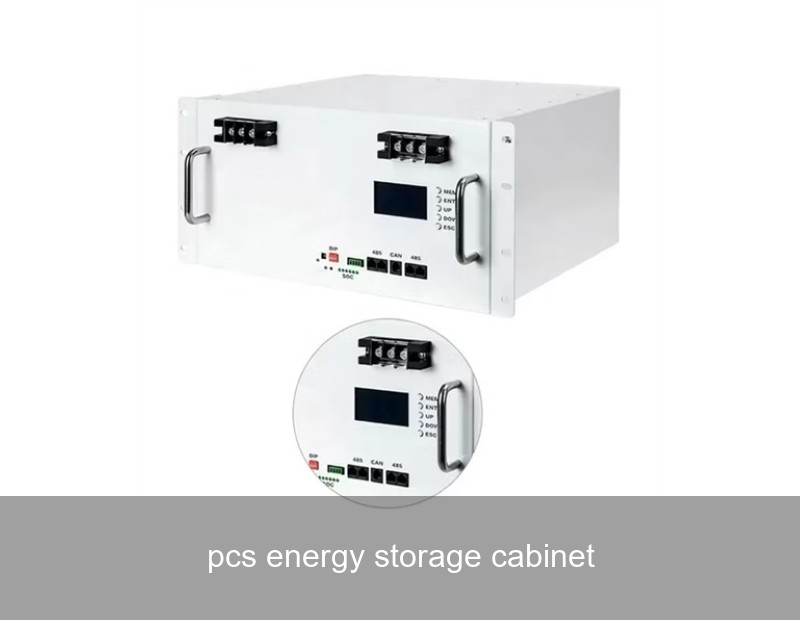
Have you ever wondered what makes a modern battery energy storage system tick? While the batteries themselves often steal the spotlight, the true brain and brawn of the operation reside in a key piece of hardware: the PCS energy storage cabinet. As Europe and the U.S. aggressively pursue renewable energy targets, managing the intermittent nature of solar and wind power has become the defining challenge. This is where Power Conversion Systems (PCS) step in, acting as the vital gateway between stored DC battery power and the usable AC power that runs our homes, businesses, and grids. In this article, we'll demystify the PCS cabinet, explore its growing importance, and show how it's enabling a smarter, more resilient energy future.
Table of Contents
- What Exactly is a PCS Energy Storage Cabinet?
- The Modern Grid Challenge: More Renewables, More Complexity
- Beyond Basic Conversion: The Intelligent Functions of a Modern PCS
- A Real-World Case Study: Stabilizing a German Industrial Microgrid
- Choosing the Right PCS: Key Considerations for Your Project
- Future Horizons: Where PCS Technology is Heading
What Exactly is a PCS Energy Storage Cabinet?
Think of the PCS energy storage cabinet as the sophisticated "translator" and "manager" of your storage system. It's a robust, self-contained unit that houses the core power electronics. Its primary job is bidirectional conversion: turning direct current (DC) from the batteries into alternating current (AC) to feed into your facility or the grid (inversion), and converting AC back to DC to charge the batteries (rectification). But today's cabinets are far more than simple converters.
A typical cabinet from a leading provider like Highjoule integrates the power conversion system, advanced thermal management, safety disconnects, and control hardware into one optimized, UL or IEC-compliant enclosure. This modular approach simplifies installation, enhances safety, and ensures all components work in perfect harmony. It's the command center that executes decisions from the broader energy management system (EMS), making real-time choices about when to charge, discharge, or hold.

Credit: A modern energy storage installation requires precise engineering. Image via Unsplash.
The Modern Grid Challenge: More Renewables, More Complexity
The energy landscape is shifting dramatically. In the EU, renewable sources accounted for 44.7% of electricity generation in 2023. Similarly, the U.S. Energy Information Administration projects significant solar and wind growth. This surge creates a fundamental mismatch: solar panels produce most power at midday, while demand often peaks in the evening. This "duck curve" phenomenon puts immense strain on traditional grid infrastructure.
This is where storage, governed by a capable PCS energy storage cabinet, becomes non-negotiable. It doesn't just store excess energy; it allows for its intelligent dispatch. The PCS can release power in milliseconds to smooth out sudden drops in solar generation (e.g., from a passing cloud) or to provide critical backup power during an outage. For commercial and industrial users, this capability translates directly to cost savings through peak shaving—avoiding expensive demand charges from utilities during high-usage periods.
Beyond Basic Conversion: The Intelligent Functions of a Modern PCS
The latest generation of PCS cabinets are marvels of grid-supporting intelligence. Let's break down their advanced capabilities:
- Grid Forming & Black Start: Unlike traditional grid-following inverters, advanced PCS can "form" a grid. They can establish voltage and frequency from scratch, enabling microgrids to operate independently and even black-start a section of the grid after a total outage.
- Frequency and Voltage Regulation: By rapidly injecting or absorbing reactive power, the PCS helps maintain grid stability, a service increasingly valued by grid operators (like FERC Order 2222 in the U.S. opens markets for these services).
- Advanced Safety Protocols: Integrated arc-fault detection, rapid shutdown, and comprehensive monitoring ensure the system operates safely under all conditions.
At Highjoule, we engineer our HPC Series Power Conversion Cabinets with these very functions in mind. Designed for commercial and utility-scale applications, they offer high efficiency (up to 99%), seamless grid support, and are built to withstand demanding environments, ensuring reliability you can count on for decades.
A Real-World Case Study: Stabilizing a German Industrial Microgrid
Let's look at a concrete example from Bavaria, Germany. A mid-sized automotive parts manufacturer committed to 100% renewable operation. They installed a 2.5 MW solar carport and a 4 MWh battery storage system. However, their sensitive manufacturing equipment suffered from minor voltage sags and frequency fluctuations caused by the variable solar input and internal heavy machinery loads.
The Solution: The integrator chose a system centered on two of Highjoule's HPC-1500 cabinets. These units were selected not just for their conversion efficiency, but for their superior grid-forming capability and fast frequency response.
| Metric | Before Installation | After Installation |
|---|---|---|
| Voltage Sags per Month | 12-15 | 2 |
| Peak Grid Demand | 1.8 MW | 1.1 MW (39% reduction) |
| Renewable Self-Consumption | 68% | 94% |
| Annual Demand Charge Savings | N/A | €72,000 |
The PCS energy storage cabinets actively stabilized the internal microgrid, creating a "cleaner" power environment for machinery. By shaving peak demand and storing excess solar, they delivered a compelling return on investment. The plant manager noted, "The system doesn't just save money; it makes our entire production process more resilient and sustainable."
Choosing the Right PCS: Key Considerations for Your Project
Selecting the optimal PCS energy storage cabinet is crucial. Here’s a quick guide:
- Power Rating & Scalability: Match the PCS power (in kW/MW) to your discharge needs. Modular designs, like Highjoule's cabinet series, allow you to add units as your needs grow.
- Efficiency Curve: Look for high efficiency across a wide load range, not just at peak rating. A few percentage points difference significantly impacts lifetime energy yield.
- Grid Code Compliance: Ensure the PCS meets local grid interconnection standards (e.g., UL 1741 SA in the U.S., VDE-AR-N 4105 in Germany).
- Software & Integration: The cabinet must seamlessly communicate with your chosen battery management system (BMS) and Energy Management System (EMS). Open protocols are a plus.
Highjoule's approach is to provide not just hardware, but a fully integrated solution. Our cabinets are pre-configured to work flawlessly with our own or third-party storage modules, backed by our Apex EMS platform for intelligent, weather-aware optimization.

Credit: Commercial solar-plus-storage systems rely on robust PCS cabinets. Image via Unsplash.
Future Horizons: Where PCS Technology is Heading
The evolution of the PCS energy storage cabinet is accelerating. We are moving towards:
- Hybrid Inverter Cabinets: Integrating solar PV and storage conversion into a single unit, simplifying system architecture and reducing costs.
- Artificial Intelligence: Embedding AI for predictive grid interaction and self-optimizing performance based on weather, tariff structures, and load patterns.
- Standardized Grid Services: Plug-and-play functionality for ancillary services markets, allowing any storage asset to easily generate revenue for its owner.
These innovations will further solidify the PCS cabinet as the central nervous system of the new energy ecosystem, enabling a decentralized, resilient, and efficient grid.
Your Next Step
The journey to energy independence and grid resilience starts with understanding the core components that make it possible. The PCS energy storage cabinet is far from a mere accessory; it is the strategic enabler. As you contemplate your organization's energy strategy, what specific challenge—be it rising demand charges, renewable integration, or simply the need for unwavering backup power—could a intelligently managed storage system with a high-performance PCS at its heart solve for you?
 Inquiry
 Online Chat