


Peregrine Energy Partners: Unlocking Grid Value with Intelligent Storage
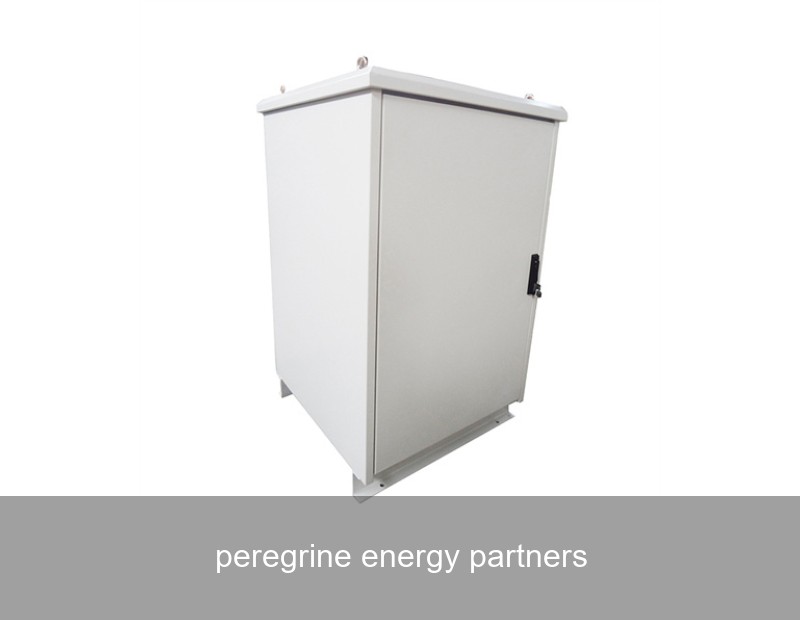
If you're involved in energy development, finance, or grid services, you've likely heard the term Peregrine Energy Partners. It's more than just a company name; it's becoming shorthand for a sophisticated approach to energy asset development. At its core, the model focuses on identifying and monetizing complex value streams in modern power markets—particularly through advanced energy storage. But what does this look like in practice, and how do you ensure these projects aren't just built, but are optimized for resilience and revenue from day one? The answer lies not just in the battery, but in the intelligence that surrounds it.
What is the Peregrine Energy Partners Model?
Think of the Peregrine Energy Partners approach as being akin to a master chess player in the energy sector. It's not about making the single, obvious move (like simply adding solar panels). It's about strategizing several moves ahead, understanding how each piece—be it generation, storage, market incentives, and grid constraints—interacts. This model specializes in developing standalone energy storage and storage-coupled renewable projects that serve multiple masters: providing grid stability, capturing arbitrage opportunities in wholesale markets, and offering critical backup power. The goal is to stack these value streams to create a more profitable, reliable, and impactful asset. It's a shift from selling energy to selling grid services and certainty.
The Modern Grid Challenge: More Than Just Megawatts
Here's the phenomenon we're all witnessing. Grids, especially in target markets like the U.S. (ERCOT, CAISO) and Europe (UK, Germany), are undergoing a seismic shift. Intermittent renewable penetration is soaring, which is fantastic for decarbonization. However, it creates a volatile landscape of sudden supply drops (when the sun sets or wind dies) and potential congestion. Traditional "peaker" plants, often fossil-fueled, are too slow and expensive to reliably smooth out these second-by-second imbalances. The grid doesn't just need more power; it needs precise, instantaneous, and flexible power tools. That's the exact niche that sophisticated energy storage, developed under models like Peregrine's, is designed to fill.

The Data Reality: Why Traditional Solutions Fall Short
Let's look at the numbers. According to the U.S. Energy Information Administration (EIA), battery storage capacity is expected to skyrocket, but not all systems are created equal. A critical metric is the system's cycle life and round-trip efficiency. A low-quality system might degrade significantly after a few thousand cycles, or waste 20% of the energy put into it. For a developer, this isn't just an engineering spec; it's a direct hit to the project's financial model and its ability to fulfill long-term service contracts.
Furthermore, grid operators like ERCOT in Texas are implementing stricter performance requirements for resources providing frequency regulation. The system must respond within milliseconds, not seconds. This is where the partnership between visionary development and cutting-edge technology becomes non-negotiable.
The Technology Pillars for a Successful Project
- Advanced Battery Chemistry (Li-ion NMC & LFP): Offering the right balance of energy density, cycle life, and safety for the application.
- Predictive Energy Management System (EMS): The true "brain" that decides when to charge, discharge, or hold, based on market prices, weather forecasts, and grid signals.
- Grid-Forming Inverter Technology: Allows storage to not just follow the grid but to stabilize it and potentially "black start" a section after an outage—a hugely valuable service.
- Robust Thermal Management: Consistent performance and longevity hinge on keeping battery cells within a precise temperature range, in all climates.
Case Study: A Real-World Fix with Highjoule's Intelligence
Consider a recent commercial & industrial (C&I) project in Southern Germany. The site had significant on-site solar generation but faced two problems: 1) Mid-day solar curtailment due to local grid congestion, and 2) Extremely high demand charges from their utility based on peak monthly draw from the grid.
The Development Goal: To create a "Peregrine-style" value stack: increase solar self-consumption, shave peak demand, and participate in the German primary control reserve market.
The Challenge: Off-the-shelf storage systems couldn't seamlessly manage these three conflicting objectives simultaneously without degrading battery life or leaving money on the table.
The Highjoule Solution: The developer partnered with Highjoule to deploy a 500 kW / 1 MWh H-Joule Cube C&I储能系统. The key wasn't the container itself, but Highjoule's proprietary Adaptive Synergy OS. This AI-driven EMS uses real-time and forecast data to dynamically prioritize tasks:
| Time/Trigger | Primary Objective | Action | Value Stream |
|---|---|---|---|
| Sunny Mid-Day | Avoid Solar Curtailment | Store excess solar production | Maximized Renewable ROI |
| Evening Peak (5-8 PM) | Demand Charge Reduction | Discharge to offset grid draw | Reduced Utility Bills by ~30% |
| Grid Frequency Event | Provide Grid Service | Instantaneous response to frequency signal | Market Revenue from Grid Operator |
The Result: Within the first year, the system achieved a 22% higher overall ROI than a baseline, single-purpose storage system. The intelligent cycling regimen also projects a 15% longer battery lifespan, protecting the long-term asset value. This is the essence of modern energy partnership: leveraging smart technology to extract layered value.
Beyond the Battery: The Highjoule Ecosystem for Partners
At Highjoule, we understand that companies operating with the Peregrine Energy Partners mindset need more than hardware. They need a technology partner that provides a foundation for intelligence and reliability. Founded in 2005, we've evolved from a battery innovator to a full-scale provider of intelligent, sustainable power solutions.
For developers and IPPs, our value proposition centers on three pillars:
- The H-Joule Matrix Utility-Scale Platform: A modular, containerized BESS solution with industry-leading energy density and integrated safety systems, designed for the rigorous cycling of market-trading and grid service applications.
- Synergy OS - The Decision Engine: This is where the magic happens. Our cloud-based EMS can be customized to optimize for any value stack—whether it's wholesale arbitrage in the PJM market, frequency response in the UK, or behind-the-meter savings for a factory.
- Global Support & Performance Guarantees: We back our systems with long-term performance warranties and remote monitoring from our operations centers, giving financiers and owners peace of mind on asset performance.

How to Future-Proof Your Energy Portfolio
The energy transition is accelerating, and the value of a storage asset will be defined by its flexibility and intelligence. As you evaluate your next project, consider this: Is your storage system a passive container of electrons, or an active, grid-savvy financial asset?
The most successful developers are already asking more profound questions: How can my storage asset provide resilience during increasing climate-related outages? How can it adapt to future market rules? How does the software ensure I am always capturing the highest-priority revenue stream?
Key Questions for Your Next Storage Project
- Does the EMS have a proven track record in the specific wholesale market or grid service program I'm targeting?
- How does the system's design protect my core asset (the battery) from accelerated degradation due to aggressive cycling?
- Can the technology provider offer scenario modeling to predict project economics under different market futures?
Ready to See the Difference Intelligence Makes?
We invite you to move beyond the spec sheet. What specific value streams are you struggling to stack in your current pipeline, and what if a single, intelligent system could manage that complexity for you?
 Inquiry
 Online Chat