


Understanding Photovoltaic Cells Costs: A Deep Dive into the Economics of Solar Power
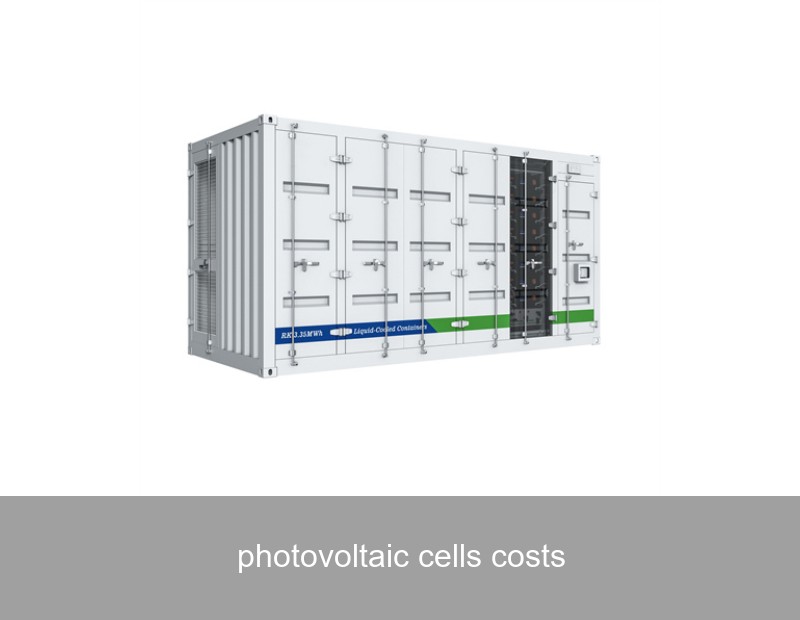
If you've considered solar power for your home or business, the first question is likely, "What will it cost?" The price of photovoltaic (PV) cells, the heart of any solar panel, has been on a remarkable journey. For decades, high photovoltaic cells costs were the primary barrier to widespread solar adoption. But the landscape has transformed dramatically. Today, we're not just buying panels; we're investing in an intelligent, integrated energy ecosystem. Let's unpack the factors driving PV costs and explore how the true value of solar has shifted from mere component pricing to total system performance and long-term energy independence.
The Great Price Plunge: From Luxury to Mainstream
It's one of the most significant success stories in clean energy. Since 2010, the cost of solar photovoltaic modules has plummeted by over 80%. According to data from the International Renewable Energy Agency (IRENA), global weighted-average levelized cost of electricity (LCOE) from utility-scale solar photovoltaics fell 88% between 2010 and 2021. This wasn't magic; it was a combination of manufacturing scale, technological improvements, and supportive policies that drove a virtuous cycle of innovation and cost reduction.

Think of it like the evolution of flat-screen TVs. What was once a cutting-edge, expensive technology is now affordable and ubiquitous. For solar, this means the core hardware—the PV cells themselves—now represents a smaller fraction of the total system cost than ever before. The conversation has smartly shifted from "Can I afford the panels?" to "How do I get the most value from my entire solar investment over its 25+ year lifespan?"
Cost Breakdown: Looking Beyond the Module Price Tag
When you get a quote for a solar installation, the PV modules are just one piece of the puzzle. To understand the true economics, you need to consider the "balance of system" (BoS) and soft costs.
- Hardware (Modules & Inverters): While module costs have fallen, quality and efficiency vary. A higher-efficiency panel might cost more upfront but generate more power in a limited space, offering better long-term value.
- Balance of System: This includes inverters (which convert DC solar power to AC for your home), mounting structures, wiring, and crucially, the energy storage system.
- Soft Costs: Permits, installation labor, customer acquisition, and system design. In markets like the U.S. and Europe, these can constitute 50% or more of the total project cost.
This is where a holistic approach becomes critical. An optimized system designed with compatible, high-performance components will deliver a lower lifetime cost per kilowatt-hour than a system built on the cheapest possible panels alone.
The Storage Imperative: Maximizing Your Solar Investment
Here's a reality check: solar panels often produce the most energy in the middle of the day when you might not be home. Without storage, excess energy is sold back to the grid at a low rate, only for you to buy it back at night at a higher price. This dynamic severely impacts the financial return of your system.
Integrating a battery energy storage system (BESS) is the game-changer. It allows you to:
- Increase Self-Consumption: Store your cheap, clean solar energy for use in the evening, dramatically reducing grid imports.
- Provide Backup Power: Keep essential loads running during grid outages—a growing concern in many regions.
- Optimize for Time-of-Use Rates: In areas with variable electricity pricing, store energy when it's cheap (from your panels or the grid) and use it when rates are high.
At Highjoule, we've built our reputation on this integrated philosophy. Our EcoSphere intelligent energy management platform doesn't just connect solar panels and a battery; it seamlessly orchestrates generation, storage, and consumption. For our commercial and industrial clients, our GridMax series of containerized BESS solutions turns solar arrays into dispatchable assets, enabling participation in grid services and demand charge reduction. The goal is simple: to ensure every kilowatt-hour generated by your solar investment is used in the most economically advantageous way possible, making the effective "cost" of your solar power even lower.
Case Study: A German Manufacturing Plant's Journey to ROI
Let's look at real data from a mid-sized automotive parts manufacturer in Bavaria, Germany. Facing volatile energy prices and ambitious corporate sustainability targets, they installed a 500 kW rooftop PV array in 2020.
| Metric | Initial Setup (Solar Only) | After Adding Highjoule Storage (2022) |
|---|---|---|
| Solar Generation | 550,000 kWh/year | 550,000 kWh/year |
| On-Site Self-Consumption | 35% | 82% |
| Grid Electricity Purchases | Reduced by 30% | Reduced by 65% |
| Annual Energy Cost Savings | €48,000 | €112,000 |
| Projected Payback Period | 9 years | 6.5 years |
The key move? In 2022, they integrated a Highjoule PowerVault 300 commercial battery system with our EcoSphere platform. The intelligence of the system schedules energy usage for machine shops and charges the battery with excess solar, avoiding drawing power during expensive peak periods. The addition of storage cut their projected payback time by over two years and increased their energy independence dramatically. The upfront cost of the PV cells was just the entry ticket; the storage and intelligence delivered the full financial return.

Future Trends: What's Next for Photovoltaic Cells Costs?
While dramatic price falls may moderate, technology continues to advance. We're seeing the rise of n-type TOPCon and HJT cells, which offer higher efficiencies and better performance in warm, low-light conditions. Perovskite-silicon tandem cells are on the horizon, promising another significant leap in efficiency. However, the law of diminishing returns applies. A 5% efficiency gain is increasingly expensive to achieve at the cell level.
Therefore, the next wave of cost reduction and value creation will come from system-level innovation: smarter inverters, more durable and scalable storage solutions, and AI-driven energy management software. This aligns perfectly with Highjoule's mission. Our R&D focuses not on marginally cheaper cells, but on how to integrate the best available PV technology with our proprietary battery chemistry and grid-adaptive software to deliver the lowest lifetime cost of energy for our customers.
Making the Decision: It's About Total Cost of Ownership
So, when evaluating "photovoltaic cells costs," shift your perspective. Ask potential providers:
- How will you design my system to maximize self-consumption and ROI, not just to meet a peak power rating?
- How scalable and compatible is the storage solution you're proposing?
- What intelligence does the system have to adapt to changing weather, usage patterns, and electricity tariffs?
The most economical solar investment today is a future-proofed, storage-integrated smart energy system. It's about building resilience and taking control of your energy costs for decades.
Given that your solar panels will likely outlast your current car and possibly your mortgage, what value would you place on a system that not only cuts your bill but also turns your property into a reliable, self-sufficient energy hub?
 Inquiry
 Online Chat