


Finding Your Volks Energy Supplier: A Guide to Community Power and Smart Storage
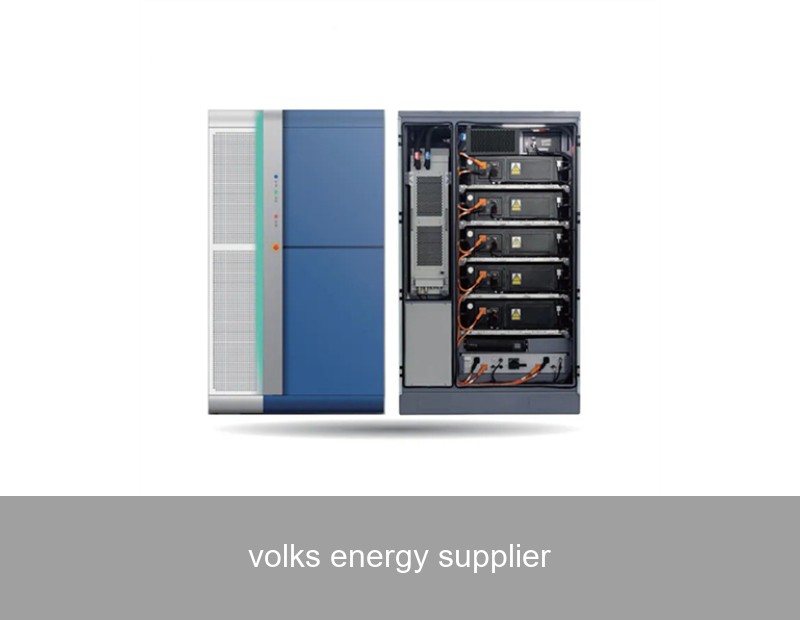
Have you ever looked at your energy bill and wished for more control, a fairer price, or a greener source? You're not alone. Across Europe and the US, a powerful shift is underway: the rise of the volks energy supplier. This concept, rooted in community and collective action, is transforming how we think about electricity. But what happens when the sun isn't shining, or the wind isn't blowing? That's where the true challenge—and opportunity—lies. This article explores how modern energy communities are pairing with advanced storage to create resilient, independent, and cost-effective power solutions.
Table of Contents
- What is a "Volks Energy Supplier"?
- The Critical Storage Gap in Renewable Communities
- Case Study: A German Energy Cooperative's Success
- How Battery Energy Storage Systems (BESS) Empower Communities
- Highjoule's Solutions for Community and Commercial Scale
- The Future of Localized Energy
What is a "Volks Energy Supplier"?
Translated from German, "volks" means "of the people." A volks energy supplier is essentially a people's energy company. These are often community-owned cooperatives, local municipal utilities (Stadtwerke), or other collective models that prioritize members and local residents over distant shareholders. Their goals are typically threefold:
- Democratic Control: Members have a say in decisions.
- Local Reinvestment: Profits are cycled back into the local grid and community projects.
- Sustainability: A strong focus on generating power from local renewable sources like solar and wind.
This model has seen massive growth, particularly in Europe. For instance, in Germany, over 900 energy cooperatives exist, with hundreds of thousands of citizen investors. They represent a move away from monolithic utility companies towards a more participatory, resilient energy landscape.
The Critical Storage Gap in Renewable Communities
Here's the common phenomenon: a community installs a large solar park. During a bright summer day, it produces a massive surplus—sometimes so much that the grid can't absorb it all, and energy is "curtailed" or wasted. Then, in the evening when demand peaks, the sun is gone, and the community must buy expensive power from the national grid.
This mismatch between renewable generation and consumption patterns is the Achilles' heel of many well-intentioned projects. The data is clear: without storage, a solar-based community might only directly consume 30-40% of its own production. The rest is fed into the grid, often at lower feed-in tariffs, and the community remains reliant on external suppliers for a significant portion of its needs. The financial and environmental potential is left untapped.

Image Source: Unsplash - A community solar farm. The surplus midday energy is ideal for storage.
Case Study: The Bruckhausen Energy Cooperative, Germany
Let's look at a real example. The Bruckhausen Energy Cooperative in northern Germany, a classic volks energy supplier, operates a 5 MW solar park. Initially, they faced the classic storage gap. In 2021, they decided to integrate a large-scale battery storage system.
The Data-Driven Results (after one year of operation with storage):
| Metric | Before BESS | After BESS Installation |
|---|---|---|
| Internal Consumption of Solar Power | ~35% | ~78% |
| Grid Dependency During Peak Hours | High | Reduced by over 60% |
| Revenue Stability | Volatile, tied to feed-in tariffs | Enhanced by selling stored power at peak prices |
| Grid Services Income | None | Added revenue from primary control reserve |
The cooperative's 2.4 MWh battery allows them to store the midday surplus and release it between 5-8 PM, precisely when their community needs it most and grid prices are highest. This project, supported by the local government, is a blueprint for how energy communities can achieve true independence. You can read more about such community models in this report by the U.S. Department of Energy.
How Battery Energy Storage Systems (BESS) Empower Communities
A Battery Energy Storage System is the linchpin for a mature volks energy supplier. It's not just a battery; it's an intelligent energy manager. Here’s what a modern BESS enables:
- Energy Time-Shifting: Store cheap, green energy for use during expensive, high-demand periods.
- Grid Stability: Provide frequency regulation services to help balance the wider grid, creating a new revenue stream.
- Resilience: Maintain critical power during grid outages, especially when paired with islanding capabilities.
- Capacity Firming: Smooth out the intermittent output of renewables, making the community a more reliable power source.
The technology, primarily lithium-ion phosphate (LFP) for its safety and longevity, has matured rapidly. When integrated with smart energy management software, it becomes the brain of the local energy network.
Highjoule's Solutions for Community and Commercial Scale
This is where Highjoule, as a global leader in advanced energy storage since 2005, directly supports the mission of modern energy communities and commercial entities. We understand that a one-size-fits-all approach doesn't work. Our product suites are designed to scale and adapt.
For emerging volks energy suppliers and larger commercial/industrial applications, our HiveStack Commercial BESS offers a modular, containerized solution. It's scalable from 100 kWh to multi-MWh, perfect for managing the output of a community solar park or providing backup power for a factory. Its advanced thermal management ensures safety and performance in diverse climates across Europe and North America.
For smaller community hubs, schools, or wastewater treatment plants that form part of a municipal energy network, our PowerHub I Series provides a robust, all-in-one storage solution. Crucially, all Highjoule systems are governed by our Neuron Energy Management Platform, an AI-driven software that autonomously optimizes for self-consumption, cost savings, or grid revenue—aligning perfectly with a community's specific goals.
We partner with cooperatives, installers, and engineering firms to provide not just hardware, but the expertise to make energy independence a reliable reality. Learn about battery storage safety from an authoritative source like the National Fire Protection Association (NFPA).

Image Source: Unsplash - A technician servicing a containerized BESS unit.
The Future of Localized Energy
The synergy between decentralized energy models and smart storage is undeniable. As virtual power plants (VPPs) aggregate thousands of distributed assets, your local volks energy supplier could become a key node in a smarter, more flexible national grid. The future points towards hyper-local microgrids that can operate independently ("island") from the main grid during disruptions, powered by their own renewables and storage.
This isn't just a technical evolution; it's a social one. It empowers citizens, keeps energy spending within the local economy, and accelerates the decarbonization of our energy systems. The International Renewable Energy Agency (IRENA) consistently highlights storage as a key enabling technology for this transition.
Ready to Explore Your Community's Potential?
Is your energy cooperative, municipality, or business evaluating how to increase self-consumption, reduce grid costs, and build resilience? What would it mean for your community to truly control its power, both literally and figuratively?
 Inquiry
 Online Chat