


Maximizing the Value of Your Photovoltaic Installations: A Guide to Smart Energy Management
So, you've made the smart move and invested in photovoltaic installations for your home or business. The sun is shining, the panels are humming, and you're watching your meter spin backwards. It's a great feeling, isn't it? But here's a question many savvy energy users are starting to ask: "Am I getting the absolute most out of my solar investment?" The truth is, generating clean power is only half the story. The real game-changer lies in how you manage, store, and utilize that energy. Let's explore how modern technology is transforming simple solar arrays into intelligent, resilient power systems.
The Unseen Challenge of Modern Photovoltaic Installations
Traditional photovoltaic installations operate on a simple principle: generate during the day, consume what you can, and export the surplus to the grid. This model worked well with generous feed-in tariffs. However, the energy landscape is shifting rapidly. Grid electricity prices are volatile, and feed-in rates in many European and U.S. regions are declining. You might be producing a surplus at noon when demand and prices are low, only to buy back expensive power from the grid in the evening when the sun sets and your family is home or your factory is still running. This mismatch between solar production and consumption patterns is the central challenge for modern solar owners.

Image Source: Unsplash - Professional photography of residential photovoltaic installation.
The Data: Why Solar-Only Systems Leave Money on the Table
The numbers paint a clear picture. According to analysis by the U.S. Department of Energy's Solar Energy Technologies Office, a typical residential solar system without storage might only directly offset 30-50% of a household's total electricity consumption, depending on local climate and usage patterns. The rest is exported or used inefficiently. In commercial settings, this gap can be even larger. A study in Germany found that small to medium enterprises (SMEs) often consume less than 40% of their self-generated solar power on-site without storage. The financial implication? A significantly longer payback period and a lower return on your green investment.
The Energy Consumption Mismatch
| Time of Day | Typical Solar Production | Typical Home/Business Demand | Result without Storage |
|---|---|---|---|
| Midday (11 AM - 3 PM) | Peak | Low (Empty house / Standard operations) | Massive export to grid at low rate |
| Evening (6 PM - 10 PM) | Low/None | Peak (Cooking, heating, lighting, machinery) | Expensive import from grid |
| Overnight | None | Moderate (Refrigeration, security, standby) | Complete reliance on grid |
The Solution: Integrating Storage with Photovoltaic Installations
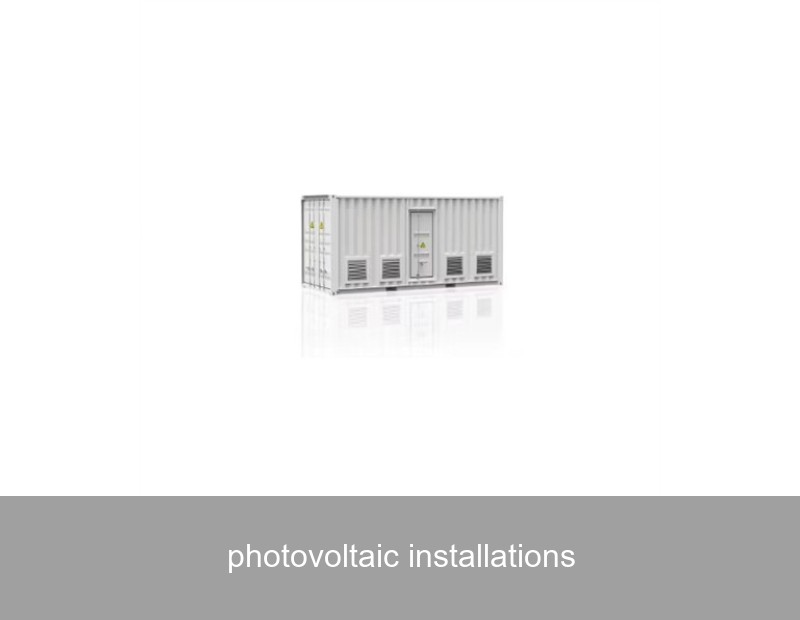
This is where Battery Energy Storage Systems (BESS) come in, acting as a "energy bank" for your solar power. By pairing your photovoltaic installations with a high-performance battery, you can capture the midday surplus and save it for when you truly need it. This simple addition transforms your system's economics and resilience:
- Maximize Self-Consumption: Use more of the clean energy you produce, sometimes increasing on-site usage to over 80%.
- Reduce Grid Dependence: Shield yourself from peak-time tariffs and price volatility.
- Provide Backup Power: Keep critical loads running during grid outages—a feature increasingly valued in both California and across Europe.
- Support Grid Stability: Advanced systems can even provide services to the local grid, creating potential revenue streams.
Case Study: A German Bakery's Recipe for Energy Independence
Let's look at a real-world example. Bäckerei Schmidt (name changed for privacy), a family-run bakery in Bavaria, Germany, had a 100 kW rooftop solar array installed in 2018. While it cut their daytime energy costs, their ovens and refrigeration worked long before sunrise and after sunset. They were exporting over 60% of their solar yield and buying expensive grid power during their operational peaks.
In 2022, they decided to integrate a storage solution. They installed a Highjoule Cobalt-Ion 50 commercial battery system with a capacity of 50 kWh and an intelligent energy management system (EMS). The results after one year were compelling:
- Self-Consumption Rate: Increased from 38% to 89%.
- Grid Energy Cost Reduction: Total annual electricity bill reduced by an additional 68% post-solar.
- Payback Period: The integrated PV + storage system achieved payback in under 7 years, compared to the projected 10+ years for solar alone under the new feed-in tariffs.
- Resilience: The system now provides seamless backup for their cold storage, preventing spoilage during the region's occasional grid disturbances.
"The battery doesn't just store energy; it stores value and peace of mind," the owner noted. This case mirrors findings from the Fraunhofer Institute for Solar Energy Systems ISE, which consistently highlights the improved economics of sector-coupled systems.
How Highjoule Elevates Photovoltaic Projects
As a global leader in advanced energy storage since 2005, Highjoule's core mission is to unlock the full potential of renewable energy assets like your photovoltaic installations. We don't just sell batteries; we provide intelligent, integrated power solutions.
For residential clients, our HomePower Stack series is designed for seamless integration with new or existing solar arrays. Its AI-driven manager learns your consumption patterns, automatically optimizing when to store, use, or—if beneficial—export energy, all managed through a user-friendly app.

Image Source: Unsplash - Example of a sleek, modern residential battery storage unit.
For commercial and industrial (C&I) applications, our modular IndustrialPower Platform scales to meet demanding loads. A bakery, a manufacturing plant, or a microgrid can use it for peak shaving, demand charge reduction, and scheduled backup. Highjoule's proprietary EMS is the brain of the operation, making complex, cost-saving decisions in real-time based on energy prices, weather forecasts, and consumption schedules.
What sets Highjoule apart is our focus on safety, longevity, and lifecycle value. Our systems use robust, UL-certified (in the U.S.) and CE-marked (in Europe) components with sophisticated thermal management and monitoring, ensuring your investment is protected for decades.
Highjoule Services for Solar Integrators and Owners
- Feasibility & Design: Our experts model your solar production and load profile to right-size the storage solution for maximum ROI.
- Seamless Integration: We work with your solar installer or provide full turnkey solutions to ensure flawless hardware and software integration.
- Smart Energy Management: Our cloud-connected platform offers remote monitoring, performance analytics, and control.
- Ongoing Support: Comprehensive warranties and service packages to ensure system health and performance over its entire lifecycle.
The Future of Integrated Energy Systems
The evolution of photovoltaic installations is clear: from simple generation units to interactive nodes in a smart, decentralized energy network. With the rise of electric vehicles (acting as mobile storage), dynamic electricity tariffs, and virtual power plants (VPPs), the opportunities are expanding. The next step for forward-thinking energy producers is to view their solar + storage system not just as a cost-saving tool, but as a controllable asset that can adapt to market signals and contribute to grid stability, as discussed in forward-looking reports from the International Energy Agency (IEA).
Imagine your system automatically charging your battery when grid renewables are abundant and prices are low, then discharging during a regional peak demand event, earning you a credit—all without you lifting a finger. This is the intelligent, proactive energy future we are building at Highjoule.
Your Next Step
Look at your latest energy bill and your solar production data. How much are you exporting versus using? What is your consumption pattern when the sun isn't shining? The gap you see represents both a cost and an opportunity. What would achieving 80% or more energy independence mean for your operational budget or your household's resilience in the face of increasing climate and market uncertainties?
 Inquiry
 Online Chat