


Can a Solar Panel Power a Freezer? Your Guide to Reliable, Off-Grid Cooling
you're at your cabin, farm, or even running a small roadside business. A reliable freezer is non-negotiable—for preserving food, storing inventory, or keeping medical supplies safe. But what happens when the grid is unreliable, diesel is expensive, or you simply want to reduce your carbon footprint? The idea of using a placa solar para tocar um freezer (a solar panel to run a freezer) becomes incredibly appealing. It sounds straightforward, but is it as simple as plugging a freezer into a solar panel? The short answer is no, but with the right system design, it's a highly effective and sustainable solution. This guide will walk you through the essentials, from basic calculations to real-world applications, ensuring your freezer stays cold with the power of the sun.
The Power Dilemma: Keeping Your Freezer Running
A freezer isn't like a light bulb that draws constant power. It's a cyclical device. The compressor kicks in to cool the interior, drawing a high surge of power (starting watts), then runs at a lower level (running watts), and finally switches off until the temperature rises again. This cycle is heavily influenced by ambient temperature, how often it's opened, and its insulation quality. A typical 15-cubic-foot residential freezer might have a running wattage of 150-300W, but its starting surge can be 2-3 times higher. The challenge for a solar system isn't just meeting the average need, but handling those surge moments and providing power 24/7, through the night and on cloudy days.
Sizing Your Solar Panel for a Freezer: It's Not Just About Watts
So, how many solar panels do you actually need to run a freezer? Let's break it down with a simple example. Assume your freezer consumes an average of 1.5 kWh per day (a common figure for an efficient model).
- Daily Energy Need: 1.5 kWh.
- Solar Panel Output: A standard 400W panel in good sun might produce 1.6-2.0 kWh per day, depending on your location (e.g., solar irradiance in Southern Europe vs. Northern US).
- The Catch: This seems sufficient, but solar production isn't constant. You get zero energy at night. The freezer needs power around the clock. This is where simply connecting a panel directly fails. You need a system to store the sun's energy for use anytime.

Image: A solar array powering an off-grid appliance like a freezer requires both generation and storage. (Photo by American Public Power Association on Unsplash)
Beyond the Panel: The Crucial Role of Battery Storage
This is the heart of a reliable solar panel for freezer setup. A battery storage system acts as a "power bank," storing excess solar energy generated during the day for use at night and during low-production periods. The key components are:
- Solar Panels: Generate DC electricity.
- Charge Controller: Regulates the voltage and current from the panels to safely charge the batteries.
- Battery Bank: Stores the energy. Lithium-ion batteries (like LiFePO4) are now preferred for their longer lifespan, deeper discharge capability, and higher efficiency compared to traditional lead-acid.
- Inverter: Converts the stored DC battery power into the AC electricity that your freezer uses. It must be sized to handle the freezer's starting surge wattage.
A well-sized battery bank for our example freezer (1.5 kWh/day) would need a capacity of at least 3-4 kWh to account for days with less sun and ensure battery health by not discharging it completely.
Real-World Case Study: A Bakery's Sustainable Cold Chain
Let's look at a practical application. "Le Petit Four," a family-owned artisan bakery in rural Provence, France, wanted to expand its frozen pastry line but faced grid instability and high electricity costs. Their main challenge was powering a new commercial 25-cubic-foot blast freezer and several holding freezers, with a combined daily load of approximately 8 kWh and significant compressor surge currents.
They installed a tailored off-grid solar system:
| Component | Specification | Purpose |
|---|---|---|
| Solar Panels | 6 x 450W Bifacial Panels (2.7 kWp) | Maximize energy harvest in a sunny, reflective environment. |
| Battery Storage | Highjoule H-ESS 10.2 kWh Lithium-Ion System | Provide overnight and backup power, manage high surge currents. |
| Inverter | Highjoule 5 kW Hybrid Inverter | Handle simultaneous surge from multiple compressors, integrate solar/battery/grid. |
The Results After One Year: The bakery achieved 95% energy independence for its cold storage. They eliminated power-outage-related spoilage and reduced their operational energy costs by an estimated €1,200 annually. The system's intelligent management, a hallmark of Highjoule's technology, prioritizes solar usage for the freezers and even sells minor excess back to the grid, creating a small revenue stream. This case demonstrates that a solar panel to run a freezer in a business context is not only feasible but financially and operationally smart.
Highjoule's Integrated Solution for Reliable Solar-Powered Cooling
As a global leader in advanced energy storage since 2005, Highjoule understands that powering critical loads like freezers requires more than just hardware—it requires intelligent, integrated design. Our products are built for this exact challenge.
For residential, commercial, and industrial applications looking to implement a placa solar para tocar um freezer solution, Highjoule offers:
- Highjoule H-ESS (Home Energy Storage System): Scalable lithium-ion battery systems from 5 kWh to 30+ kWh, perfectly sized to keep your freezer running for days without sun. Their high surge power capability ensures they can handle the demanding startup of compressor motors.
- Highjoule Hybrid Inverters: These smart devices seamlessly manage power flow between your solar panels, battery bank, the grid, and your appliances. They are specifically engineered to handle the high inrush currents of inductive loads like freezers without tripping.
- Highjoule Energy Management System (EMS): The brain of the operation. Our EMS software allows you to prioritize your freezer as a "critical load," ensuring it always has power first. You can monitor performance in real-time, track savings, and control the system remotely.
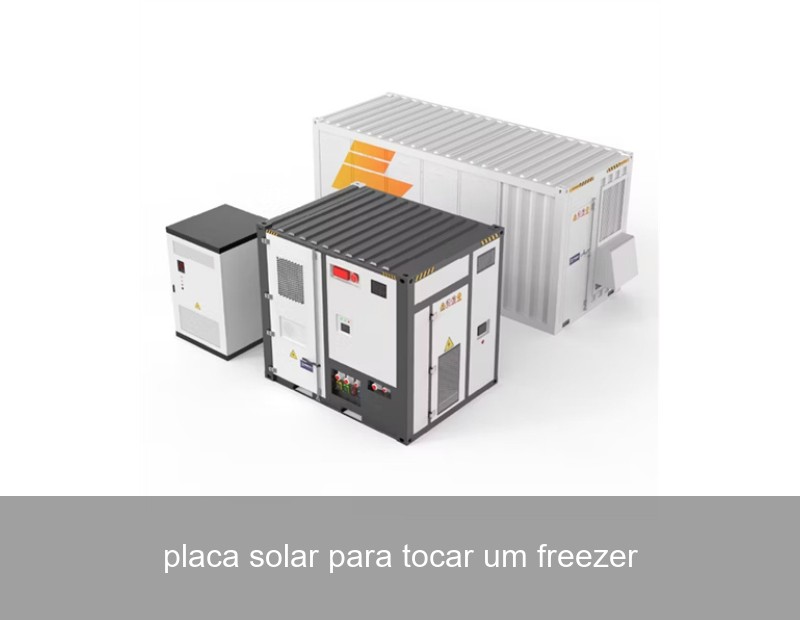
For larger-scale needs, such as microgrids for agricultural cold storage or remote clinics, Highjoule's Containerized Battery Energy Storage Systems (BESS) provide turnkey, mega-watt-scale solutions that integrate renewable energy to power entire facilities reliably.

Image: A modern home battery system, like those from Highjoule, is key to 24/7 solar-powered appliance operation. (Photo by Kindel Media on Pexels)
Making the Switch: Key Considerations for Your Project
Before investing in a solar setup for your freezer, work through this checklist:
- Audit Your Appliance: Find the energy guide label or manual to determine its annual kWh consumption. Divide by 365 for a daily average. A simple plug-in energy meter can also provide real data.
- Assess Your Site: Evaluate sun exposure. Tools like the EU's PVGIS can estimate solar yield at your exact location.
- Plan for the Worst: Size your battery for "autonomy" – how many days you want to run without sun. For critical medical storage, this might be 3+ days. For a weekend cabin, 1 day may suffice.
- Choose Quality Components: Opt for high-efficiency panels, a pure sine wave inverter (to protect your freezer's electronics), and durable lithium batteries. This is where partnering with an expert like Highjoule ensures compatibility and longevity.
- Consult a Professional: Especially for systems beyond a very small setup, a certified installer can ensure safe, code-compliant, and optimal system design. They can also advise on potential incentives, which are available in many U.S. states and European countries.
Ready to Harness the Sun for Your Essential Cooling Needs?
Imagine the peace of mind that comes with knowing your freezer—whether it safeguards your family's food, your business's inventory, or vital community supplies—operates independently, cleanly, and reliably. The technology is here, proven, and more accessible than ever. What's the first perishable good or critical item you'd feel secure storing in your own solar-powered freezer?
 Inquiry
 Online Chat