


Can a Solar Panel Power a Fridge? Your Complete Guide to Off-Grid Cooling
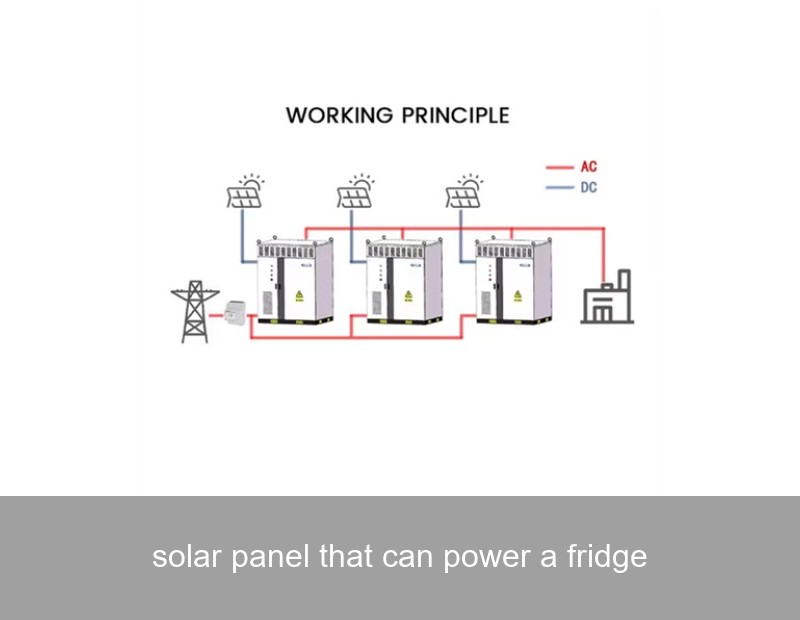
Imagine a power outage on a sweltering summer day. Your first worry? The food in your refrigerator. Now, imagine a simple, resilient solution: a solar panel that can power a fridge, keeping your essentials safe and cool, completely independent of the grid. It's not just a dream for off-grid cabins; it's a practical, increasingly popular application of solar energy for homeowners seeking security and sustainability. In this guide, we'll demystify exactly what it takes to use solar power for your refrigerator, breaking down the key components, real-world data, and how companies like Highjoule provide the intelligent systems to make it reliable and efficient.
Table of Contents
- The Basics: It's More Than Just a Panel
- Calculating Your Power Needs: Fridges and Solar Panels
- A Real-World Case Study: Off-Grid Living in Colorado
- Beyond the Basics: The Role of Smart Energy Storage
- Highjoule Solutions for Reliable Solar-Powered Appliances
- Getting Started with Your Solar-Powered Fridge Project
The Basics: It's More Than Just a Panel
The straightforward answer is yes, a solar panel can absolutely power a fridge. But the more accurate answer is that a solar panel system powers a fridge. Think of it as a team where each player has a critical role. The solar panel (or array) is the generator, creating DC (Direct Current) electricity when the sun shines. However, your fridge needs consistent, stable power day and night, through clouds and clear skies. That's where the rest of the team comes in:
- Charge Controller: Protects your batteries by regulating the voltage and current from the solar panels.
- Battery Storage System (BESS): This is the heart of off-grid power. It stores excess solar energy generated during the day for use at night or during low-light periods. Without storage, your fridge would turn off at sunset.
- Inverter: Converts the DC electricity from the panels and batteries into the AC (Alternating Current) electricity that most household refrigerators require.
So, when you ask "can a solar panel power a fridge?", you're really asking about designing a balanced micro-system. The size of the solar panel array depends directly on the energy appetite of your fridge and the capacity of your battery storage.
Calculating Your Power Needs: Fridges and Solar Panels
Let's move from concept to numbers. A modern, energy-efficient 18-cubic-foot refrigerator might use between 1 to 2 kilowatt-hours (kWh) of energy per day. Older or larger models can use significantly more. You can find your fridge's specific consumption on its yellow EnergyGuide label or in the manual.
Now, for the solar side. A typical 400-watt residential solar panel, under ideal conditions, might produce about 1.6 to 2 kWh per day on average (depending heavily on your location—Arizona vs. Washington state, for example). On paper, one panel might seem enough. But we must account for real-world factors:
- Sunlight Hours: Peak sun hours vary by season and geography.
- System Losses: Inverter efficiency, temperature, and wiring cause energy loss (typically 10-20%).
- The Critical "No Sun" Period: The system must store enough energy to last through the night and possibly cloudy days.
This is where the logic ladder leads us: the phenomenon of wanting off-grid cooling requires us to examine the data on appliance consumption and solar yield, which inevitably highlights the need for robust storage.
| Component | Specification / Consumption | Notes |
|---|---|---|
| Energy-Efficient Refrigerator | 1.5 kWh per day | Baseline daily load |
| Required Solar Array (Gross) | ~600 Watts | Assuming 4-5 peak sun hours, accounting for system losses |
| Required Battery Storage (Useable) | ≥ 3 kWh | To cover night + one cloudy day (depth of discharge considered) |
A Real-World Case Study: Off-Grid Living in Colorado
Let's look at a concrete example from a climate with distinct seasons. A family in the Rocky Mountains of Colorado built an off-grid cabin. Their priority was maintaining a reliable refrigerator for weekly provisions. They installed:
- A 24-cubic-foot, high-efficiency fridge (estimated 1.8 kWh/day).
- A 1.2 kW solar array (three 400W panels).
- A 5.6 kWh lithium-ion battery storage system.
- A 3 kW inverter/charger system.
Data collected over a year showed the system reliably powered the fridge, along with LED lights and a water pump. During the sun-rich summer, the panels fully recharged the batteries by midday. In winter, with shorter days and occasional snow cover, they managed consumption carefully. The key insight? The battery capacity was the limiting factor, not the solar panel size. Having that stored energy buffer was what truly made the system work, turning an intermittent source (sunlight) into a continuous power supply for the fridge.
You can explore more on the energy consumption of home appliances at the U.S. Department of Energy's Energy Saver site.

Image: A typical off-grid setup with solar panels powering essential appliances. Credit: Unsplash.
Beyond the Basics: The Role of Smart Energy Storage
As our case study shows, the battery is the linchpin. Not all battery systems are created equal. Traditional lead-acid batteries require more maintenance, have a shorter lifespan, and can't be deeply discharged without damage. Modern Lithium Iron Phosphate (LiFePO4) batteries, like those used in Highjoule systems, offer:
- Longer Lifespan: 6,000+ charge cycles vs. 1,000-1,500 for lead-acid.
- Greater Depth of Discharge (DoD): You can safely use 90%+ of their stored energy without harm, compared to ~50% for lead-acid. This means you need less physical battery capacity for the same usable energy.
- Compact Size & Maintenance-Free Operation: They are smaller and require no watering or regular upkeep.
But the real game-changer is intelligence. A smart Battery Energy Storage System (BESS) doesn't just store energy; it manages it. It can prioritize charging the batteries from solar, seamlessly switch to battery power when a cloud passes over, and even be programmed to conserve energy for essential loads like your fridge during extended low-sun periods.
Highjoule Solutions for Reliable Solar-Powered Appliances
This is where Highjoule's expertise comes into play. Since 2005, we've specialized in making renewable energy reliable for critical loads. For a homeowner wanting a solar panel that can power a fridge as part of a resilient home energy system, our Residential Energy Storage (RES) series provides the perfect foundation.
Our integrated systems combine high-efficiency inverters, safe LiFePO4 batteries, and intelligent energy management software in one compact unit. The software is key—it allows you to monitor your solar production, battery level, and fridge consumption in real-time via a smartphone app. You can set "Backup Power" modes to ensure your refrigerator is always the last thing to be powered down if energy is scarce. For larger applications, like a farm's cold storage or a community clinic's vaccine fridge, our Commercial & Industrial (C&I) and Microgrid solutions offer scalable, robust power security.
Learn about the latest in battery technology from a research perspective at the National Renewable Energy Laboratory (NREL).

Image: A modern home battery storage system, essential for 24/7 solar-powered appliances. Credit: Unsplash.
Getting Started with Your Solar-Powered Fridge Project
So, how do you translate this into action? Start with an audit of your specific situation:
- Measure Your Fridge: Use a plug-in energy meter (a kilowatt-hour meter) for a week to get its real consumption.
- Assess Your Site: Note your roof or yard's solar exposure. Tools like the NREL PVWatts Calculator can give solar production estimates.
- Think Beyond the Fridge: Will you want to add lights, a router, or a coffee maker to this backup circuit later? Plan for future capacity.
- Consult a Professional: Designing a safe, code-compliant, and efficient system is crucial. A certified installer can model scenarios and recommend components that work seamlessly together.
When you consult with a professional, ask them about integrated systems like Highjoule's. The advantage is a single, warranty-backed solution where the inverter, battery, and management system are designed to communicate perfectly, removing the guesswork and ensuring your fridge—and your peace of mind—are always powered.
Ready to Explore Your Energy Independence?
The journey to powering your critical appliances with clean, reliable solar energy starts with a single question. What other essentials in your home would you want to secure with a resilient, intelligent energy system?
 Inquiry
 Online Chat