


Plantas Solares en Estados Unidos: Powering Growth with Smart Storage Solutions
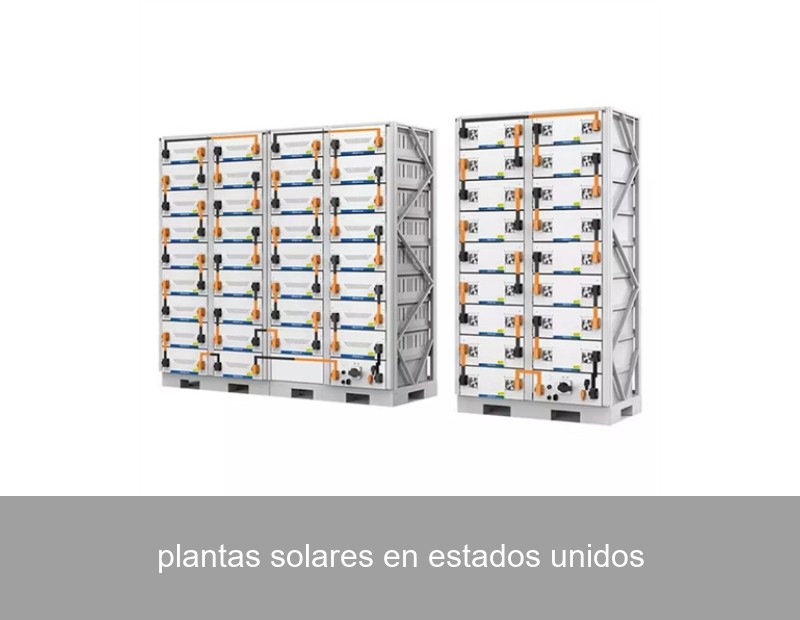
The landscape of American energy is undergoing a radiant transformation. From the sun-drenched deserts of the Southwest to the growing number of community solar gardens in the Northeast, plantas solares en Estados Unidos are being deployed at a record pace. It's an exciting shift towards energy independence and sustainability. But as any seasoned energy professional knows, this rapid growth brings a critical question to the forefront: how do we ensure this abundant but intermittent power source becomes a truly reliable pillar of our grid? The answer lies not just in capturing sunlight, but in intelligently managing its energy. This is where advanced energy storage transitions from a luxury to an absolute necessity.
The U.S. Solar Boom: More Panels, New Challenges
Let's look at the numbers. The United States is now home to over 5,000 major solar power plants, with utility-scale solar capacity expected to nearly double from 2023 to 2025 (U.S. Energy Information Administration). States like Texas, California, and Florida are leading the charge, turning vast tracts of land into power-generating assets. This is phenomenal progress. However, this very success illuminates a fundamental challenge: solar generation is inherently variable. Cloud cover can cause sudden dips, and of course, production falls to zero every night, just as demand often remains significant.
This creates a dual problem for grid operators. First, there's the issue of curtailment—literally having to turn off solar panels because the grid cannot absorb the excess power during peak production hours. This is wasted clean energy and lost revenue. Second, as sunset approaches, a phenomenon known as the "duck curve" emerges, where demand spikes just as solar generation plummets, forcing a rapid ramp-up of traditional fossil-fuel plants. This undermines the environmental benefits and can strain grid stability.

The "Duck Curve" visually represents the grid management challenge created by high solar penetration. (Image Source: National Renewable Energy Laboratory - NREL)
The Grid Integration Puzzle: When the Sun Doesn't Shine
So, how do we solve this puzzle? The key is to decouple energy generation from energy consumption. Think of it this way: a solar plant without storage is like a spectacular fountain—beautiful and powerful when flowing, but the moment you turn off the pump, it stops. Add storage, and you've built a reservoir. You can now capture the overflow, manage the release, and ensure a steady, dependable supply.
This is the core mission of modern plantas solares en Estados Unidos: evolving from simple generators into sophisticated, dispatchable power assets. The technology enabling this evolution is the Battery Energy Storage System (BESS). But not all storage solutions are created equal. The integration must be seamless, intelligent, and built to withstand the rigorous demands of utility-scale applications.
The Smart Solution: Battery Energy Storage Systems (BESS)
A BESS is far more than just a bank of batteries. It's an integrated ecosystem of hardware and software that performs multiple critical functions for a solar plant:
- Energy Time-Shifting (Arbitrage): Store cheap, abundant solar energy produced at noon and discharge it during high-price, high-demand evening hours.
- Frequency Regulation: Provide instantaneous injections or absorptions of power to keep the grid's frequency stable—a service increasingly valued by grid operators.
- Solar Smoothing: Mitigate the impact of passing clouds by discharging stored energy to maintain a steady power output to the grid.
- Capacity Firming: Guarantee a certain level of power output, even when solar generation is low, making the solar plant a more reliable and contractable resource.
This is where Highjoule's expertise becomes pivotal. Since 2005, we have been at the forefront of designing and deploying advanced BESS solutions specifically for large-scale renewable integration. Our GridSynergy platform is not just a containerized battery unit; it's an intelligent energy management hub. It features our proprietary Adaptive Charge Algorithm that maximizes battery cycle life, integrated climate control for optimal performance in harsh environments from the Arizona heat to the Minnesota cold, and a Grid-Forming Inverter capability that can help stabilize weak grids—a common challenge in remote areas where large solar farms are often built.
Case Study: Taming Texas Sun with Highjoule Intelligence
Let's ground this in a real-world example. In 2022, Highjoule partnered with the operator of a 150 MW solar farm in West Texas, a region famous for its intense sun and equally intense grid volatility. The plant was experiencing significant curtailment during peak solar hours and needed to enhance its value in the ERCOT market.
We deployed a 60 MWh GridSynergy BESS alongside the existing solar infrastructure. The results over the first year of operation were compelling:
| Metric | Before Highjoule BESS | After Highjoule BESS Deployment |
|---|---|---|
| Solar Curtailment | ~18% of potential generation | Reduced to under 5% |
| Revenue from Frequency Response | None | $1.2+ million annually |
| Evening Peak Power Delivery | Limited to real-time solar | Consistently able to deliver 40 MW for 2 hours |
Our system's intelligent software autonomously decides when to store, when to sell to the grid, and when to provide stability services, maximizing ROI. For this Texas solar plant, the Highjoule BESS transformed it from a variable resource into a predictable, revenue-optimizing asset. The Department of Energy's Solar Futures Study highlights storage as the essential enabler for such high-penetration solar scenarios.
Beyond Storage: The Intelligent Energy Hub
The future of plantas solares en Estados Unidos is not just solar-plus-storage; it's the creation of intelligent energy hubs. Highjoule's vision extends to microgrid solutions for industrial and commercial complexes, where a dedicated solar array coupled with our Commander series BESS for commercial sites can provide critical backup power, demand charge reduction, and sustainable energy independence.
For utility-scale partners, our EMS (Energy Management System) provides a single pane of glass to monitor, forecast, and optimize the entire solar-plus-storage asset, participating in wholesale markets with algorithmic precision. This level of control is what turns a capital project into a strategic, future-proof investment.

Modern solar plants increasingly integrate containerized battery storage systems for optimal energy management. (Image Source: Unsplash)
The Future of U.S. Solar Plants: What's Next?
The trajectory is clear. With the support of policies like the Inflation Reduction Act (IRA), which provides robust investment tax credits for standalone storage, the marriage between solar and storage will only deepen. The next frontier involves virtual power plants (VPPs), where hundreds of distributed solar-plus-storage assets, including residential systems powered by solutions like Highjoule's HomeGuard residential storage unit, can be aggregated to act as a single, grid-supporting power plant.
This interconnected, intelligent network is the true future of American energy resilience. As a leader with nearly two decades of experience, Highjoule is committed to providing the hardware, software, and expertise to make this future a reality—one solar plant, one microgrid, one community at a time.
What specific grid challenge is your solar project or region facing, and how could intelligent storage turn that challenge into your greatest opportunity?
 Inquiry
 Online Chat