


Powering Your Home in South Africa: A Guide to Choosing the Right Solar System
If you're a homeowner in South Africa, you've likely felt the pinch of load-shedding and watched your electricity bills climb relentlessly. This frustrating reality is driving a powerful shift towards energy independence. More South Africans are now asking: "How can I power my home reliably and sustainably?" The answer increasingly lies in a solar system for home South Africa residents can trust. But moving from the initial idea to a humming, efficient home power plant requires careful planning. This guide will walk you through the key considerations, from understanding your energy needs to choosing technology that lasts, helping you navigate your journey to solar power with confidence.
Table of Contents
- The Solar Imperative: More Than Just Backup
- Understanding Your Home's Energy Profile
- Beyond the Panels: The Heart of Your System
- The Highjoule Difference: Smart, Integrated Energy Solutions
- Making the Investment: Value Over Time
- Your Solar Journey Starts Here
The Solar Imperative: More Than Just Backup
For years, the primary driver for solar in South Africa was straightforward: keep the lights on during Eskom's outages. While backup power remains a critical function, the conversation has matured. Homeowners are now looking at solar as a long-term financial and environmental strategy. It's about locking in a portion of your energy cost at a predictable rate for decades, insulating yourself from tariff hikes that consistently outpace inflation. According to data from NERSA, electricity prices have increased by over 300% in the last 15 years. A well-designed solar system for home South Africa based living becomes not an expense, but a strategic asset that generates a return.
Understanding Your Home's Energy Profile
You wouldn't buy a car without knowing how many people it needs to carry. The same logic applies to solar. The first step is a detailed audit of your electricity consumption.
- Analyze Your Bills: Look at your monthly kWh usage over a full year to account for seasonal changes (winter heating, summer cooling).
- Identify High-Load Appliances: Geysers, air conditioners, stoves, and pool pumps are typically the biggest consumers.
- Differentiate Day vs. Night Usage: This is crucial for sizing your battery storage. If you use most power in the evenings, your battery bank needs to be larger.
This analysis forms the blueprint for your system. An undersized system will leave you reliant on the grid, while an oversized one may not offer a good financial return.
Beyond the Panels: The Heart of Your System
While solar panels capture the sun's energy, the true intelligence and reliability of your solar system for home South Africa setups depend on the components you don't see as easily.
- Inverters: The brain of the operation. They convert the DC electricity from your panels into usable AC power for your home. Modern hybrid inverters can manage power from panels, batteries, and the grid seamlessly.
- Battery Storage: This is your energy reservoir. Lithium-ion phosphate (LiFePO4) batteries, like those used by leading providers, are now the standard for safety, longevity, and performance. They allow you to use solar power after sunset and provide critical backup.
- Energy Management System (EMS): The nervous system. A smart EMS, often software-driven, learns your habits and optimizes when to store energy, use it directly, or even sell it back to the grid where regulations allow.

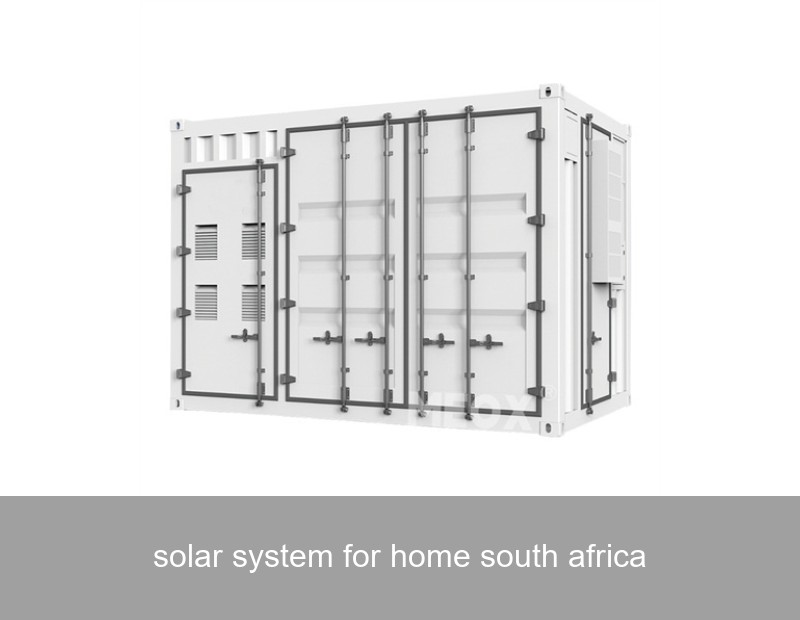
Modern home battery storage is compact, safe, and integrates seamlessly into a household.
The Highjoule Difference: Smart, Integrated Energy Solutions
As a global leader in advanced energy storage since 2005, Highjoule understands that a reliable solar system for home South Africa homeowners depend on is more than a collection of parts. It's an integrated ecosystem. Our approach focuses on delivering intelligent, efficient, and sustainable power solutions tailored to the unique demands of markets like South Africa.
For the residential sector, Highjoule's HES (Home Energy System) series exemplifies this philosophy. It combines a high-efficiency hybrid inverter with modular LiFePO4 battery banks and our proprietary SmartJoule AI energy management platform. What does this mean for you?
- Adaptive Learning: SmartJoule learns your daily patterns and weather forecasts to optimize battery charging and discharging, maximizing self-consumption.
- Seamless Transition: During a grid outage, the system switches to backup power in milliseconds, ensuring your essential loads stay running without interruption.
- Future-Proof Modularity: Start with a system that meets your current budget and needs. You can easily add more battery modules later as your family grows or your electric vehicle arrives.
This integrated, smart technology ensures you get the most out of every ray of sunshine, translating directly into higher savings and greater reliability.
A Real-World Case: The Johannesburg Family Home
Let's look at a concrete example. The Peterson family in a suburban Johannesburg home was facing an average monthly bill of R2,800 and significant disruption from load-shedding. Their primary goals were to eliminate their daytime grid consumption and ensure uninterrupted power for lights, internet, the fridge, and essential appliances during outages.
They installed a 8kW solar array paired with a Highjoule HES-10 system, featuring a 10kWh battery capacity. The results after 12 months were compelling:
| Metric | Before Installation | After Installation |
|---|---|---|
| Average Monthly Grid Import | ~900 kWh | ~120 kWh (mostly at night) |
| Monthly Electricity Cost | R2,800 | R450 |
| Load-Shedding Impact | Full disruption (4-6 hours/day) | Zero disruption for essential circuits |
| Annual CO2 Reduction | N/A | Approx. 8.5 tonnes |
The system paid for itself in under 6 years based on savings and added property value, not to mention the invaluable benefit of comfort and continuity. This case shows how a correctly sized and technologically advanced solar system for home South Africa families can rely on delivers tangible financial and lifestyle returns.
Making the Investment: Value Over Time
Viewing solar as a capital investment reframes the decision. Key factors influencing the return on investment (ROI) include:
- System Cost & Quality: Opting for premium, durable components may have a higher upfront cost but ensures performance and longevity over 20+ years.
- Your Current Tariff & Usage: The higher your current bill, the faster the payback period.
- Financing Options: Many installers offer financing plans, making the initial outlay more manageable.
- Increased Property Value: Studies, including one from the U.S. Department of Energy, indicate homes with solar systems sell faster and at a premium.
Ultimately, you're trading a variable, ever-increasing operating expense (your utility bill) for a fixed-capital asset that generates its own energy.

A well-installed solar array is a long-term investment in a home's value and sustainability.
Your Solar Journey Starts Here
The path to energy independence is exciting, but it requires a trusted partner. Look for accredited installers with proven experience, who conduct thorough site assessments and use tier-one components. Ask for detailed proposals that explain the logic behind the system sizing and provide clear performance projections. A reputable provider will be transparent about costs, warranties, and after-sales service.
At Highjoule, we empower our network of certified installers across South Africa with the technology and training to deliver these superior outcomes. Our products are built for the long haul, designed to withstand diverse climates and deliver reliable power day in, day out.
So, as you contemplate taking control of your power, what's the first question you need answered to feel confident in designing your own home's energy future?
 Inquiry
 Online Chat