


Portable Solar Generator with Panels: Your Ultimate Guide to Off-Grid Power Freedom
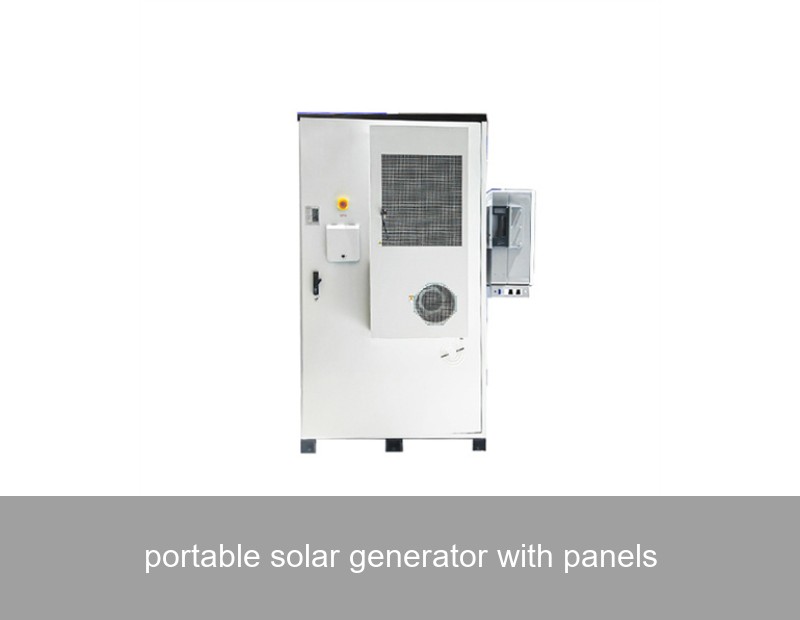
Imagine being able to power your tools, your devices, and your adventures anywhere the sun shines. That’s the promise of the modern portable solar generator with panels. No longer a niche gadget, these integrated systems are becoming essential for everyone from weekend campers to remote workers and disaster-prepared families. But with so many options, how do you choose the right one? Let's demystify the technology and explore how it's powering a more resilient, independent lifestyle.
Table of Contents
- What is a Portable Solar Generator with Panels?
- The Surge in Popularity: Why Now?
- Key Components and What to Look For
- A Real-World Case Study: Powering a Remote Research Station
- Beyond Camping: Professional and Emergency Applications
- The Highjoule Approach: Engineering for Reliability and Scale
- Choosing the Right System for Your Needs
What is a Portable Solar Generator with Panels?
Unlike noisy, fume-emitting gas generators, a portable solar generator with panels is a clean, silent, all-in-one power station. It typically consists of two main parts: a compact, battery-powered generator (an inverter/charger with a lithium battery) and one or more foldable solar panels. The panels capture sunlight, convert it to DC electricity, which charges the internal battery. The generator then converts that stored energy into usable AC or DC power to run your appliances. Think of it as a personal, renewable microgrid you can take anywhere.
The Surge in Popularity: Why Now?
The demand for these systems isn't just a trend; it's driven by concrete global shifts. Extreme weather events are causing more frequent and longer power outages. In the U.S. alone, the average duration of a power outage has increased in recent years, with major events causing outages lasting days or even weeks (U.S. Energy Information Administration). Simultaneously, the cost of solar panels and lithium batteries has plummeted, making the technology more accessible. People are seeking energy independence, not just for convenience, but for security and sustainability.
Key Components and What to Look For
Not all portable solar generators are created equal. Understanding the core components will help you make an informed decision:
- The Battery (The Heart): This is your energy bank. Lithium Iron Phosphate (LiFePO4) batteries are now the gold standard for portable systems due to their superior safety, longevity (3,000+ charge cycles), and stability compared to older lithium-ion types.
- The Solar Panels (The Engine): Look for high-efficiency monocrystalline panels with a rugged, foldable design. Pay attention to the wattage (e.g., 100W, 200W) and ensure compatibility with your generator's maximum solar input voltage.
- The Inverter (The Translator): This converts stored DC battery power to AC power for standard household devices. A pure sine wave inverter is crucial—it provides clean, stable power that won't damage sensitive electronics like laptops or medical equipment.
- Ports and Power Output: A versatile system will offer multiple outlets: standard AC plugs, USB-C PD for fast-charging modern gadgets, and 12V car ports. Check the continuous and surge wattage ratings to ensure it can start and run your devices.

Image Source: Unsplash (Representative image of portable solar setup)
A Real-World Case Study: Powering a Remote Research Station
Let's move beyond theory. In the Scottish Highlands, a biodiversity research team operates a seasonal field station completely off-grid. Their challenge was to power water pumps, communication equipment, lighting, and scientific instruments without the noise and pollution of a diesel generator.
Their solution was a high-capacity portable solar generator with panels system, configured with 800 watts of solar panels and a 2kWh LiFePO4 battery unit. Over the 2023 season, the system:
- Provided an average of 4.5 kWh of electricity per day.
- Eliminated the need for over 200 liters of diesel fuel, preventing approximately 540 kg of CO2 emissions.
- Reduced operational noise to zero, allowing for undisturbed wildlife observation.
The team reported that the reliability of the system was critical, especially during periods of low sunlight, where the battery's capacity carried them through. This case highlights how these systems are not just for recreation but are viable, professional-grade power solutions.
Beyond Camping: Professional and Emergency Applications
The versatility of a portable solar generator with panels is its greatest strength. Here’s how different users leverage them:
| User | Application | Key Benefit |
|---|---|---|
| Homeowners | Backup power for sump pumps, refrigerators, and medical devices during outages. | Peace of mind and safety. |
| Contractors & Tradespeople | Powering job site tools (saws, drills, chargers) where grid power is unavailable. | Increased productivity and reduced costs. |
| Event Planners | Silent power for food trucks, outdoor lighting, and sound systems at festivals or weddings. | Eco-friendly event enhancement. |
| Disaster Relief Teams | Rapid deployment of power for communication and essential services in affected areas. | Quick, clean, and reliable response. |
The Highjoule Approach: Engineering for Reliability and Scale
At Highjoule, our expertise in large-scale commercial and industrial battery energy storage systems (BESS) directly informs our philosophy on portable power. Since 2005, we've learned that the core principles of safety, efficiency, and system intelligence are non-negotiable, whether for a 20 MW grid project or a 2 kWh personal unit.
We apply this engineering rigor to our portable solutions. For instance, our Voyager Series portable power stations are built with automotive-grade LiFePO4 cells and feature our proprietary battery management system (BMS) – the same technology that safeguards our megawatt-scale installations. This ensures not just longevity and safety, but also optimal performance in varied temperatures. Furthermore, our scalable solar panel design allows users to easily add more panels, mimicking the modular "building block" approach we use in our microgrid solutions for businesses. For us, a portable solar generator with panels is a microcosm of a resilient, sustainable energy future.

Image Source: Unsplash (Representative image of a portable power station)
Choosing the Right System for Your Needs
Ready to invest in your energy independence? Ask yourself these questions:
- What do I need to power? List your essential devices and their wattage. A laptop (50-100W) is different from a mini-fridge (100-200W). Add up the continuous watts to find your minimum requirement.
- For how long? Do you need power for a weekend camping trip or to sustain critical home appliances for 24 hours during an outage? This determines your needed battery capacity (measured in Watt-hours, Wh).
- How quickly do I need to recharge? If you're on the move, you'll want solar panels with a high enough wattage to recharge the battery in a reasonable amount of sunlight. Look for systems with efficient MPPT (Maximum Power Point Tracking) charge controllers for faster solar charging.
- What's my environment? Will the system be used in humid, dusty, or cold conditions? Ensure it has a suitable Ingress Protection (IP) rating and a wide operating temperature range.
Remember, the most advanced systems, like those developed by Highjoule, integrate these considerations into a seamless user experience, offering app-based monitoring and control—a feature trickled down from our industrial smart energy management platforms.
Your Power, Your Control
The journey to energy independence starts with a single question: What would you power if the grid went down tomorrow, or if you were miles from the nearest outlet? A portable solar generator with panels is more than a product; it's an empowering tool that puts you in control. We at Highjoule are passionate about designing that reliability into every system, from the largest microgrid to the personal power station in your trunk. What adventure or emergency plan will you power next?
 Inquiry
 Online Chat