


Portable Solar Inverter System: Your Ultimate Guide to Mobile, Clean Power
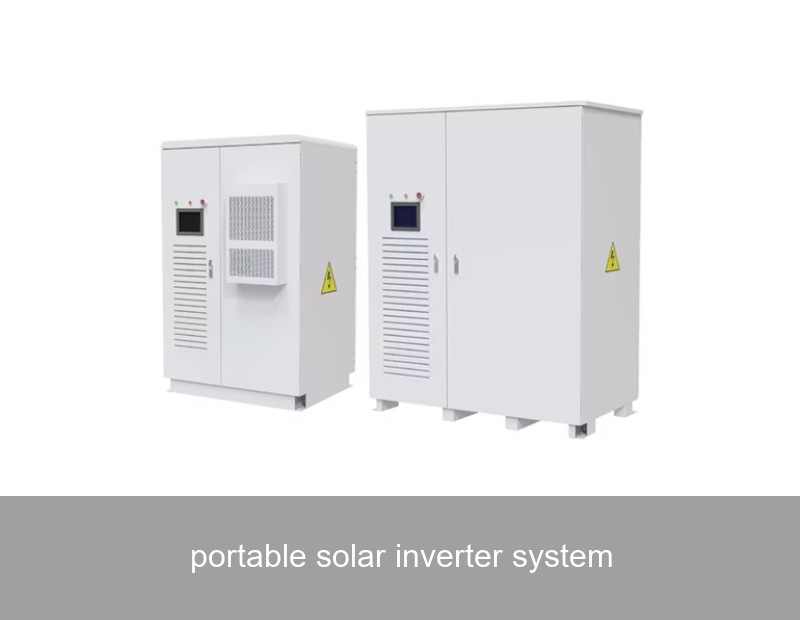
Imagine having the power of the sun, neatly packaged and ready to travel wherever you go. That's the core promise of a portable solar inverter system. For adventurers, remote workers, event organizers, and even homeowners seeking backup power, these systems are revolutionizing energy independence. Unlike traditional, fixed solar installations, a portable system integrates solar panels, a battery, and an inverter into a compact, mobile unit. It captures sunlight, stores it as DC power, and crucially, uses an inverter to convert it into the AC electricity that powers our everyday devices and tools. As a leading energy storage expert at Highjoule, I've seen firsthand how this technology is moving from a niche gadget to a mainstream solution for reliable, off-grid power across Europe and the US.
Table of Contents
- What is a Portable Solar Inverter System?
- The Rising Demand: Why Portable Solar Power is Booming
- Key Components and How They Work Together
- Real-World Impact: A Case Study from California
- Choosing the Right System for Your Needs
- Highjoule's Expertise in Advanced Portable Power
- Future Trends and Your Next Steps
What Exactly is a Portable Solar Inverter System?
Let's break it down. A portable solar inverter system is an all-in-one power station that typically includes three core components housed in a single, transportable case or unit. First, you have foldable or rollable solar panels that are highly efficient and easy to deploy. Second, a built-in lithium-ion battery stores the harvested energy. And third, the heart of the system: the inverter. This is the intelligent component that transforms the stored DC (Direct Current) power into stable, clean AC (Alternating Current) power—the same type you get from your wall outlets. The "portable" aspect means it's designed with handles, wheels, or a compact form factor, often weighing under 50 pounds for true mobility.

Image Source: Unsplash - Example of a portable solar setup in an outdoor environment.
The Rising Demand: Why Portable Solar Power is Booming
The surge in popularity isn't accidental. It's a direct response to several converging trends. Firstly, extreme weather events are causing more frequent and prolonged power outages. In the US alone, the average customer experienced over 8 hours of outages in 2021, often due to weather. Secondly, the rise of remote work and digital nomadism means people need reliable power beyond the coffee shop. Thirdly, there's a growing cultural push towards sustainable recreation—campers and RV users want to minimize generator noise and fossil fuel use. The data speaks volumes: the global portable power station market is projected to grow from around $4 billion in 2022 to over $5.5 billion by 2028, with solar-charged models being the fastest-growing segment.
Key Components: More Than Just a Big Battery
Understanding the parts helps you make an informed choice. Here’s what to look for:
- The Inverter: This is your system's brain. Look for a pure sine wave inverter, which produces electricity as clean as (or cleaner than) the grid, safely powering sensitive electronics like laptops and medical devices. The wattage (e.g., 1000W, 2000W) determines what appliances you can run.
- The Battery: Capacity is measured in watt-hours (Wh). A 1000Wh battery can run a 100W device for 10 hours. Lithium Iron Phosphate (LiFePO4) batteries, like those used in Highjoule's systems, are the new gold standard for safety, longevity (3,000+ cycles), and performance in varied temperatures.
- The Solar Input: Maximum solar input wattage dictates how fast you can recharge. A system with a 500W solar input will recharge much faster than one with 200W, given sufficient panels.
- Ports & Connectivity: Multiple AC outlets, USB-C PD ports, 12V car outlets, and even wireless charging are now common. Smart app connectivity for monitoring and control is a valuable premium feature.
| Use Case | Recommended Capacity | Key Features Needed |
|---|---|---|
| Weekend Camping & Phone Charging | 300 - 500 Wh | Lightweight, multiple USB ports, basic 300W AC outlet |
| Remote Work & Power Tools | 1000 - 1500 Wh | Pure sine wave (1000W+), fast solar input, LiFePO4 battery |
| Home Backup & Emergency Power | 2000 Wh+ | High-cycle life battery, expandable capacity, ability to chain to home panel |
Real-World Impact: A Case Study from California's Wildfire Country
Let's move from theory to practice. In 2023, a community resilience project in Sonoma County, California, addressed the critical need for backup power during Public Safety Power Shutoffs (PSPS) implemented to prevent wildfires. The project deployed 50 Highjoule Nomad Pro 1500 portable solar inverter systems to vulnerable residents, including those with medical equipment.
- 100% Reliability: All systems provided uninterrupted power for essential devices (CPAP machines, refrigerators for medication, communication devices) during multi-day outages.
- Rapid Recharge: Using the included high-efficiency 400W solar panels, units were recharged from 0% to 80% in under 4 hours of sunlight, eliminating dependency on the grid or fuel.
- User Confidence: Post-deployment surveys showed a 90% reduction in anxiety related to power outages among participants. The simple "plug-and-play" nature of the system was repeatedly cited as a major benefit over complex generator setups.
This case underscores that modern portable solar systems are not just for convenience; they are becoming vital tools for energy security and community resilience.
Choosing the Right System: Ask Yourself These Questions
With so many options, how do you choose? Start by auditing your needs:
- What will you power? List devices and their wattage. A fridge might surge to 1200W, while a laptop uses 60W.
- For how long? Do you need 4 hours of work or 48 hours of emergency backup?
- Where will you use it? Is weight a primary concern for hiking, or is wheeled mobility better for your RV or job site?
- How will you recharge? Will you primarily use solar, a car outlet, or a wall plug? This dictates the solar input specs you need.
Highjoule's Role: Engineering Trust into Portable Power
At Highjoule, our 18+ years of designing large-scale commercial and residential energy storage systems directly inform our portable solutions. We don't just make batteries; we engineer integrated intelligent energy ecosystems. Our Voyager Series of portable solar inverter systems embodies this philosophy.
What sets our approach apart is the application of grid-scale technology to portable units. For example, our proprietary CellGuard™ BMS (Battery Management System) ensures each lithium iron phosphate cell operates within its perfect window, maximizing lifespan and safety. Furthermore, our systems feature X-Boost™ technology that allows the inverter to handle surge loads up to twice its rated capacity, so you can confidently start a refrigerator or a small air conditioner. For us, portability doesn't mean compromising on the robustness, intelligence, and durability we're known for in our stationary storage solutions.

Image Source: Unsplash - Close-up of a sophisticated portable power unit interface.
The Future is Modular and Smart
The next evolution of portable solar inverter systems is heading towards modularity and grid interaction. Imagine a system where you can snap on additional battery packs for a weekend trip. Or a unit that, when at home, can seamlessly integrate with your house's main electrical panel via a transfer switch, acting as both a portable power source and a whole-home backup core. Smart grid functionality, where your portable unit could theoretically provide peak-shaving support, is on the horizon. These advancements, driven by companies like Highjoule focused on system-level integration, will blur the lines between portable and permanent power.
Ready to Harness the Sun?
The technology for clean, reliable, and truly portable power is here and proven. Whether you're safeguarding your family against outages, powering your livelihood off-grid, or simply seeking a quieter, cleaner alternative for your next adventure, a well-chosen portable solar inverter system is a transformative investment. As you consider your options, think beyond the specs sheet: What does true energy freedom look like for your specific lifestyle? The answer might just fit in the trunk of your car.
 Inquiry
 Online Chat